Orthosomnia: When Your Sleep Tracker Becomes the Thing Keeping You Up
Sleep trackers promise better rest, but chasing a perfect sleep score can backfire into orthosomnia. Here's the science, and how to use data sanely.
By Kurt Woleret
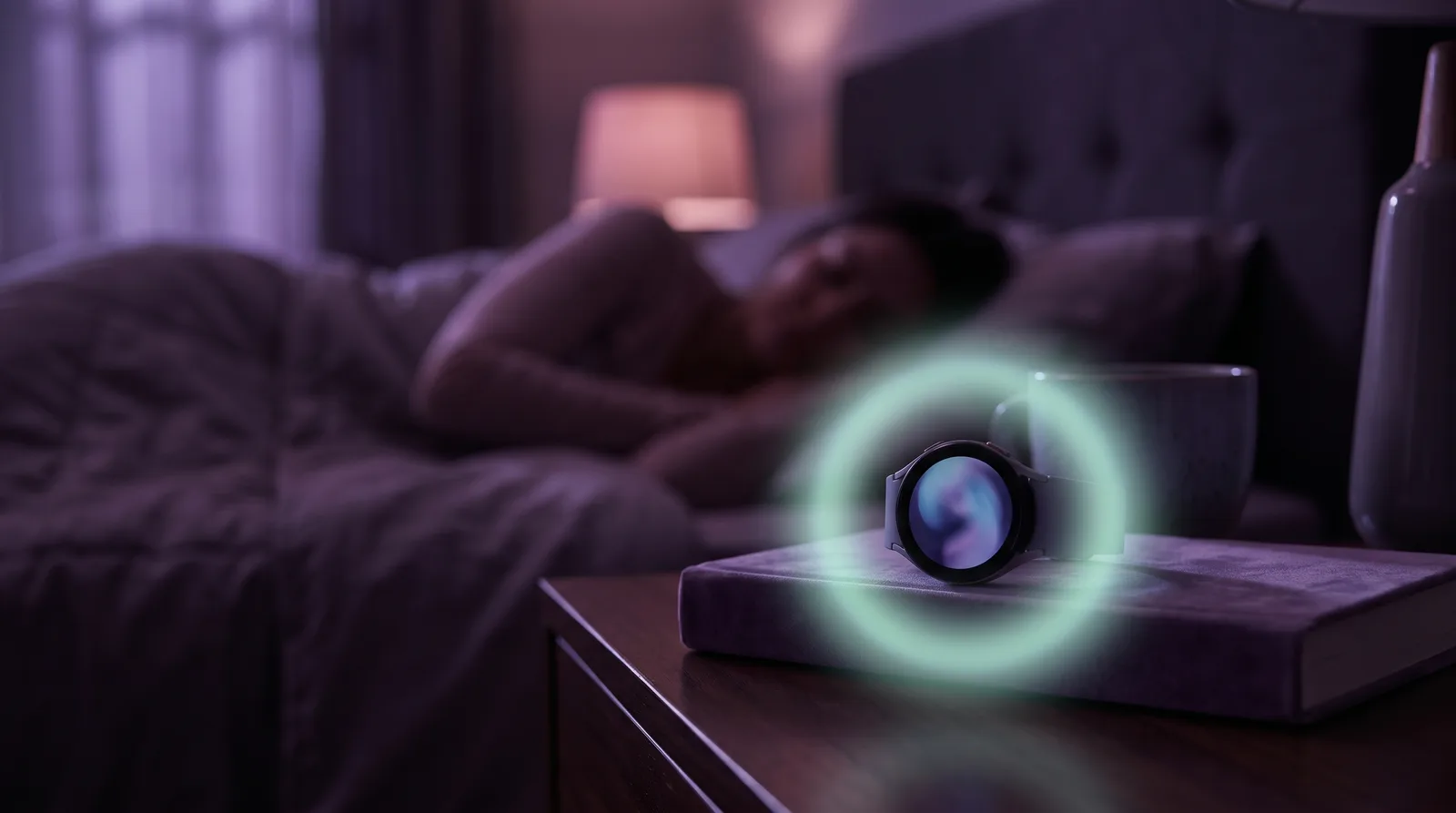
A friend of mine, a spreadsheet person, texted me his sleep score the other morning the way you'd text a bad medical result. A 68. He felt fine, he said, but the watch said his deep sleep was 'poor,' so now he was worried, and also tired, though he hadn't been tired until he read the number. I want to be clear that I'm not above this. I once spent a week optimizing my own sleep score like it was a credit rating, and slept measurably worse each night I tried. There's a name for this trap now, and I respect any era that names its own diseases: orthosomnia, the anxious pursuit of perfect sleep data.
A disorder named after its cure
The term comes from a 2017 case report by Kelly Baron and colleagues in the Journal of Clinical Sleep Medicine, describing patients whose quest for ideal tracker numbers was itself feeding their insomnia (Baron et al., 2017). The title asked, politely, whether some patients were 'taking the quantified self too far.' The patients in the report treated their tracker output as gospel, stayed in bed longer chasing bigger sleep numbers, and got anxious when the data disappointed them, which of course made their sleep worse, which made the data worse, which made them more anxious. A perfectly engineered feedback loop, running in exactly the wrong direction. One patient in the report had even started spending more than ten hours a day in bed to boost the numbers, which is insomnia-clinic behavior with a progress bar attached.
The cruel joke is that sleep responds to pressure the way a cat responds to being summoned. Sleep is maybe the only performance domain where trying harder reliably produces worse results. Effort is the enemy; sleep arrives when you stop demanding it. A tracker, used anxiously, is a demand generator strapped to your wrist, filing a nightly performance review you read before coffee.
What the wearable actually knows
Here's the part the marketing skips: consumer wearables don't measure sleep. They measure movement and heart signals from your wrist and run the pattern through an algorithm that estimates sleep. Real sleep staging happens in a lab with electrodes reading your brain's actual activity, because sleep stages are defined by brain waves, and your wrist, whatever its other virtues, does not have brain waves. Wearables are decent at telling asleep from awake and reasonably useful for spotting trends over weeks. Stage-by-stage precision, the 'you got 43 minutes of deep sleep' stuff, is much shakier, and the exact scoring recipes are proprietary. Treat the deep-sleep number as a weather forecast, not a lab result. Useful directionally. Not worth grieving over.
A sleep tracker, used anxiously, is a demand generator strapped to your wrist, filing a nightly performance review you read before coffee.
Signs the tracker is running you
A quick self-audit, from someone who has failed it. You check the score before you check how you feel, and the number can downgrade a morning that was going fine. You lie in bed longer to farm sleep minutes. Bedtime has acquired stakes: you get in bed slightly nervous about tonight's grade. You trust the data over your body, feeling fine but declaring yourself tired because the app said so, like my friend and his 68. You've googled how to increase a specific stage of sleep, as if deep sleep were a stat you could grind. And the nightly ritual of charging, positioning, and verifying the device has become its own little anxiety ceremony. Two or more of those, and the tool has quietly become the boss.
It's worth saying what normal sleep actually looks like, because trackers quietly teach the opposite. Normal sleep is variable. Waking briefly a few times a night is standard-issue human biology, not a defect; most of those wakings are so short you don't remember them, unless a device helpfully itemizes them for you at breakfast. Deep sleep naturally concentrates early in the night and declines with age, and night-to-night swings in every metric are the rule, not a crisis. A tracker turns all that ordinary texture into a report card, and report cards invite grading. Some of what people are trying to fix, in other words, was never broken. The number made it visible, and visibility got mistaken for pathology.
How to use sleep data without it using you
I'm not going to tell you to throw the watch in the river; I'm a data guy, and the data can help. It's genuinely useful for catching patterns: what late caffeine, late workouts, or alcohol do to your nights, whether your schedule is drifting, how consistent your sleep window really is. The fix isn't abandoning measurement, it's demoting it. Check weekly trends instead of nightly scores; one bad night is noise, three bad weeks is signal. Let how you feel by mid-morning outvote the number. If the score itself spikes your anxiety, take a tracker vacation for a couple of weeks; orthosomnia reports improved when patients loosened their grip on the data. And reinvest that attention at the front end of the night, the only place you have real control: a consistent wind-down, dim lights, and something genuinely undemanding in the last half hour. Mine is a few slow minutes with Feelsy, one dark drifting texture and the 4-7-8 breathing exercise, precisely because it produces no score. Nothing to optimize, nothing to fail. The watch can tell you about last night. It has nothing useful to say about tonight, and tonight goes better when nobody's grading it.
Feelsy is a wellness product, not medical advice. If stress, anxiety or sleep problems persist, please speak with a qualified professional.
References
- Baron, K. G., Abbott, S., Jao, N., Manalo, N., & Mullen, R. (2017). Orthosomnia: Are some patients taking the quantified self too far? Journal of Clinical Sleep Medicine, 13(2), 351-354.
Frequently Asked Questions
What is orthosomnia?
Orthosomnia is the anxious pursuit of perfect sleep tracker data, named in a 2017 Journal of Clinical Sleep Medicine case report. Patients fixated on ideal sleep scores, stayed in bed chasing better numbers, and grew anxious when the data disappointed, which itself worsened their sleep. The worry about measured sleep becomes a cause of bad sleep.
Are sleep trackers accurate?
Partly. Wrist wearables estimate sleep from movement and heart signals, not brain waves, which is how sleep stages are actually defined. They're decent at telling asleep from awake and useful for spotting multi-week trends, but stage-level numbers like minutes of deep sleep are much less reliable. Treat them as a forecast, not a lab result.
Can a sleep tracker make sleep worse?
Yes, if it makes bedtime feel like a graded performance. Sleep is unusual in that trying harder reliably backfires; pressure and monitoring push it away. If you check your score before noticing how you feel, lie in bed to farm sleep minutes, or feel nervous about tonight's grade, the tracker is likely adding to the problem.
Should I stop using my sleep tracker?
Not necessarily. Demote it instead: review weekly trends rather than nightly scores, let how you feel by mid-morning outvote the number, and use the data to test habits like caffeine timing. If the score itself makes you anxious, take a two-week tracker break; case reports found sleep improved when patients loosened their grip on the data.

About the author
Contributing writer
Kurt is a New York based writer covering the practical science of stress, sleep and focus. He is the resident sceptic of the Journal: if a technique cannot survive a crowded subway commute and a deadline week, he is not interested in it.
Feel it for yourself.
Feelsy turns reading about calm into practising it. Two minutes of a slow texture is often the whole difference.


Related reading
 Sleep
SleepTired but Can't Sleep? Why You're Wired at Bedtime
Exhausted all day, wide awake at midnight. Here's the science of being tired but wired, and what actually works to switch your brain off at bedtime.
 Sleep
SleepSleep Debt: Can You Really Catch Up on the Weekend?
Weekend lie-ins feel like repayment, but research says sleep debt doesn't clear that easily. What catching up actually fixes, and what it can't.
 Sleep
SleepWhy You Wake Up at 3 AM (and How to Get Back to Sleep)
Waking at 3 AM isn't a curse or a sign something's broken. Here's the sleep science behind those small-hours wake-ups, and what actually gets you back down.
 SleepNew
Night Owl vs Early Bird: The Science of Chronotypes
Night owl or early bird isn't a personality flaw or a virtue. It's a chronotype. Here's what the science says about your body clock and how to work with it.
 SleepNew
How to Wake Up Early (Without Hating Your Life)
Want to become a morning person? Here's how to wake up early using light, timing and consistency, based on what circadian science actually shows.
 Sleep
SleepCan't Sleep? Why Getting Out of Bed Is the Counterintuitive Fix
Lying awake trying harder is the one thing that makes insomnia worse. Here's the 20-minute rule, the science of stimulus control, and how to use it.