Does Reading Before Bed Help You Sleep? The Oldest Wind-Down Ritual
Reading before bed is the wind-down ritual almost everyone abandoned for a phone. Here is what research says about books and sleep, and how to return.
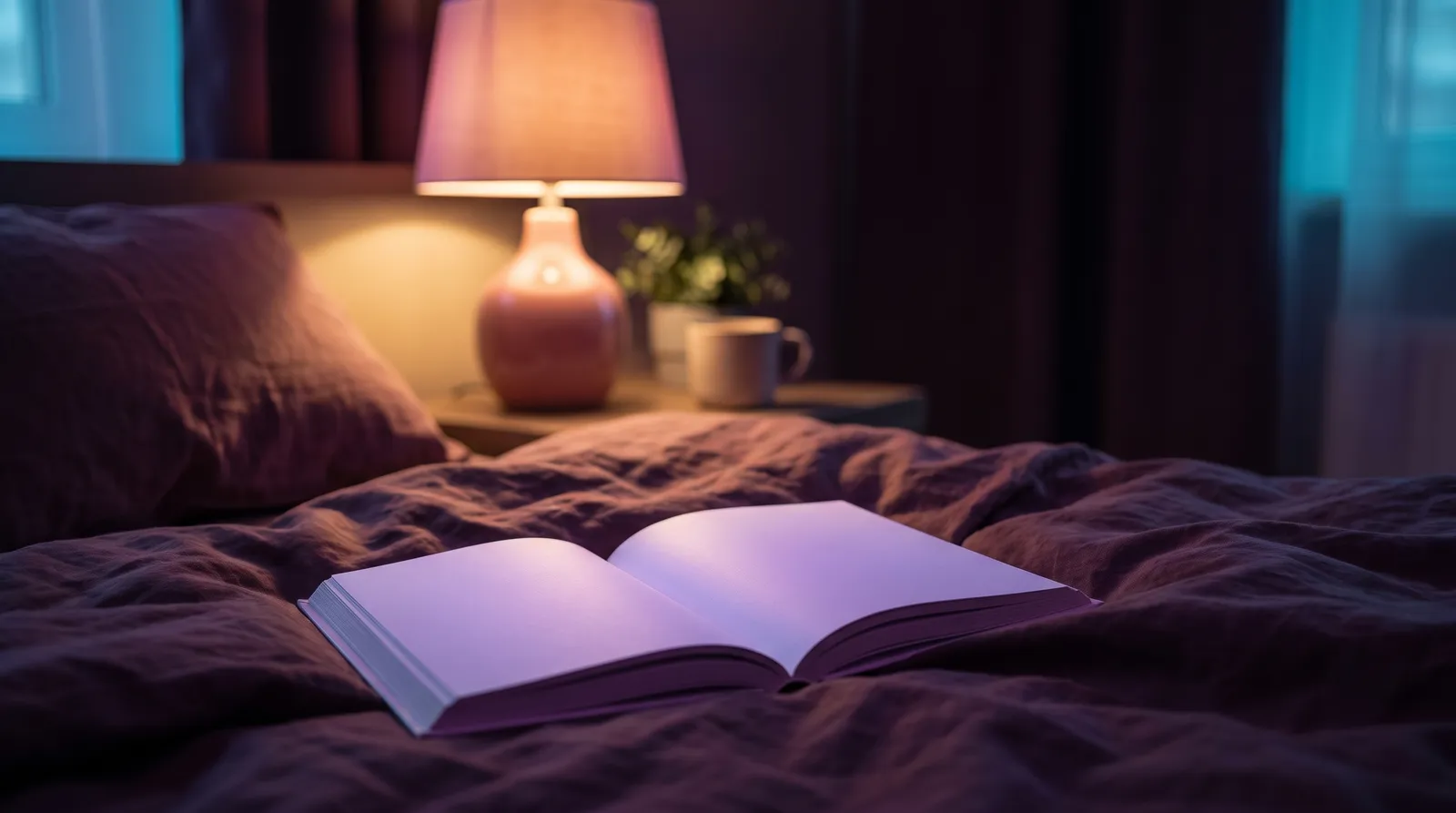
For a few centuries, the human bedtime had a reliable final act. The candle, then the lamp, then the bedside light illuminated a page; the page did its slow work; the eyelids voted; the light went out. Reading before bed was so universal a ritual that nobody thought to defend it, any more than one defends pillows. Then, within a single decade, the book on the nightstand was replaced by a rectangle of glass that contains every argument, marketplace and emergency on Earth, and the old final act quietly vanished from millions of bedrooms, mine at times included.
It is worth asking, now that the ritual is optional, what it actually did for us. The honest answer from research is: probably something, and pleasingly, someone has actually run the experiment.
The people's experiment
Sleep science is full of observational findings, but reading in bed received a genuine randomised trial, and a rather democratic one. An online study known as The People's Trial, designed with public participation, randomly assigned hundreds of adults either to read a book in bed before sleeping or to refrain from reading in bed, and then compared how the two groups rated their sleep. Those assigned to read reported improved sleep quality more often than those assigned not to (Finucane et al., 2021, Trials). It was a pragmatic study built on self-reported sleep rather than laboratory instruments, and its authors were suitably modest about it, but its direction agrees with what generations of readers have testified from under the covers: the book helps.
Why should it? Nothing about ink and paper is pharmacologically soporific. The answer, I think, lies in three quieter mechanisms, each of them instructive about how falling asleep actually works.
Somewhere else for the mind to be
The great enemy of sleep onset is not noise or light but rumination: the mind, handed no occupation, reaches for its favourite worries and begins to rehearse. A story solves this with almost embarrassing elegance. Narrative is the most absorbing structure the human mind knows; it gives attention one thread to follow, somewhere pleasant to be that is not tomorrow's meeting, and it asks nothing of you that resembles a decision. Reading is, in this sense, a cognitive displacement therapy so old we forgot it was one. Where a racing mind grips the day, a page gently unclenches it, one paragraph at a time.
The second mechanism is the ritual itself. Bodies adore a run-up. A stable sequence performed nightly, wash, lamp, pillow, chapter, becomes a conditioned signal that sleep is next, and the drowsiness begins to arrive on schedule, summoned by the routine as much as by tiredness. The book is the final domino in a chain the body has learnt by heart.
The third is what the book does not do. A printed page emits no light of its own, only the lamp's warm reflection. It delivers no notifications, hosts no arguments, refreshes nothing. Its stakes do not escalate. Compared with the device it replaced, or rather, the device that replaced it, the book's chief virtue may simply be its magnificent poverty of features.
A book is the one bedtime technology that has never once buzzed to tell its reader something has gone wrong somewhere.
How to read yourself to sleep
Like any reclaimed ritual, this one benefits from a little craft. The aim is drowsiness, not literary achievement, and the choices follow from that.
- Choose the middle shelf: books interesting enough to hold the eye, calm enough to release it. Essays, gentle fiction, natural history and rereads of old favourites serve beautifully. Save the thriller for the armchair; its cliffhangers are engineered against you.
- Keep the light warm and low, enough for the page and little more, and let it be the only light in the room.
- Read in the position you sleep in, and surrender on the first eyelid dip. The ritual has done its work; finishing the chapter is vanity.
- Set no target. Two pages that end in sleep are a triumph; twenty that end in alertness are not.
And on the nights when even a page feels like too much effort, the same principles can be honoured without print. What the book provides is a single, calm, low-stakes channel for attention, and that can be poured into other vessels: a sleep story, a quiet audiobook, or a slow visual. Some nights I let a Feelsy texture drift on the nightstand where the book would sit, a wordless page that turns itself, and follow the folding the way one follows a paragraph. Feelsy's 4-7-8 breathing exercise makes a fine closing sentence to either ritual, four counts in, seven held, eight slowly out, before the light goes off.
The rectangle problem
It would be dishonest to write about bedtime reading without naming what usually stands in its way. The phone is not evil; it is simply optimised, by some of the cleverest people alive, for the exact opposite of sleep onset: novelty, urgency, escalation, one more thing. Asking it to serve as a wind-down device is asking a fairground to serve as a library. The gentlest solution I know is substitution rather than abstinence: the phone charges across the room, and the book waits on the pillow, so that the path of least resistance at midnight leads through paragraphs. If the phone must stay, let it hold only its calmest citizens at that hour, the sleep stories and slow textures, and none of its arguments.
The candle is gone and the lamp is dimmable now, but the old final act still works exactly as it did for our great-grandparents: a pool of warm light, a patient page, a mind escorted gently out of its own day. Of all the sleep advice on offer, the loveliest may still be the simplest. Go to bed a little earlier, and bring a book.
Feelsy is a wellness product, not medical advice. If stress, anxiety or sleep problems persist, please speak with a qualified professional.
References
- Finucane, E., et al. (2021). Does reading a book in bed make a difference to sleep in comparison to not reading a book in bed? The People's Trial: an online, pragmatic, randomised trial. Trials, 22.
Frequently Asked Questions
Does reading before bed actually help you sleep?
The best evidence comes from an online randomised study called The People's Trial, which assigned hundreds of adults either to read a book in bed before sleeping or not to. Those who read reported improved sleep quality more often than those who did not. It relied on self-reported sleep rather than laboratory measures, but its direction supports the old ritual: the book helps.
Why does reading make you sleepy?
Three quiet mechanisms do the work. A story gives attention one calm thread to follow, displacing the rumination that keeps minds awake at lights-out. A nightly reading ritual becomes a conditioned signal that sleep is next, so drowsiness arrives on schedule. And a printed page emits no light of its own, delivers no notifications and never escalates, unlike the device that replaced it.
What should you read before bed?
Choose the middle shelf: books interesting enough to hold the eye but calm enough to release it. Essays, gentle fiction, natural history and rereads of old favourites work beautifully, while thrillers are engineered against you with cliffhangers. Keep the light warm and low, read in your sleeping position, set no page target, and surrender at the first eyelid dip rather than finishing the chapter.
Is reading on a phone before bed just as good?
The phone is optimised for novelty, urgency and one more thing, which is the opposite of what sleep onset needs, so a printed book is the safer vessel. The gentlest fix is substitution: charge the phone across the room and leave the book on the pillow. If a screen must stay, restrict it at that hour to its calmest offerings, such as sleep stories or a slow drifting texture, rather than feeds and arguments.

About the author
Contributing writer
Eleonor writes about contemplative traditions, attention and the cultural history of calm. She has spent two decades collecting the rituals humans use to slow down, from zazen halls to hammams, and translating them for modern, screen-lit lives.
Feel it for yourself.
Feelsy turns reading about calm into practising it. Two minutes of a slow texture is often the whole difference.


Related reading
 Sleep
SleepSleep Stories for Adults: Why Being Read to Still Works
Why sleep stories work for adults: the science of narrative distraction at bedtime, what makes a story sleep-worthy, and how to build a listening ritual.
 Sleep
SleepDoes Screen Time Before Bed Really Wreck Your Sleep?
Phones before bed: sleep villain or overblown? What the research on screens, blue light and melatonin actually shows, and what to do that isn't 'never look at a screen.'
 Sleep
SleepHow to Fall Asleep Faster: Sound, Light and Ritual
Falling asleep is a skill, not a stroke of luck. Here is how sound, light and a 15-minute ritual can quiet a racing mind and shorten the trip to sleep.
 SleepNew
Night Owl vs Early Bird: The Science of Chronotypes
Night owl or early bird isn't a personality flaw or a virtue. It's a chronotype. Here's what the science says about your body clock and how to work with it.
 SleepNew
How to Wake Up Early (Without Hating Your Life)
Want to become a morning person? Here's how to wake up early using light, timing and consistency, based on what circadian science actually shows.
 Sleep
SleepCan't Sleep? Why Getting Out of Bed Is the Counterintuitive Fix
Lying awake trying harder is the one thing that makes insomnia worse. Here's the 20-minute rule, the science of stimulus control, and how to use it.