Does Screen Time Before Bed Really Wreck Your Sleep?
Phones before bed: sleep villain or overblown? What the research on screens, blue light and melatonin actually shows, and what to do that isn't 'never look at a screen.'
By Kurt Woleret
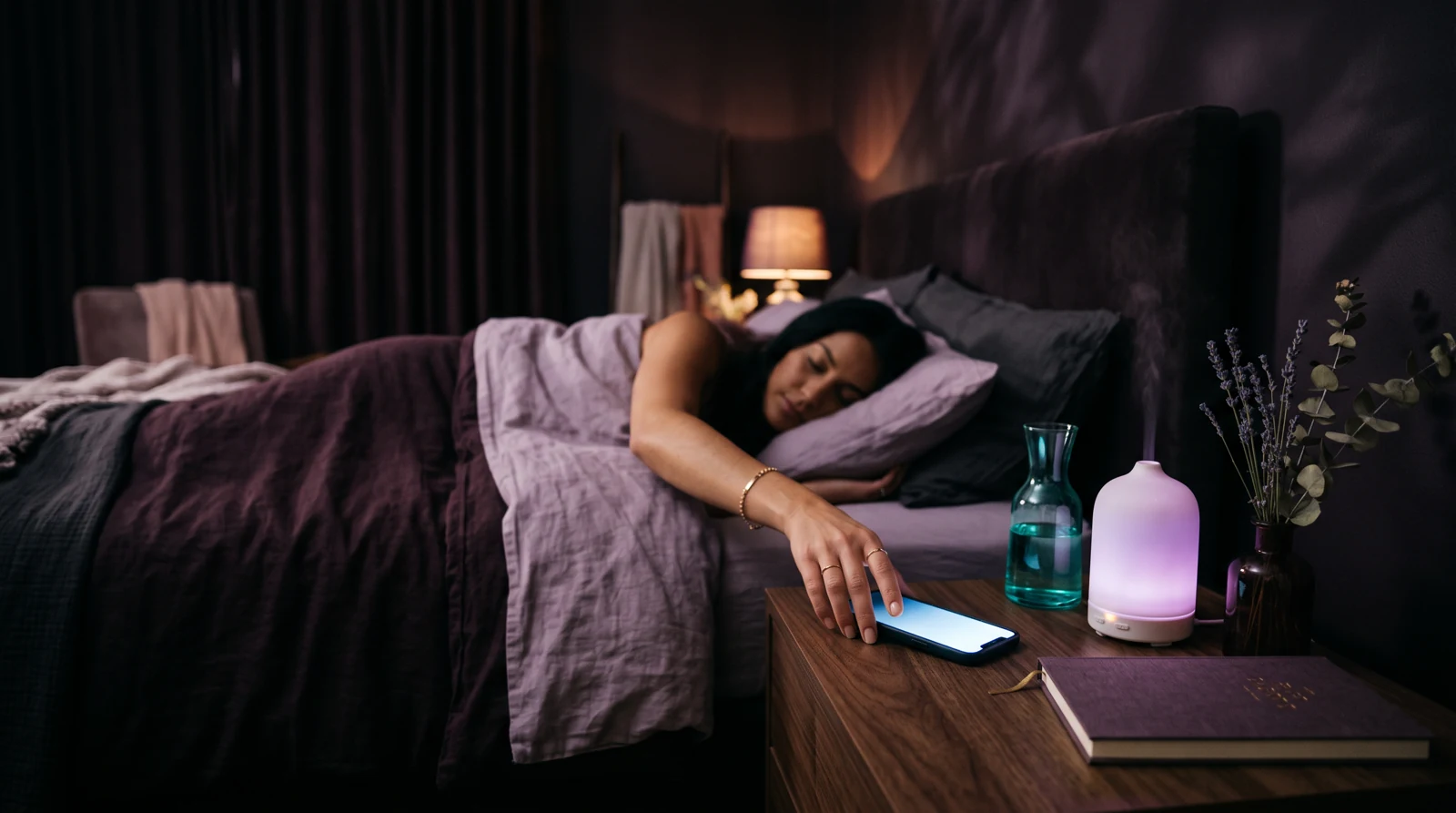
You already know the sermon. No screens before bed. The blue light, the melatonin, the phone that's ruining your sleep and possibly your soul. You've heard it from your doctor, your smartwatch, and an aunt who read one article. And you're reading this on a screen right now, probably in bed, so let's have an honest conversation instead of another finger-wag. The real story is more interesting than the headline, and it changes what you should actually do tonight.
The part that's true
Light, especially the cool blue-white kind screens throw off, is the strongest signal your internal clock has for telling day from night. Get a dose of it late and your brain reads it as: still daytime, hold the melatonin. Melatonin is the hormone that rises in the evening to tell your body it's bedtime, and delaying it delays the whole descent into sleep.
This isn't a vibe; it's been measured carefully. In a controlled study, people read on a light-emitting e-reader for a few hours before bed on some nights and a print book on others. On the screen nights they took longer to fall asleep, their melatonin release was suppressed and pushed later, they got less REM sleep, and, the part that ruins the next day, they were sleepier and slower to wake the following morning even after a full night in bed (Chang et al., 2015, PNAS). So yes, the mechanism is real, and the cost isn't just falling asleep late. It's a duller morning attached to it.
The part the sermon leaves out
Now the nuance nobody puts in the scary headline. That study used hours of bright, close-range screen reading, right up to lights-out, in a controlled lab. That's a heavy dose. Light's effect depends on how bright it is, how close to your eyes, what color, and how long, and a dim phone held at arm's length for ten minutes is a very different exposure than a tablet inches from your face for three hours. The physics scale. So does the damage.
And here's the thing the blue-light industry doesn't advertise: for a lot of people, the light is the smaller problem. The bigger one is what the screen is doing to your head. A book relaxes you toward sleep. A group chat, a work email that can't be unread, a news feed engineered to keep you scrolling, and a cliffhanger episode do the opposite. They're built to be activating, and an activated brain doesn't care what wavelength woke it up. I can be wide awake at midnight from a stressful text on the world's warmest amber screen. The photons were never the issue.
For a lot of us the problem isn't the blue light. It's the content lit up behind it.
Why blue-light glasses are mostly theater
This is where I lose the gadget crowd. Blue-light-blocking glasses and night-shift screen filters address exactly one of the four things that matter, the color, and leave brightness, duration, and, above all, content completely untouched. Amber-tinting your feed so you can doom-scroll in a cozier hue is treating the paint when the engine's the problem. Some people report they help; I'd bet a fair chunk of that is placebo plus the fact that anyone who buys them is at least thinking about their sleep. If they nudge you toward a better routine, fine. Just don't mistake the tint for the fix.
What actually moves the needle
Strip away the marketing and a short list of boring, effective moves remains. Give yourself a real buffer, thirty to sixty minutes of no screens before you want to be asleep; that window matters more than any filter. Dim everything as the evening goes, the room and the devices both, because your clock reads total light, not just the phone. Be ruthless about what you let in late: swap the feed and the work inbox for something that doesn't fight back, a real book, a slow show you've seen before, a podcast with your eyes shut. And get the phone off the nightstand, because the strongest thing it does to your sleep isn't the glow, it's being within arm's reach at 3 a.m.
The screen that helps instead of fights
I'm not going to pretend I read paper novels by candlelight; I don't, and neither will you. The move isn't zero screens, it's swapping the activating screen for a boring one. This is honestly why I built my own wind-down around visual textures instead of willpower. On nights my brain wants to keep opening tabs, I put on Feelsy, drop the brightness low, and let a slow slime or fluid texture with a quiet soundscape hold my attention while it winds down, autoplay drifting from one calm scene to the next so I'm not tapping the screen awake. It's still a screen. But it's a dim, going-nowhere one with nothing to argue with, which is about as close to a print book as a glowing rectangle gets. Pair it with the buffer and the dim room, and you've done the parts that the research says count.
So no, you don't have to swear off screens like it's a moral failing. You have to be smart about brightness, timing, and especially what's on them. Do that, and the phone stops being the thing between you and sleep.
Feelsy is a wellness product, not medical advice. If stress, anxiety or sleep problems persist, please speak with a qualified professional.
References
- Chang, A. M., Aeschbach, D., Duffy, J. F., & Czeisler, C. A. (2015). Evening use of light-emitting eReaders negatively affects sleep, circadian timing, and next-morning alertness. Proceedings of the National Academy of Sciences, 112(4), 1232-1237.
Frequently Asked Questions
Does screen time before bed really wreck your sleep?
Yes, but the effect depends heavily on brightness, distance from your eyes, and duration. A controlled study found that people reading on a light-emitting e-reader for hours before bed took longer to fall asleep, had suppressed and delayed melatonin, got less REM sleep, and were sleepier the next morning compared to reading a print book. That said, a dim phone held at arm's length for ten minutes is a very different exposure than hours of close-range screen reading.
Is it the blue light or the content that ruins sleep?
For a lot of people, the content matters more than the light itself. A group chat, an unresolved work email, or a stressful news feed are built to be activating, and an activated brain doesn't care what wavelength woke it up. The article's author notes being kept awake at midnight by a stressful text even on a warm amber screen.
Do blue-light blocking glasses actually help sleep?
Blue-light glasses and night-shift filters only address color, one of four things that matter, while leaving brightness, duration, and content untouched. Some people report benefits, but much of that may be placebo or simply that buying the glasses makes someone more mindful of sleep in general. They aren't a substitute for a real screen buffer before bed.
What actually helps reduce the impact of screens before bed?
Give yourself thirty to sixty minutes without screens before you want to sleep, dim the room and devices as the evening goes on, and swap activating content like feeds and work email for something that doesn't fight back, such as a real book or a rewatched show. Keeping the phone off the nightstand also helps, since being within arm's reach at 3 a.m. is often worse than the glow itself.

About the author
Contributing writer
Kurt is a New York based writer covering the practical science of stress, sleep and focus. He is the resident sceptic of the Journal: if a technique cannot survive a crowded subway commute and a deadline week, he is not interested in it.
Feel it for yourself.
Feelsy turns reading about calm into practising it. Two minutes of a slow texture is often the whole difference.


Related reading
 Sleep
SleepHow to Fall Asleep Faster: Sound, Light and Ritual
Falling asleep is a skill, not a stroke of luck. Here is how sound, light and a 15-minute ritual can quiet a racing mind and shorten the trip to sleep.
 Sleep
SleepHow to Stop Racing Thoughts at Night
Racing thoughts at night are a habit the brain can unlearn. Here is why minds speed up at bedtime and the techniques that quiet them, step by step.
 Sleep
SleepHow Long Should a Nap Be? The Science of Waking Up Better
Ten minutes, twenty, ninety? Nap length decides whether you wake up sharp or wrecked. Here's what sleep research says about the ideal nap, and how to time it.
 SleepNew
Night Owl vs Early Bird: The Science of Chronotypes
Night owl or early bird isn't a personality flaw or a virtue. It's a chronotype. Here's what the science says about your body clock and how to work with it.
 SleepNew
How to Wake Up Early (Without Hating Your Life)
Want to become a morning person? Here's how to wake up early using light, timing and consistency, based on what circadian science actually shows.
 Sleep
SleepCan't Sleep? Why Getting Out of Bed Is the Counterintuitive Fix
Lying awake trying harder is the one thing that makes insomnia worse. Here's the 20-minute rule, the science of stimulus control, and how to use it.