Rock Balancing: Why Stacking Stones Calms the Mind
Why balancing stones calms a busy mind: the quiet art of rock stacking, what it teaches about attention and letting go, and how to begin respectfully.
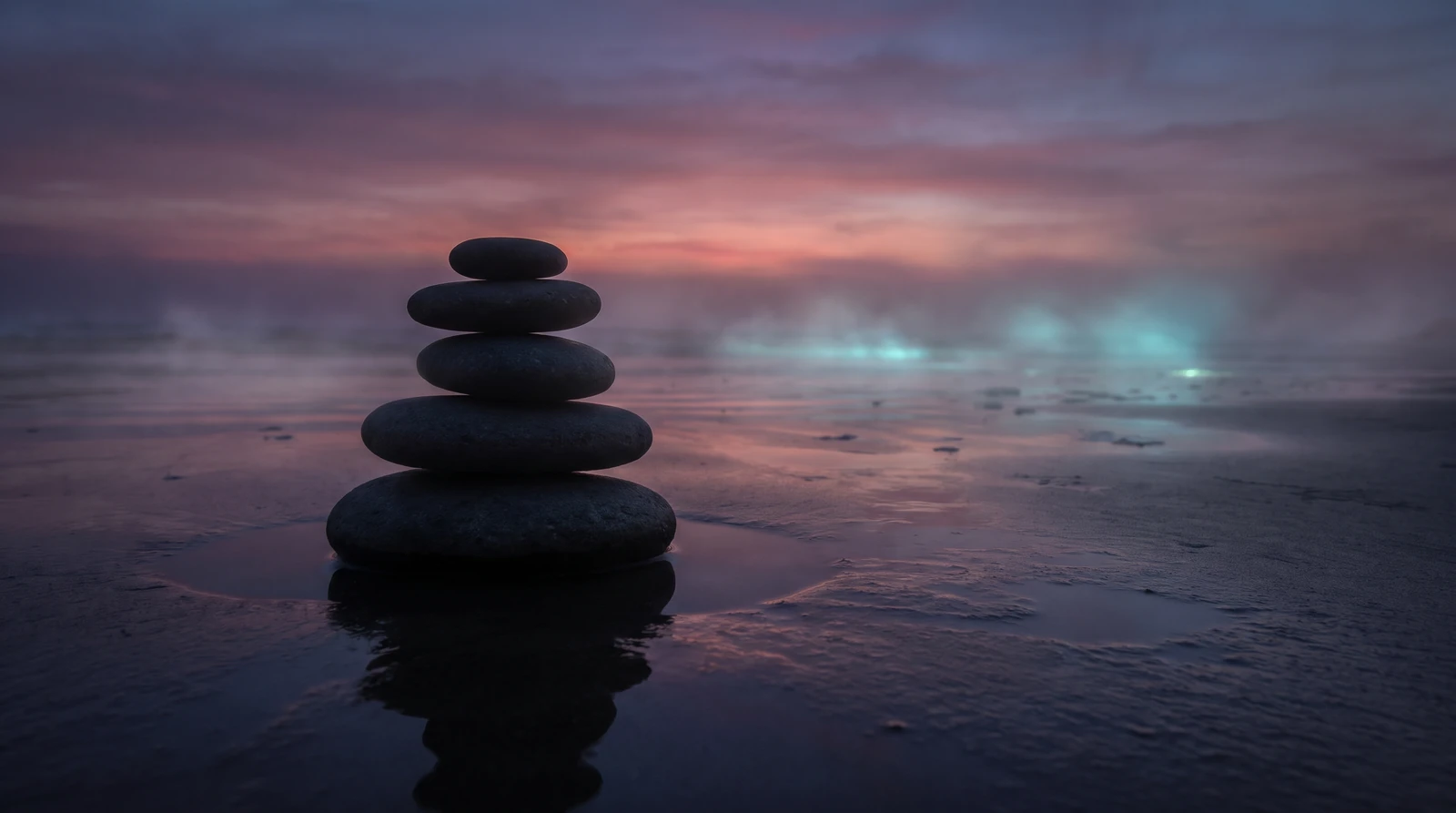
You have seen them, even if only in photographs: improbable towers of stone standing on a riverbank or a tideline, each rock resting on the one below at an angle that looks like a conjuring trick. No glue, no pins, no trickery. Just gravity, patience, and someone who stood very still for a long time, listening with their fingertips.
Rock balancing, the practice of stacking stones so they hold by balance alone, has become a quiet global pastime, and the people who do it talk about it less like a hobby and more like a meditation. They are not wrong. Few activities concentrate the scattered mind as completely, or teach the art of letting go as literally, as persuading two stones to agree.
An old impulse
Humans have been setting stone upon stone for as long as we have had hands. Cairns have marked trails, summits, boundaries and graves across almost every culture with rocks to spare: hilltop waymarkers in Scotland, trail cairns in mountain ranges the world over, prayer-stone heaps along Himalayan passes. Stacking stones has long been a way of saying, in the most durable material available, someone was here, and this place matters.
The modern meditative version keeps the gesture but drops the permanence. Contemporary balancers build towers that are meant to fall, photographing them at most, then returning the stones to where they lay. What remains is the process: a slow negotiation with weight and gravity that cannot be rushed, outsourced or faked.
What the practice asks of you
Balancing a stone is an exercise in total attention. Every rock, however rough, has small hollows and ridges where another stone can seat itself, and finding that point is done less with the eyes than with the hands. You hold the upper stone lightly, move it by millimetres, and wait for the moment the weight goes quiet, a tiny click of stillness that balancers describe the way musicians describe a note finding its pitch.
You cannot balance a stone while thinking about your inbox. The stone is a lie detector for attention, and it only stands when you are entirely there.
That feedback is what makes the practice meditative rather than merely fiddly. A wandering mind shows up instantly as a wobble; a settled one is rewarded with the small miracle of a rock standing where no rock should. Attention is not being demanded by an instructor or an app, it is being required by physics, which turns out to be a far more persuasive teacher.
Why it settles the mind
The ingredients will be familiar to anyone who has read about flow: a clear goal, immediate feedback, difficulty poised just at the edge of ability. The hands are occupied, the stakes are gentle, and the senses are full of pleasantly simple information, cool stone, running water, the weight shifting across your palm. There is no score and no audience, and the task absorbs exactly as much attention as you can give it.
It is also, quietly, a visual meditation. A finished balance is a strange and restful thing to look at: mass made weightless, order conjured from rubble, stillness that is visibly provisional. Like watching a candle flame or falling sand, the eye rests on it precisely because it is simple, slightly improbable, and entirely without demand.
Letting the tower fall
Every balanced stack ends the same way. A breeze, a tremor, a dog with ambitions, and the tower returns to being a scatter of stones. Balancers learn early that this is not the sad part of the practice but the point of it. Like the sand mandalas swept away upon completion, a stone balance is beauty with a built-in goodbye, and building one is a rehearsal for holding things, plans, days, moods, without gripping.
There is a lesson about effort hidden in there too. A stone cannot be forced to balance; push harder and it resists more. It can only be listened to, adjusted for, and finally trusted. People who spend an hour at it tend to come away suspecting that a good deal of life works on the same terms.
How to begin, respectfully
You need no equipment beyond a pocketful of patience. Find a handful of stones with some variety, flatter ones for the base, rounder ones for the challenge, and a quiet spot where you can work undisturbed. Start with two stones, feel for the seat where the upper one wants to rest, and build upward only when each layer feels honest. Expect collapses; they are the curriculum.
One courtesy matters. In some fragile or protected landscapes, moving stones disturbs habitats, erodes soil and confuses the cairns that genuinely mark trails, so check local guidance, avoid building near official waymarkers, and when you finish, gently unmake your tower and return the stones roughly where they came from. The practice is the balancing, not the monument, and leaving no trace is part of its grammar.
Stone stacking without the stones
City evenings do not always offer a riverbank. The watching half of the practice, the restful gaze at slow, improbable order, travels indoors easily: a few minutes with a drifting Feelsy texture, particles settling and reforming in soft light, gives the eyes the same unhurried, low-stakes spectacle, and pairs well with a slow breath at the end of a loud day. But if you ever find yourself near water with time to spare, pick up two stones and introduce them. The conversation is slower than any app, and very old, and it has a way of leaving the mind exactly where the stones end up: improbably, briefly, perfectly still.
Feelsy is a wellness product, not medical advice. If stress, anxiety or sleep problems persist, please speak with a qualified professional.
Frequently Asked Questions
What is rock balancing?
Rock balancing is the practice of stacking stones so they hold together through balance alone, with no glue or supports. Each stone rests on tiny natural hollows and ridges in the one below, found mostly by feel. Practitioners treat it as a moving meditation: the task requires such complete attention that everyday mental chatter falls away while you work.
Why is stacking stones so calming?
It combines the classic ingredients of flow: a clear goal, instant feedback and a challenge right at the edge of your ability. A wandering mind shows up immediately as a wobble, so the stones effectively require presence. The senses are occupied with simple, pleasant information, cool stone and shifting weight, and there is no score, no audience and no hurry.
How do I start rock balancing as a beginner?
Gather a few stones with some variety, flatter ones for a base and rounder ones for the challenge, and find a quiet spot. Start with just two stones: hold the upper one lightly, move it by millimetres, and feel for the point where the weight goes quiet and it seats itself. Build upward slowly, and expect plenty of collapses, which are part of the learning.
Is it okay to stack stones anywhere?
Not quite. In fragile or protected landscapes, moving stones can disturb habitats, erode soil and confuse the cairns that genuinely mark trails. Check local guidance, never build near official waymarkers, and when you finish, gently unmake your tower and return the stones roughly where you found them. The meditation is in the balancing itself, not in leaving a monument.
What does rock balancing teach about letting go?
Every balance eventually falls, and balancers treat that as the point rather than the loss. Like sand mandalas swept away after completion, a stone tower is beauty with a built-in goodbye, so building one rehearses holding things lightly. The stones also refuse force: push harder and they resist, so the practice trains listening and adjusting over gripping and insisting.

About the author
Contributing writer
Eleonor writes about contemplative traditions, attention and the cultural history of calm. She has spent two decades collecting the rituals humans use to slow down, from zazen halls to hammams, and translating them for modern, screen-lit lives.
Feel it for yourself.
Feelsy turns reading about calm into practising it. Two minutes of a slow texture is often the whole difference.


Related reading
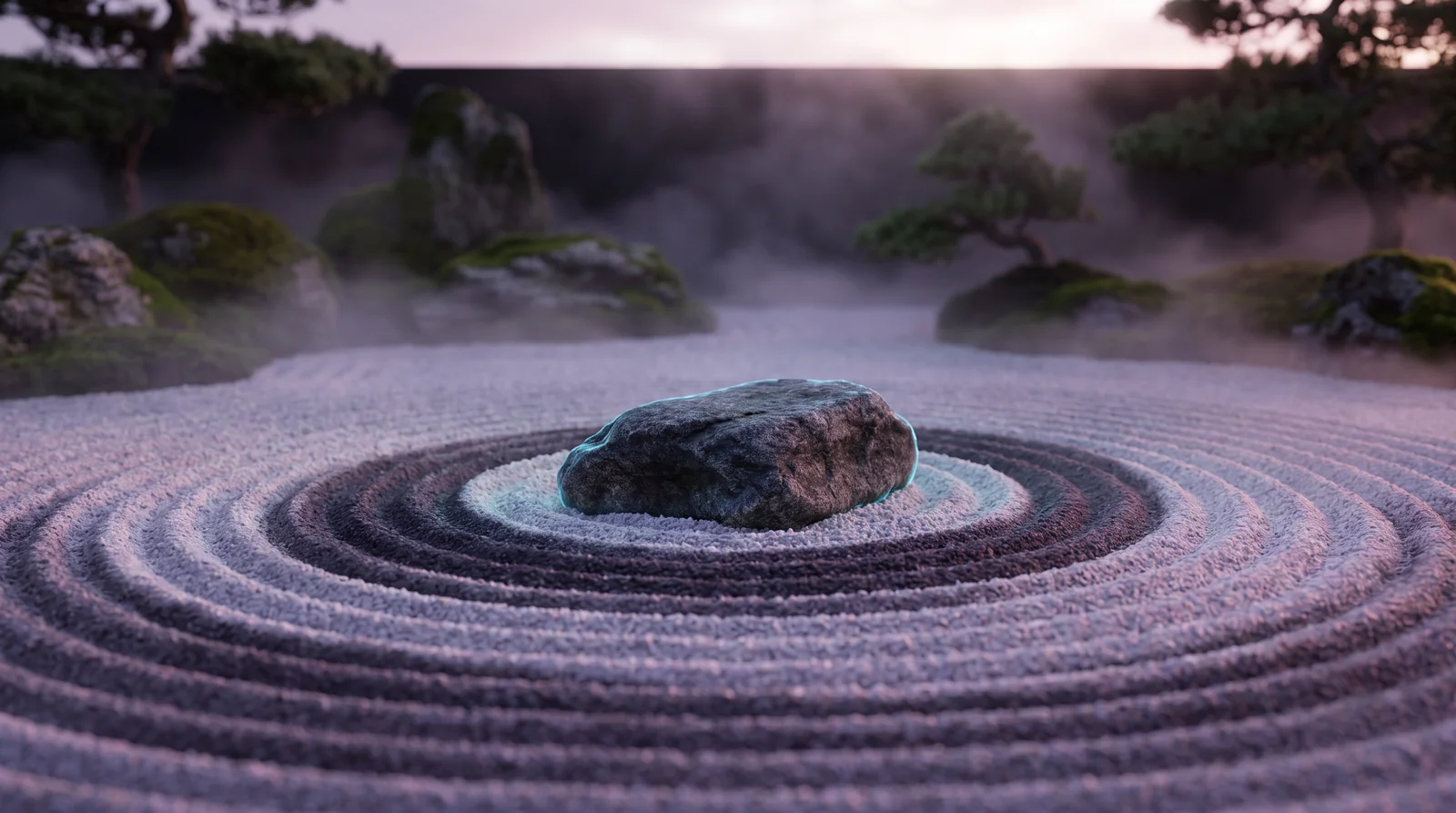 Ancient Wisdom
The Zen Garden: Why Raking Gravel Stills the Mind
What a zen garden is and why it calms: the history of karesansui, the perception science of Ryoan-ji, and a way to practise dry-garden attention at home.
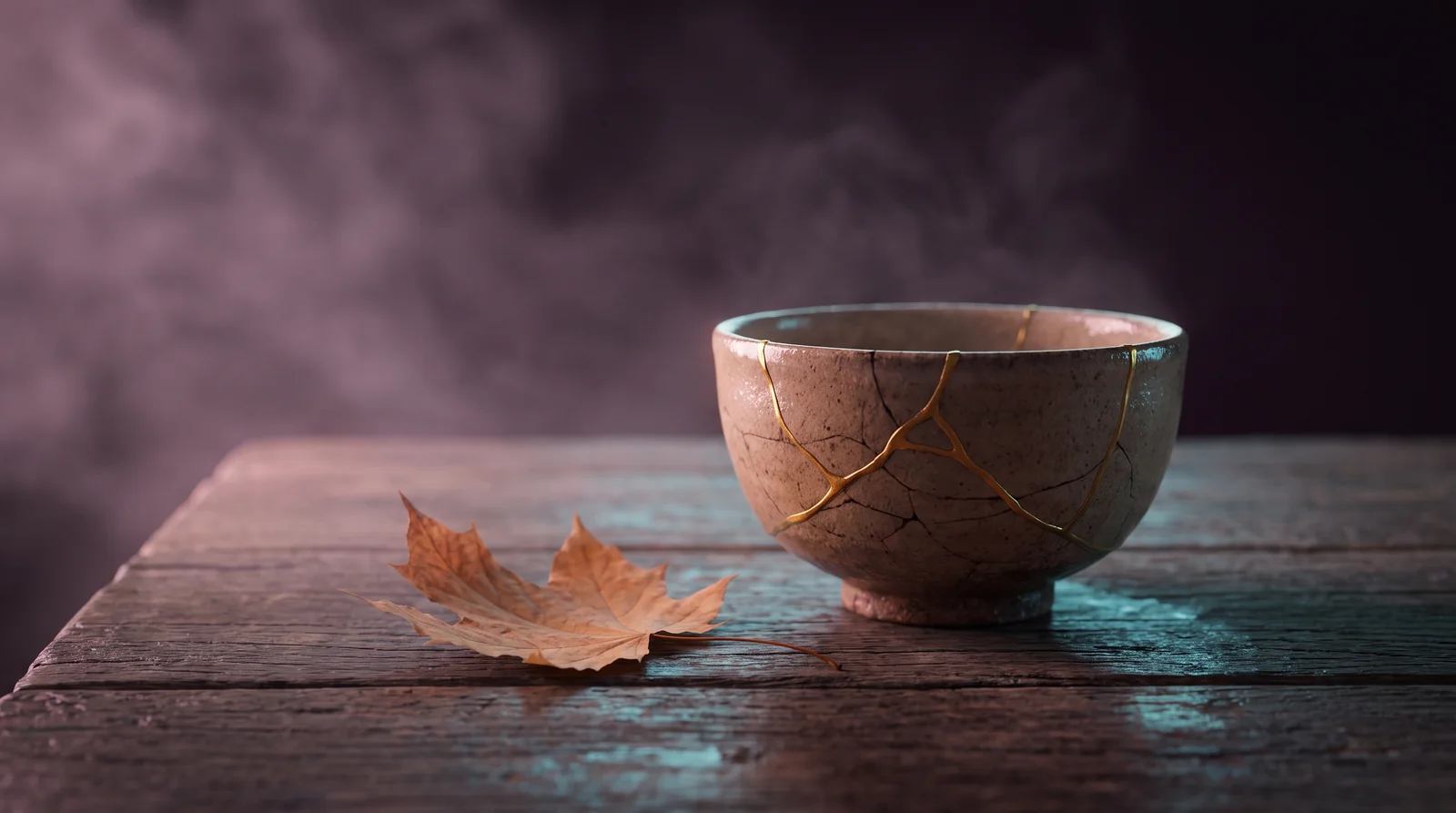 Ancient Wisdom
Wabi-Sabi: The Japanese Art of Finding Calm in Imperfection
What wabi-sabi really means: the Japanese aesthetic of imperfect, impermanent beauty, and how its quiet philosophy softens perfectionism and stress.
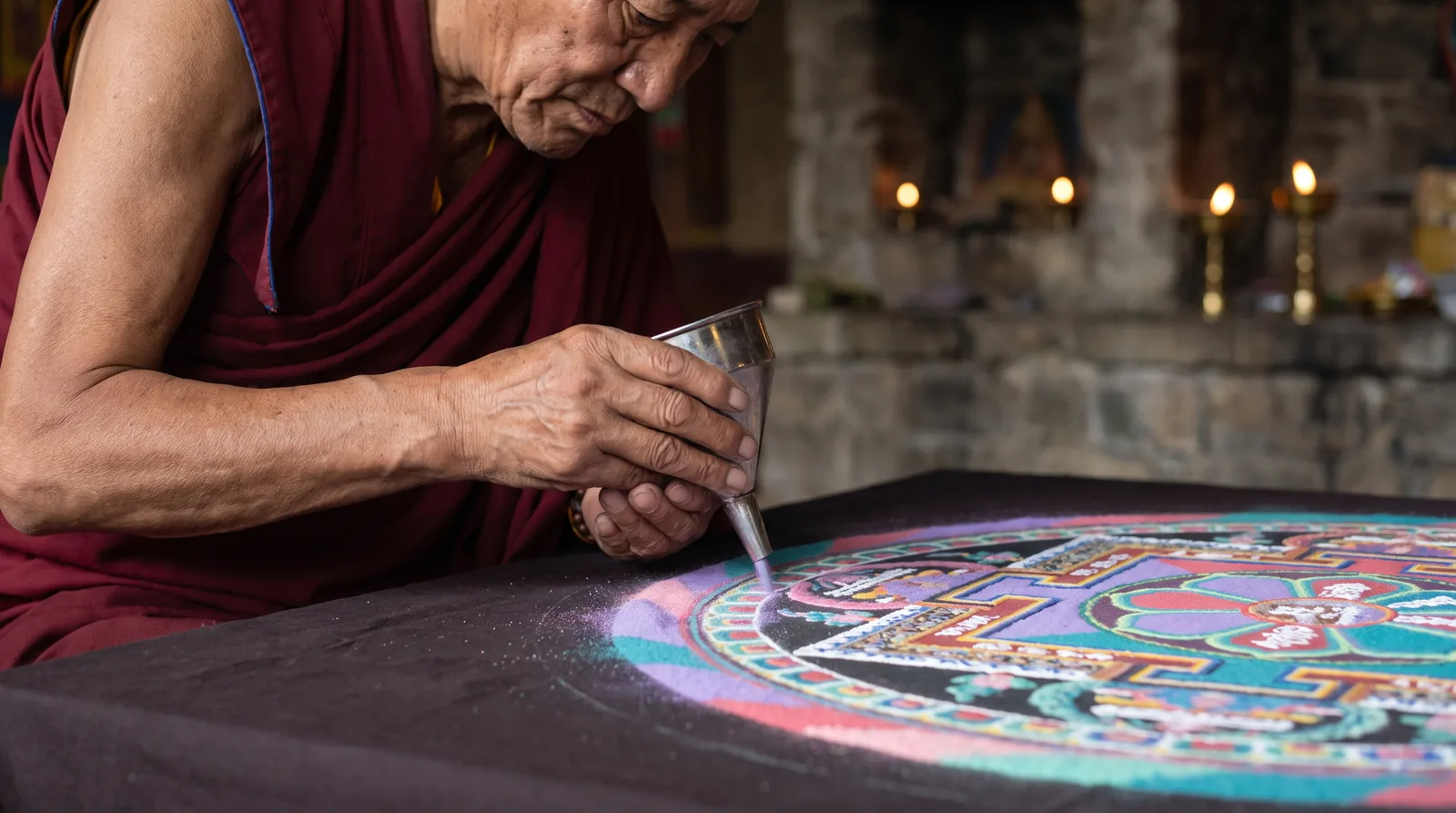 Ancient Wisdom
Sand Mandalas and the Art of Letting Go
Tibetan monks spend days building an intricate sand mandala, then sweep it away. What the ritual teaches about impermanence, process and why watching can be meditation.
 Visual MeditationNew
Apricity: The Forgotten Pleasure of Winter Sun
Apricity is a forgotten English word for the warmth of the sun in winter. Here is why a few minutes of low winter sunlight can soften the darkest months.
 Visual MeditationNew
Momijigari: The Japanese Art of Autumn Leaf Viewing
Momijigari is the old Japanese tradition of travelling to see autumn leaves. Here is why fiery foliage calms the mind, and how to practise it anywhere.
 Visual MeditationNew
Why Libraries Feel So Calming
Step into a library and your shoulders drop. Here is the psychology of hush, tall shelves and shared silence, and how to borrow that feeling for your rooms.