Does the Sleepy Girl Mocktail Actually Work?
Tart cherry juice, magnesium, and fizz: the viral sleep drink unpacked. Which ingredients have real evidence behind them and what is actually doing the work.
By Kurt Woleret
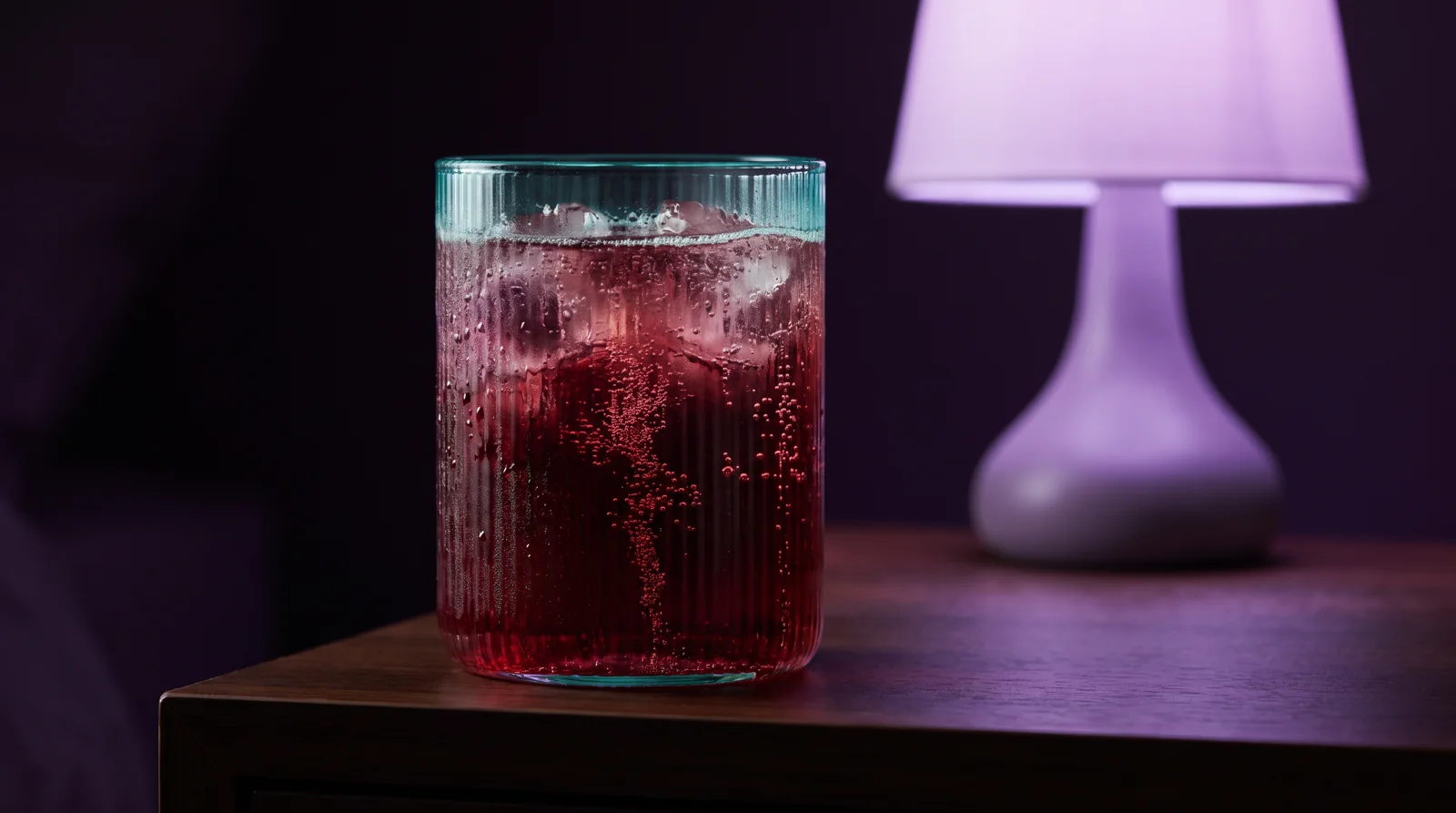
Somewhere between the mouth tape and the $400 sunrise alarm, the internet produced a sleep trend that is, against all odds, kind of reasonable. The sleepy girl mocktail: tart cherry juice, a scoop of magnesium powder, topped with sparkling water, served over ice in your most photogenic glass. It's cheap, it's pretty, and millions of people swear it knocks them out. I'm the resident skeptic here, so let's do what we do: take the glass apart, ingredient by ingredient, and see which parts are doing actual work.
The recipe, for the record
The canonical version is about half a cup of tart cherry juice, one serving of magnesium powder, and sparkling water to fill, over ice, 30 to 60 minutes before bed. Variations abound, but those are the three claims standing on the podium: cherry, magnesium, ritual fizz.
Tart cherry: the strongest card in the deck
Surprisingly, the juice has real research behind it. Tart cherries, specifically the Montmorency variety, naturally contain melatonin, the hormone your brain uses to signal that night has arrived. In a 2012 study in the European Journal of Nutrition, Glyn Howatson and colleagues ran a placebo-controlled trial of tart cherry juice concentrate taken twice daily for a week. The cherry group showed elevated melatonin levels and modest but measurable gains: roughly 25 minutes more total sleep and better sleep efficiency compared to placebo. Small study, short duration, modest numbers, but it's a real signal from a real trial, which is more than most viral sleep hacks can produce when you knock on the door. For context, this puts tart cherry in rare company; most things that go viral as sleep cures can't point to a single controlled trial that went their way.
Keep the word modest in frame, though. Twenty-five minutes is nice. It is not the transformation the comment sections describe, and the study used concentrated juice twice a day, not a splash in seltzer at bedtime.
Magnesium: the shakiest card
Magnesium does matter for sleep regulation, and genuinely low magnesium can mess with your nights. The catch: if you eat reasonably well, you're probably not deficient, and the evidence that extra magnesium improves sleep in people with normal levels is thin and mixed. Form matters too; some common forms are better known for their effects on your morning commute than your night's rest. We've covered the full magnesium picture separately, but the short version is: plausible helper for some people, not a universal sedative, and more is not better.
The fizz is not decorative
The most active ingredient might be the ritual.
Here's the part the ingredient debates miss. Making the same pretty drink at the same time every night is a wind-down cue, and wind-down cues are legitimately powerful. Your brain is an association machine: do a calm, pleasant, repeatable thing before bed for a few weeks and the thing itself starts triggering drowsiness, the way your gym shoes make you feel slightly tired just looking at them. The mocktail forces you to stop, go to the kitchen, make something slowly, and sip it instead of scrolling. That behavioral package would help even if the glass contained nothing but cold water and commitment.
But isn't that just placebo?
Partly, probably, and I'd like to defend placebo's honor for a second. When the outcome you're chasing is subjective relaxation, expecting to feel calmer genuinely helps you feel calmer; that's not fraud, that's how the machine works. Insomnia feeds on the fear of insomnia, so a pretty ruby drink that convinces you tonight is handled takes a competitor off the field. The trouble only starts when a trend's claims outrun its ingredients, and people skip the boring fundamentals because the glass was supposed to do everything. Enjoy the placebo. Just don't let it negotiate away your bedtime.
The fine print
A few honest caveats before you stock up. Cherry juice carries real sugar, which matters if you're watching intake. Finishing a tall drink right before lying down books you a 3 a.m. bathroom appointment, so earlier is better. Magnesium doses beyond the label's serving can upset your stomach, and anyone with kidney issues or on medication should run supplements past a professional first. And no glass of juice outruns a 4 p.m. cold brew, a doomscroll session, or a bedroom at 78 degrees. It's a garnish on sleep hygiene, not a substitute for it.
If you want to know whether it works for you specifically, run the boring experiment. Two weeks, same recipe, same time each evening, and judge by the mornings, not the vibes at 10 p.m.: how fast you conked out, how often you surfaced, how human you felt at breakfast. Keep everything else steady while you test. If the mornings improve, great, you've bought a real result for the price of juice. If nothing moves, you've saved yourself a subscription to a habit that was only ever photogenic.
The verdict
As viral trends go, this one lands surprisingly well: one modestly evidence-backed ingredient, one plausible-for-some ingredient, and one quietly effective ritual, total cost a few dollars. Fair deal. Just put the drink inside an actual wind-down instead of expecting it to be one: lights low, screen boring, something slow for your eyes and hands. My version is the mocktail plus ten minutes of Feelsy with the brightness down, usually a slow texture on autoplay, sometimes the 4-7-8 exercise when my brain is still writing emails. The cherry juice sets the mood. The wind-down closes the deal.
Feelsy is a wellness product, not medical advice. If stress, anxiety or sleep problems persist, please speak with a qualified professional.
References
- Howatson, G., Bell, P. G., Tallent, J., Middleton, B., McHugh, M. P., & Ellis, J. (2012). Effect of tart cherry juice (Prunus cerasus) on melatonin levels and enhanced sleep quality. European Journal of Nutrition, 51(8), 909-916.
Frequently Asked Questions
What is in a sleepy girl mocktail?
The standard recipe is about half a cup of tart cherry juice, one serving of magnesium powder, and sparkling water poured over ice, taken 30 to 60 minutes before bed. Tart cherry is the ingredient with the most research behind it; the magnesium is more of a maybe, and the nightly ritual itself does real work as a wind-down cue.
Does tart cherry juice really help you sleep?
There's modest evidence it can. Tart cherries naturally contain melatonin, and a 2012 placebo-controlled trial found that a week of tart cherry juice concentrate raised melatonin levels and added roughly 25 minutes of sleep with better sleep efficiency. The effect is real but small, so expect a gentle nudge rather than a knockout.
Do I need the magnesium in the sleepy girl mocktail?
Not necessarily. Magnesium matters for sleep regulation, but if you eat reasonably well you're probably not deficient, and evidence that extra magnesium helps people with normal levels is mixed. Stick to the label's serving if you use it, since larger doses can upset your stomach, and check with a professional if you have kidney issues or take medication.
When should I drink a sleepy girl mocktail?
Aim for 30 to 60 minutes before bed, or a bit earlier. Finishing a tall drink right at lights-out tends to wake you for the bathroom in the middle of the night. The drink works best as the opening move of a wider wind-down: dim lights, a boring screen or none at all, and something slow to settle your attention.

About the author
Contributing writer
Kurt is a New York based writer covering the practical science of stress, sleep and focus. He is the resident sceptic of the Journal: if a technique cannot survive a crowded subway commute and a deadline week, he is not interested in it.
Feel it for yourself.
Feelsy turns reading about calm into practising it. Two minutes of a slow texture is often the whole difference.


Related reading
 Sleep
Magnesium for Sleep: What the Evidence Actually Says
Magnesium is the internet's favorite sleep supplement. Here's what the trials actually found, which forms people use, and what it can't do for you.
 Sleep
Does Melatonin Actually Work? What the Science Says
Melatonin is everywhere, but does it actually work? Here's what meta-analyses show about the famous sleep supplement, and when it helps or doesn't.
 Sleep
How Late Is Too Late for Coffee? Your Caffeine Cutoff, Explained
Caffeine six hours before bed can still cut an hour of sleep. What the research says about your last-cup cutoff, half-lives, and smarter timing.
 Sleep
Falling Back: A Survival Guide for the End of Daylight Saving Time
Clocks fall back this weekend, and the free hour is slightly fake. What the end of daylight saving time really does to your sleep, and how to land it well.
 Sleep
The Best Alarm Sound to Wake Up To, According to Research
Harsh beeping may be making your mornings worse. What research says about the best alarm sound to wake up to, and how to choose one your brain won't fight.
 Sleep
Can You Learn While You Sleep? What the Science Actually Says
Sleep learning is an old dream and mostly a myth, but not entirely. What research really shows about learning, memory and your sleeping brain.