Does Melatonin Actually Work? What the Science Says
Melatonin is everywhere, but does it actually work? Here's what meta-analyses show about the famous sleep supplement, and when it helps or doesn't.
By Kurt Woleret
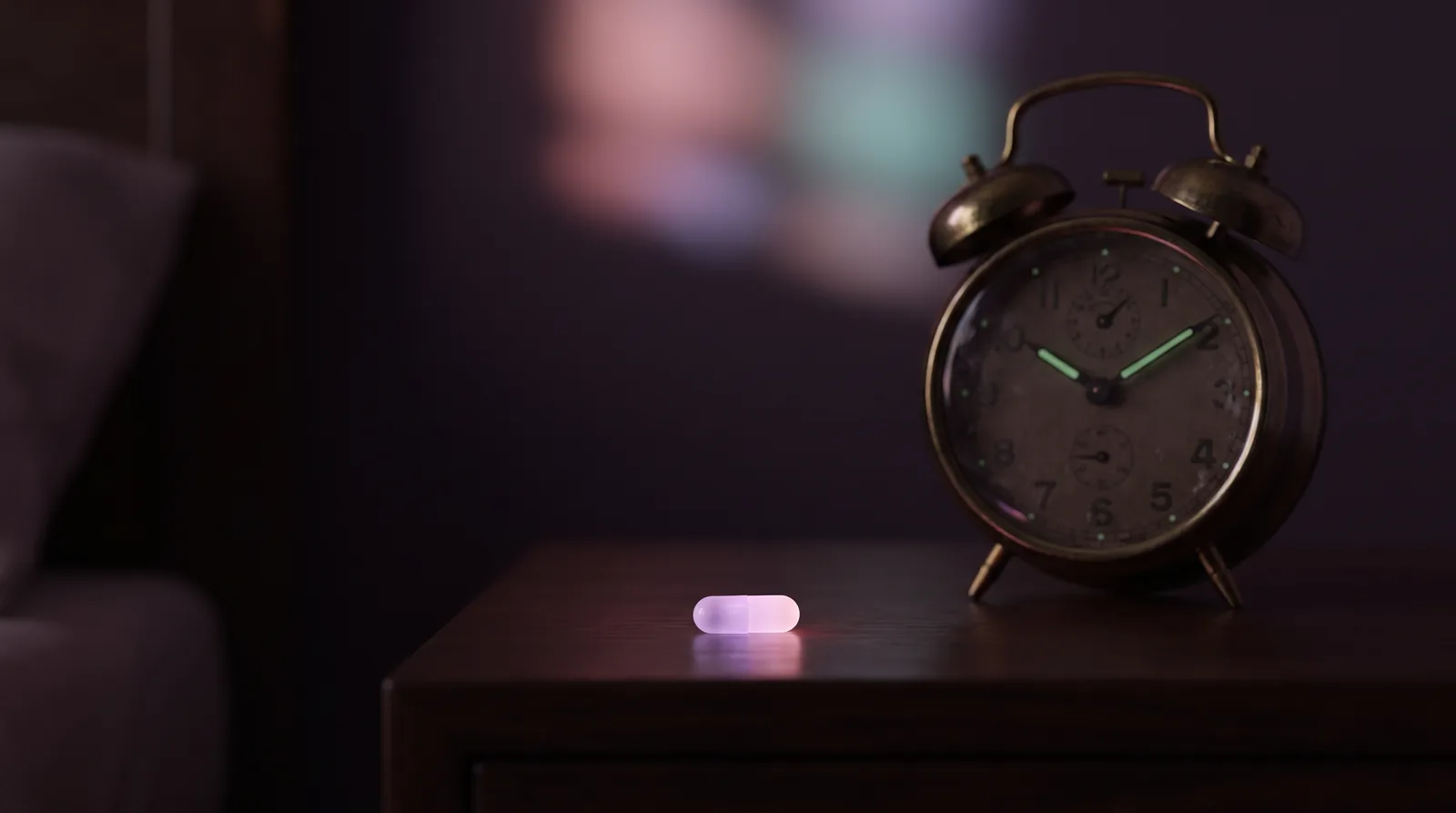
My bodega sells melatonin gummies at the register, between the lighters and the lottery tickets. That's how normalized this stuff has become. It's the unofficial nightcap of every stressed-out city, recommended by coworkers and group chats with total confidence and zero footnotes. So let's do the footnotes. Does melatonin actually work? Short answer: yes, a little, for some things. Longer answer: it's one of the most misunderstood pills in the drugstore, and most people are using it for a job it was never built to do.
What melatonin actually is
First correction: melatonin is not a sedative. It's a hormone your brain already makes every night. When light fades, your pineal gland releases it, and it acts like a memo to the rest of the body: darkness confirmed, night shift begins. It doesn't knock you out. It tells your internal clock what time it is. That distinction matters, because a memo and a tranquilizer are very different tools. Taking melatonin is less like taking a sleeping pill and more like adjusting the clock on the wall and hoping the rest of you follows.
This is why the people who love melatonin and the people who say it does nothing are often both right. If your problem is a clock problem, a mistimed body clock, jet lag, a schedule that slid three hours late during a rough month, the memo helps. If your problem is a noise problem, racing thoughts, stress, a nervous system stuck in fifth gear, you can hand your brain all the memos you want. It's not reading them. It's busy.
What the research actually shows
The most cited evidence is a meta-analysis by Ferracioli-Oda and colleagues in PLOS One, which pooled randomized trials of melatonin for primary sleep disorders. The results were positive, and modest to the point of comedy. On average, people taking melatonin fell asleep about seven minutes faster and slept about eight minutes longer than people taking placebo, with a small improvement in overall sleep quality. Seven minutes. That's real, it's statistically solid, and it is not the miracle your coworker described.
Melatonin buys the average person about seven minutes. The wind-down routine you skip while waiting for it to kick in is worth more.
The authors made another point that gets less airtime: the effects, while smaller than prescription sleep drugs, come with a milder side effect profile, which is why melatonin keeps earning a place in the conversation. It's a gentle nudge with a gentle cost. The mistake is expecting a shove.
Where melatonin earns its keep
Melatonin is at its best when your clock and your life disagree. Flying across time zones and need your body to accept a new bedtime? That's a clock problem. Working rotating shifts? Clock problem. Drifted into a 3 a.m. bedtime during vacation and now can't drift back? Clock problem. In these cases you're not trying to sedate yourself, you're trying to reschedule yourself, and a well-timed dose of the darkness hormone is a reasonable tool for that specific job.
Timing beats dosage here, and this is where most people get it backwards. Swallowing a horse-sized gummy at midnight when you're already in bed and wide awake is the least effective way to use it. The clock-shifting effect works best from a smaller dose taken well before your target bedtime, giving the signal time to land. More milligrams at the wrong hour is just louder static.
Where it falls apart
Now the uncomfortable part. Most people I know aren't taking melatonin for jet lag. They're taking it because their brain won't shut up at 11 p.m., and for that, the evidence is thin and the logic is worse. Stress-driven sleeplessness is an arousal problem. Your alerting system is overriding your sleep drive, and melatonin doesn't touch the alerting system. It's a calendar app trying to win an argument with a fire alarm.
There are also practical headaches worth knowing:
- Supplements are loosely regulated, and studies of store-bought melatonin have found actual doses that differ wildly from the label. Your 5 mg gummy is a rumor, not a measurement.
- Doses sold on shelves are often far higher than what research used. More is not better; it's just more, sometimes with grogginess attached the next morning.
- Nightly reliance can become a ritual crutch: the pill becomes the only cue your brain accepts for sleep, which is a fragile place to put all your chips.
What to do instead, or alongside
If your clock is fine and your head is loud, the winning moves are the boring ones. Dim the lights an hour out, since bright evening light suppresses the exact hormone you're buying at the bodega. Close the work. Give your eyes something slow instead of a feed: I run Feelsy's autoplay mode on my nightstand, soft textures drifting in the dark, which gives the restless channel of my attention something to hold without waking the rest of me up. And give your body a real downshift signal: two or three minutes of slow breathing with long exhales. Feelsy's guided 4-7-8 exercise paces it for you, which at midnight is exactly the amount of thinking I want to do: none.
If you do try melatonin, treat it like an experiment. Small dose, taken early, consistent bedtime, for a couple of weeks. If nothing changes, you have your answer, and it cost you less than a month of gummies.
The bottom line
Melatonin works, for the thing it actually does. It's a clock-setter with a modest, well-documented effect, not a sedative and not a placebo. Use it to move your sleep schedule, not to fight your stress. And if sleeplessness is a most-nights thing for a month or more, that pattern deserves a professional conversation, not a bigger gummy.
Feelsy is a wellness product, not medical advice. If stress, anxiety or sleep problems persist, please speak with a qualified professional.
References
- Ferracioli-Oda, E., Qawasmi, A., & Bloch, M. H. (2013). Meta-analysis: Melatonin for the treatment of primary sleep disorders. PLOS One, 8(5), e63773.
Frequently Asked Questions
Does melatonin actually work for sleep?
Yes, but modestly. A meta-analysis of randomized trials found people taking melatonin fell asleep about seven minutes faster and slept about eight minutes longer than with placebo, with a small improvement in sleep quality. It helps most with body-clock problems like jet lag and shifted schedules, and least with stress-driven sleeplessness.
When should I take melatonin?
Earlier than you think. Melatonin works as a timing signal, not a knockout pill, so a smaller dose taken well before your target bedtime beats a large dose swallowed at midnight when you're already frustrated. Taking it late at the wrong hour mostly adds next-morning grogginess.
Is a higher dose of melatonin better?
No. Research effects were achieved with modest doses, and store shelves often sell far more than that. Supplements are loosely regulated, so labeled doses can differ a lot from what's in the gummy. More milligrams at the wrong time doesn't shift your clock harder; it just costs more and can leave you groggy.
Why doesn't melatonin work for my racing thoughts?
Because racing thoughts are an arousal problem, and melatonin doesn't touch your brain's alerting system. It tells your body clock what time it is, which is useless when stress is overriding the sleep signal. A wind-down ramp with dim light, slow breathing with long exhales, and a calm visual focus addresses the actual problem.
Is it okay to take melatonin every night?
It has a milder side effect profile than prescription sleep drugs, which is part of its appeal, but relying on it nightly for stress-related sleeplessness usually means treating the wrong problem. If you need something every night for a month or more to sleep, that pattern is worth discussing with a professional.

About the author
Contributing writer
Kurt is a New York based writer covering the practical science of stress, sleep and focus. He is the resident sceptic of the Journal: if a technique cannot survive a crowded subway commute and a deadline week, he is not interested in it.
Feel it for yourself.
Feelsy turns reading about calm into practising it. Two minutes of a slow texture is often the whole difference.


Related reading
 Sleep
SleepTired but Can't Sleep? Why You're Wired at Bedtime
Exhausted all day, wide awake at midnight. Here's the science of being tired but wired, and what actually works to switch your brain off at bedtime.
 Sleep
SleepHow to Fall Asleep Faster: Sound, Light and Ritual
Falling asleep is a skill, not a stroke of luck. Here is how sound, light and a 15-minute ritual can quiet a racing mind and shorten the trip to sleep.
 Sleep
SleepHow Late Is Too Late for Coffee? Your Caffeine Cutoff, Explained
Caffeine six hours before bed can still cut an hour of sleep. What the research says about your last-cup cutoff, half-lives, and smarter timing.
 SleepNew
Night Owl vs Early Bird: The Science of Chronotypes
Night owl or early bird isn't a personality flaw or a virtue. It's a chronotype. Here's what the science says about your body clock and how to work with it.
 SleepNew
How to Wake Up Early (Without Hating Your Life)
Want to become a morning person? Here's how to wake up early using light, timing and consistency, based on what circadian science actually shows.
 Sleep
SleepCan't Sleep? Why Getting Out of Bed Is the Counterintuitive Fix
Lying awake trying harder is the one thing that makes insomnia worse. Here's the 20-minute rule, the science of stimulus control, and how to use it.