Vipassana Meditation: A Beginner's Guide to Seeing Clearly
What vipassana meditation is, how insight practice differs from other techniques, and how to begin observing breath and sensation at home tonight.
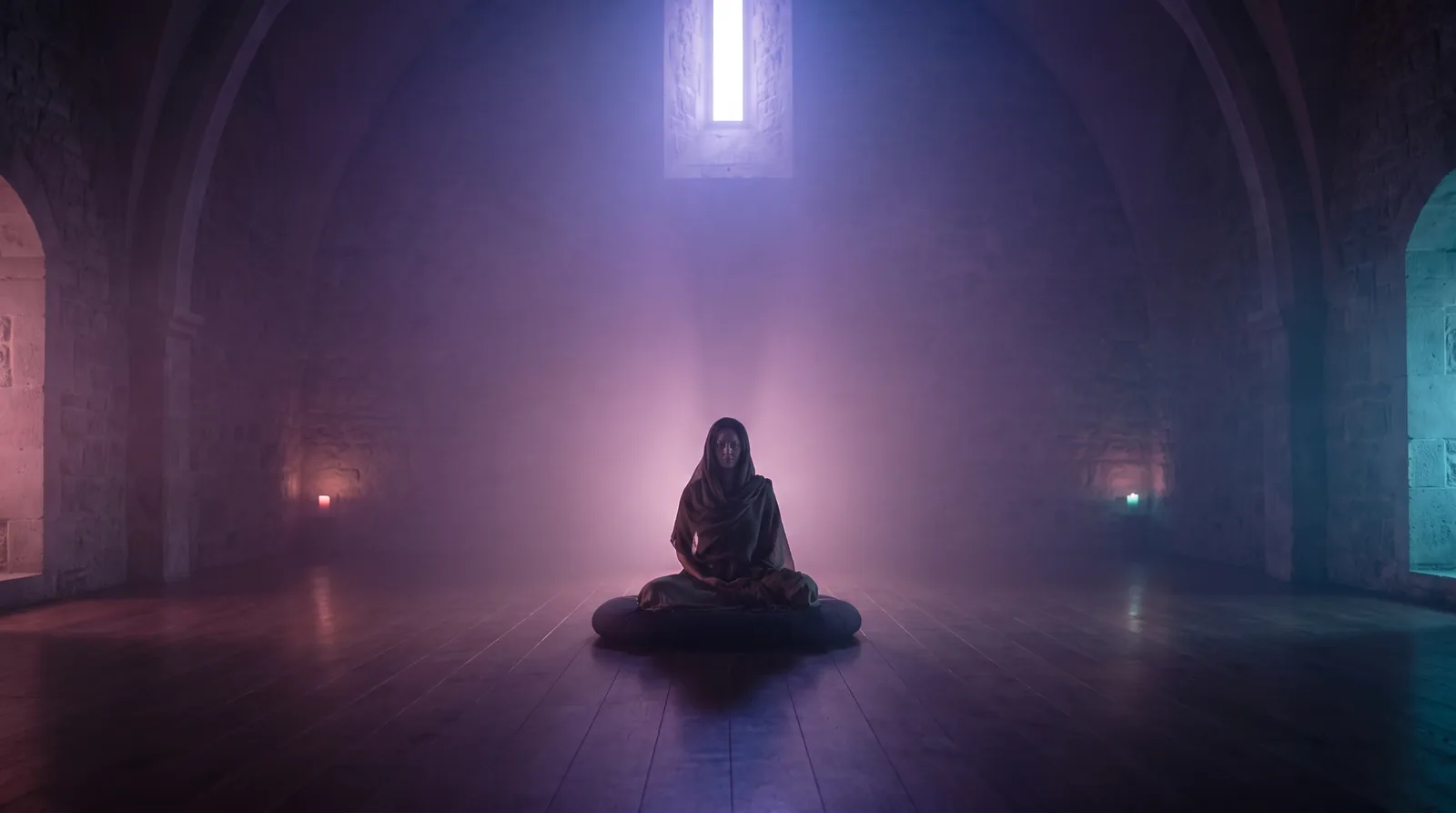
Of all the meditation traditions that have crossed from Asia into the modern wellness vocabulary, vipassana arrives with perhaps the least decoration. There is no candle to gaze at, no mantra to repeat, no visualisation to construct. There is only what is already happening: the breath arriving and leaving, an itch on the cheek, a thought surfacing and dissolving, the faint pressure of the floor. The word itself, from the ancient Pali language of the early Buddhist texts, is usually translated as insight, or more evocatively as seeing clearly. That is the entire promise of the practice, and it is a larger promise than it first appears. Vipassana proposes that most of our suffering is a quarrel with reality conducted at very close range, and that the quarrel quietens when we learn to observe experience precisely as it is, rather than as we fear or wish it to be.
What vipassana actually means
Vipassana is often called insight meditation, and the name marks a distinction that organises much of Buddhist contemplative practice. Many techniques are practices of concentration: the attention is gathered onto a single object, a candle flame, a repeated phrase, the breath, and trained to rest there. Concentration steadies the mind the way a keel steadies a boat. Vipassana begins from that steadiness but points it somewhere else. Instead of narrowing onto one object, the meditator turns attention onto the flow of experience itself and watches how it behaves: how sensations arise without invitation and pass without permission, how thoughts announce themselves as urgent and then evaporate when merely observed, how even discomfort, examined closely, turns out to be a shifting weather system rather than a solid thing. The insight the tradition speaks of is not an idea to be learned but a fact to be noticed, again and again, until it sinks in: everything that appears in experience is temporary, and watching it change is strangely liberating.
How it differs from the meditation you may already know
If you have tried a breathing exercise or a body scan, you have already handled the raw materials of vipassana. The difference lies in the relationship to what is noticed. In a relaxation exercise, sensation is a means to an end; the point is to feel calmer. In vipassana, calm is welcome but incidental. The point is accuracy. The meditator practises noting what is present, a tingling, a warmth, a wave of irritation, without chasing the pleasant or fleeing the unpleasant. Teachers in the tradition call this equanimity, and it is less like serenity than like the patience of a good naturalist: interested, unhurried, unwilling to disturb the specimen. Over weeks of practice this begins to generalise. The email that would have provoked a spiral is observed as a tightening in the chest that peaks and passes. The 3am worry is recognised as a thought with a familiar signature rather than a prophecy. Nothing about the world has changed; the seeing has.
Vipassana does not ask you to feel differently. It asks you to see precisely, and lets the feeling follow.
What the research does and does not say
It is worth being honest about the evidence, because vipassana attracts grand claims. The modern mindfulness programmes studied in clinical trials draw heavily on vipassana methods, and the best summary of that literature remains measured. A large systematic review led by Madhav Goyal, published in JAMA Internal Medicine in 2014, examined dozens of randomised trials and found that mindfulness meditation programmes showed moderate evidence of improving anxiety, depression and pain, with smaller or insufficient evidence for other outcomes. Moderate is not miraculous, and the review found little to suggest meditation outperforms other active treatments. But moderate, for a practice that costs nothing and asks only for attention, is far from nothing. The honest position is that vipassana is a discipline of perception with a plausible and partially evidenced side effect of easing distress, not a cure for anything, and the tradition itself would likely agree.
A first sitting, plainly described
The classical path often begins with a period of breath awareness to gather the attention, before widening into open observation. A first session at home might look like this:
- Sit comfortably upright, on a chair or cushion, and set a timer for ten minutes so the clock is no longer your concern.
- Spend the first few minutes resting attention on the breath at the nostrils or the belly, not controlling it, simply feeling each arrival and departure.
- When the attention feels somewhat gathered, widen it: let whatever is most vivid in the body or mind become the object, and observe it the way you would watch weather.
- Softly name what you notice if it helps: warmth, pressure, planning, remembering. The label should be a light touch, not a commentary.
- When you realise you have been carried off by a thought, and you will be, note thinking without scolding yourself, and return to whatever is present now.
That final instruction is the whole engine of the practice. The noticing of distraction is not the failure; it is the repetition that builds the skill.
Making a place for it in an ordinary life
Vipassana has a reputation for austerity, largely because of the famous ten day silent retreats through which many people first encounter it. Those retreats exist and are by all accounts formidable, but they are the deep end of a pool that has a perfectly good shallow end. Ten minutes daily, seated on an ordinary chair while the kettle cools, is a real practice. The main obstacle for beginners is not the sitting but the settling: arriving at the cushion with a mind still at running speed. Here a gentle on ramp helps. A few slow breaths first, or a short spell with something soft for the eyes to rest on, works well; I find a few minutes with one of Feelsy's slow moving textures lets the visual system unclench before the harder, quieter work of watching the breath begins. Then the screen goes dark, and the older practice takes over.
There is a lovely modesty in vipassana that the centuries have not worn away. It does not promise transcendence by Tuesday. It promises that if you sit down and watch your own experience with patience and precision, you will discover that it is more fluid, more workable and considerably less solid than it pretends to be. Seeing that clearly, the tradition says, is where ease begins.
Feelsy is a wellness product, not medical advice. If stress, anxiety or sleep problems persist, please speak with a qualified professional.
References
- Goyal, M., et al. (2014). Meditation Programs for Psychological Stress and Well-being: A Systematic Review and Meta-analysis. JAMA Internal Medicine, 174(3), 357-368.
Frequently Asked Questions
What is vipassana meditation?
Vipassana, a Pali word usually translated as insight or seeing clearly, is one of the oldest Buddhist meditation practices. Rather than concentrating on a single object such as a mantra or candle flame, the meditator observes the flow of experience itself, breath, sensations, thoughts, noticing how everything that appears is temporary. The aim is accurate perception rather than immediate relaxation, though calm often follows.
How is vipassana different from mindfulness?
They are close relatives: modern mindfulness programmes draw heavily on vipassana methods. The practical difference is emphasis. A typical mindfulness or relaxation exercise uses attention to feel calmer, while vipassana treats calm as incidental and aims at precise observation of how sensations and thoughts arise and pass. Concentration practices narrow attention onto one object; vipassana widens it into open observation.
How do I practise vipassana at home as a beginner?
Sit upright, set a timer for ten minutes, and rest attention on the breath at the nostrils or belly for the first few minutes. Then widen your attention and observe whatever is most vivid, softly labelling it if that helps: warmth, pressure, planning. When you notice you have been carried away by a thought, note it without scolding yourself and return to the present. That return is the skill being built.
Do you have to attend a ten day retreat to learn vipassana?
No. The famous ten day silent retreats are the deep end of the practice, not the entrance requirement. A daily ten minute sitting on an ordinary chair is a genuine vipassana practice, and it is a far kinder starting point for most people than immediate immersion in retreat conditions.
Does vipassana meditation actually work?
The evidence is encouraging but measured. A 2014 systematic review in JAMA Internal Medicine found moderate evidence that mindfulness meditation programmes, which draw on vipassana methods, improve anxiety, depression and pain, without clearly outperforming other active treatments. It is best understood as a low cost discipline of attention with a plausible, partially evidenced benefit for distress, not a cure.

About the author
Contributing writer
Eleonor writes about contemplative traditions, attention and the cultural history of calm. She has spent two decades collecting the rituals humans use to slow down, from zazen halls to hammams, and translating them for modern, screen-lit lives.
Feel it for yourself.
Feelsy turns reading about calm into practising it. Two minutes of a slow texture is often the whole difference.


Related reading
 Breath & Body
Body Scan Meditation: A Guided Tour of Your Own Weight
Learn how to do a body scan meditation step by step: what it is, why moving attention through the body calms the mind, and how to practise it tonight.
 Ancient Wisdom
Zazen for Beginners: The Zen Art of Just Sitting
What zazen is, how to practise Zen seated meditation at home, posture and breath basics, and why 'just sitting' is harder and kinder than it sounds.
 Visual Meditation
How to Meditate: A Beginner's Guide to the First Ten Minutes
Learn how to meditate as a complete beginner: what to actually do with your mind, how long to sit, why wandering is normal, and a kind ten-minute plan.
 Ancient Wisdom
Döstädning: The Gentle Swedish Art of Death Cleaning
What Swedish death cleaning really means: the calm philosophy of döstädning, how it differs from ordinary decluttering, and how to begin at any age.
 Ancient Wisdom
How to Start a Gratitude Journal You Will Actually Keep
How to start a gratitude journal that actually helps: what the research found, why most lists go stale, and the very old art of counting blessings.
 Ancient Wisdom
Haiku as Meditation: Seventeen Syllables of Attention
How writing haiku trains attention: why the tiny form works like meditation, what noticing small moments does for wellbeing, and how to write your first.