Zazen for Beginners: The Zen Art of Just Sitting
What zazen is, how to practise Zen seated meditation at home, posture and breath basics, and why 'just sitting' is harder and kinder than it sounds.
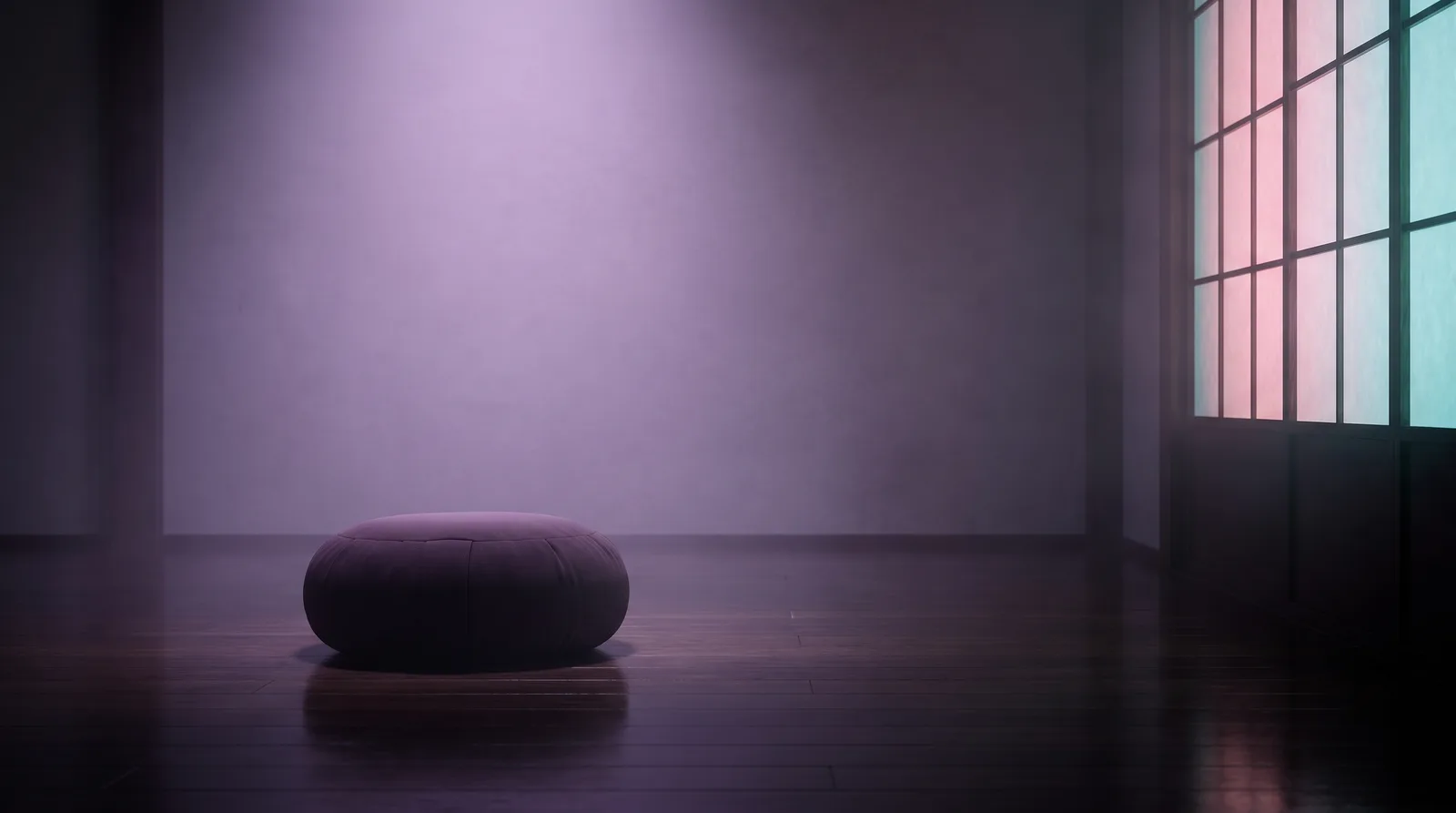
Most meditation instruction arrives with an agenda. Focus on this, visualise that, count to ten, feel calmer. Zazen, the seated practice at the heart of Zen Buddhism, is startling precisely because it asks for almost none of this. The word translates as 'seated meditation', and in its purest form, the shikantaza or 'just sitting' of the Soto school, the instruction is nearly complete in the name itself: sit down, stay still, remain awake, and let everything else come and go. No goal, no ladder of attainment, not even the comfortable handhold of a technique. To a modern mind trained on productivity, it sounds like nothing at all. Practised sincerely, it turns out to be one of the most demanding and most generous things a person can do with twenty minutes.
This guide is for the curious beginner: what zazen actually involves, how to set up a sustainable posture at home, what to do with the breath and the thoughts, and what a small body of research suggests about people who sit this way for years.
What zazen actually is
Zazen descends from the meditation traditions that travelled from India through China, where Chan Buddhism took shape, before arriving in Japan as Zen around the twelfth and thirteenth centuries. The Japanese teacher Dogen, founder of the Soto school, made a claim that still sounds radical: zazen is not a method for achieving enlightenment, it is the expression of an already awake nature. You do not sit to become something better; you sit because sitting, fully inhabited, is enough. The Rinzai school takes a different route, pairing seated practice with koans, those famously unanswerable questions, but the seated foundation is shared.
In practical terms, zazen differs from most modern mindfulness in its austerity. There is no app narrating your progress and no rotating menu of anchors. Traditionally the eyes stay half open, lowered at a forty-five degree angle, often facing a wall. The half-open gaze matters: it keeps you in the world rather than in a private inner cinema, and it makes drowsiness harder to indulge. You are not shutting life out; you are sitting still in the middle of it.
Posture first: why Zen begins with the body
Zen teachers are famously particular about posture, and not out of fussiness. In zazen the posture is the practice. The classic arrangement is a cushion on the floor, legs folded in whatever cross-legged position your hips will honestly allow, knees resting on the ground so that body weight settles through three points. The spine rises tall without stiffness, as though the crown of the head were gently lifted by a thread; the chin tucks slightly; hands rest in the lap, left fingers over right, thumb tips touching lightly to form an oval. A chair is a perfectly legitimate substitute: sit away from the backrest, feet flat, the same tall and settled spine. What matters is a base stable enough that the body can be forgotten.
Beginners often discover that the first ten sessions are less about the mind than about negotiating with ankles and hips. This is normal, and it is quietly useful. Attending to the body's complaints, adjusting kindly, and returning to stillness is already the whole gesture of the practice in miniature.
Breathing and counting: the beginner's rope
The breath in zazen is not managed; it is allowed. Breathing settles low into the belly, slow and quiet, without any counting pattern imposed on it. That said, most lineages offer beginners a rope to hold: counting each exhalation from one to ten, then beginning again at one. Lose count, which you will, and you simply return to one without commentary. The counting is not the point. It is scaffolding, there to be dismantled once the mind can rest on the breath without it, and eventually to give way to just sitting, with nothing counted at all.
Zazen does not ask you to empty your mind. It asks you to stop furnishing it, and to watch what remains when you do.
What to do with your thoughts
Nothing, which is the difficult part. The Zen instruction is not to suppress thinking but not to entertain it either: thoughts arise, are noticed, and are allowed to pass, the way clouds cross a wide sky. Dogen's phrase for the resting state is sometimes rendered as 'thinking not-thinking', a deliberate paradox pointing at awareness that neither chases thoughts nor wrestles them. When you find yourself three minutes deep in a rehearsed argument or tomorrow's shopping, the practice is simply to notice, release, and return to posture and breath. Every return is the practice succeeding, not failing. A session with fifty returns is not a poor session; it is fifty repetitions of the only movement that matters.
What the research suggests
Zazen has been studied less exhaustively than modern mindfulness programmes, but the findings are intriguing. A study by Pagnoni and Cekic at Emory University compared long-term Zen practitioners with matched non-meditators and found that the usual age-related decline in grey matter volume and attentional performance was less pronounced in the meditators, with the difference most visible in regions linked to attention. A small study of experienced sitters cannot prove that zazen protects the brain, and it does not need to. It simply adds a quiet, suggestive data point to what practitioners have claimed for eight centuries: that sitting still, repeatedly and sincerely, trains something real.
A gentle way to begin at home
You do not need a temple, a teacher or a black cushion to begin, only a corner and a little stubbornness. A workable home practice looks like this:
- Choose a short, honest duration: ten minutes daily outlasts forty minutes abandoned by Thursday. Set a gentle timer and let it hold the clock so you do not have to.
- Sit at the same time and in the same spot each day; ritual carries you on the mornings when motivation does not.
- Settle the posture first, sway gently side to side to find centre, take two or three deeper breaths, then let the breath find its own rhythm.
- Keep the eyes half open and lowered. If a bare wall feels forbidding at first, a soft visual field helps some beginners settle: I sometimes let Feelsy's slow-drifting textures play at low brightness across the room as a halfway house for the gaze, before graduating to the honest plainness of the wall.
- End deliberately: bow, or simply pause before standing. How you leave the cushion tends to be how the practice enters your day.
Sitting with it
Zazen offers none of the quick rewards our attention economy has trained us to expect, which is exactly its medicine. Some sessions will feel like clear water; many will feel like sitting in traffic. The tradition's advice is identical for both: sit down again tomorrow. Over weeks, something subtle shifts. The pause between an irritation and your reaction to it widens by a breath. The compulsion to reach for the phone loosens by a degree. Nothing dramatic, and everything important. Just sitting, it turns out, was never just sitting.
Feelsy is a wellness product, not medical advice. If stress, anxiety or sleep problems persist, please speak with a qualified professional.
References
- Pagnoni, G., & Cekic, M. (2007). Age effects on gray matter volume and attentional performance in Zen meditation. Neurobiology of Aging, 28(10), 1623-1627.
Frequently Asked Questions
What is zazen in simple terms?
Zazen is the seated meditation practice at the heart of Zen Buddhism; the word literally means 'seated meditation'. In its simplest form you sit still with a tall, stable posture, keep the eyes half open, let the breath settle low and slow, and allow thoughts to come and go without chasing or suppressing them. There is no goal to achieve while sitting: the sitting itself is the practice.
How long should a beginner do zazen?
Ten minutes a day is an excellent beginning, and consistency matters far more than duration. A short daily sit at the same time and place builds the habit that carries you through unmotivated mornings, and the length can grow naturally once sitting feels established. Traditional temple periods run longer, but a sustainable home practice starts small.
Should my eyes be open or closed during zazen?
In zazen the eyes traditionally remain half open, lowered at roughly a forty-five degree angle, often while facing a wall. The half-open gaze keeps the practice anchored in the present world rather than an inner daydream, and it makes drowsiness harder to indulge. Fully closed eyes are common in other meditation styles, but the soft, open gaze is characteristic of Zen.
What do I do with my thoughts during zazen?
Neither suppress them nor entertain them. Thoughts are allowed to arise, be noticed and pass, like clouds crossing the sky; when you catch yourself carried away in a story, you simply return attention to posture and breath. Every return counts as the practice working, so a session with many returns is not a failed session.
Is zazen the same as mindfulness meditation?
They are related but not identical. Modern mindfulness programmes usually offer guided techniques, rotating anchors and explicit goals such as stress reduction, while zazen is deliberately austere: an unguided, mostly silent practice of just sitting, traditionally with eyes half open facing a wall. Zazen also carries its Zen Buddhist context, in which sitting is treated as complete in itself rather than as a tool.

About the author
Contributing writer
Eleonor writes about contemplative traditions, attention and the cultural history of calm. She has spent two decades collecting the rituals humans use to slow down, from zazen halls to hammams, and translating them for modern, screen-lit lives.
Feel it for yourself.
Feelsy turns reading about calm into practising it. Two minutes of a slow texture is often the whole difference.


Related reading
 Ancient Wisdom
The Zen Garden: Why Raking Gravel Stills the Mind
What a zen garden is and why it calms: the history of karesansui, the perception science of Ryoan-ji, and a way to practise dry-garden attention at home.
 Visual Meditation
How to Meditate: A Beginner's Guide to the First Ten Minutes
Learn how to meditate as a complete beginner: what to actually do with your mind, how long to sit, why wandering is normal, and a kind ten-minute plan.
 Visual Meditation
Mindfulness vs Meditation: What Is the Difference?
Mindfulness and meditation are not the same thing: what each word means, how the two overlap, and how to choose the practice that suits your own mind.
 Ancient Wisdom
Döstädning: The Gentle Swedish Art of Death Cleaning
What Swedish death cleaning really means: the calm philosophy of döstädning, how it differs from ordinary decluttering, and how to begin at any age.
 Ancient Wisdom
How to Start a Gratitude Journal You Will Actually Keep
How to start a gratitude journal that actually helps: what the research found, why most lists go stale, and the very old art of counting blessings.
 Ancient Wisdom
Haiku as Meditation: Seventeen Syllables of Attention
How writing haiku trains attention: why the tiny form works like meditation, what noticing small moments does for wellbeing, and how to write your first.