What Is a Zen Koan? The Question You Cannot Think Your Way Out Of
Zen koans are questions designed to exhaust the thinking mind. What koans are, where they came from, and why sitting with one is so strangely calming.
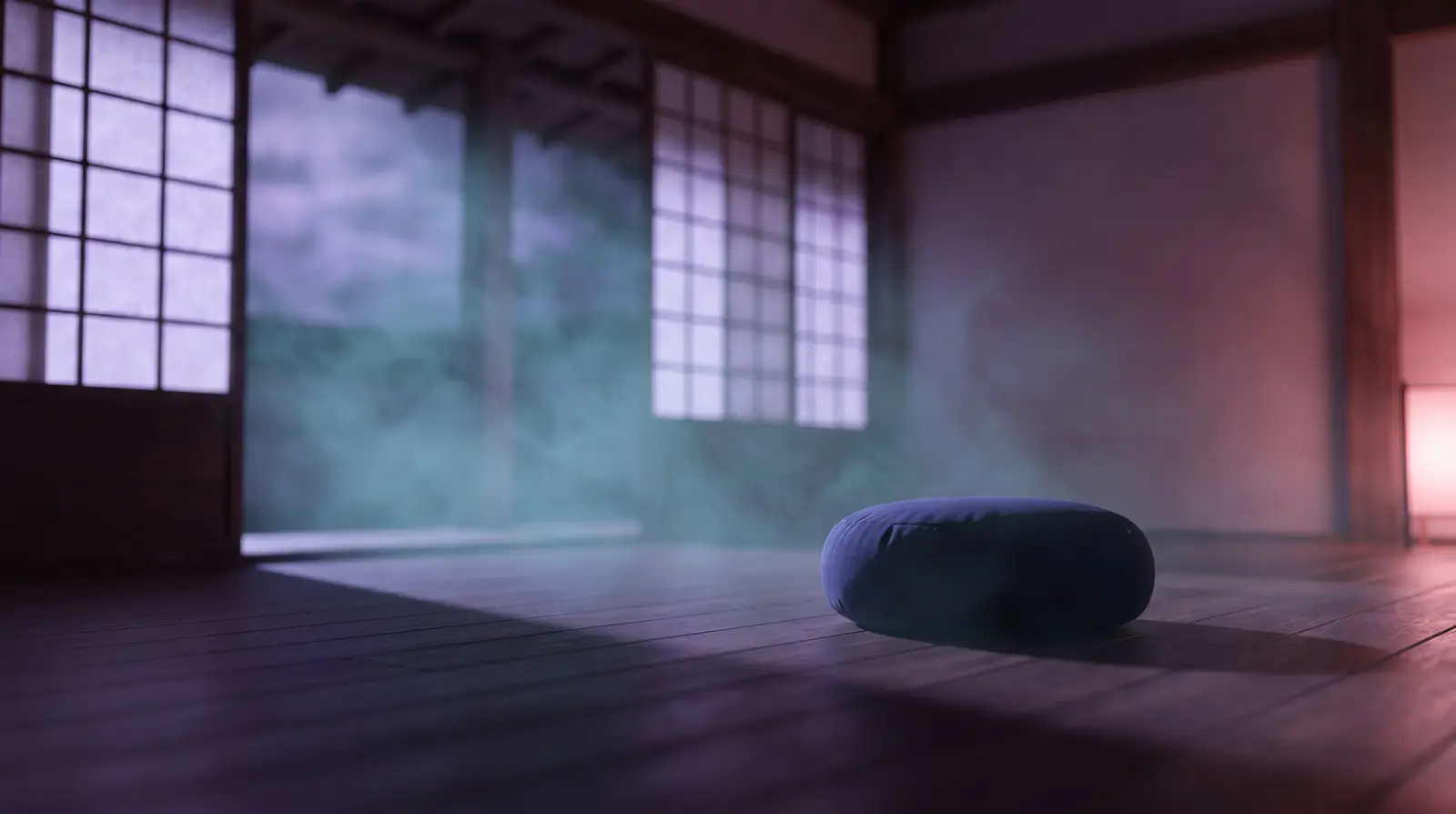
What is the sound of one hand clapping? Most people meet this question as a joke, shorthand for Eastern inscrutability, filed somewhere between fortune cookies and incense smoke. But the question is real. It was composed in eighteenth-century Japan by the Zen master Hakuin as a training instrument, and for centuries students have sat with it, not for minutes but for years. A koan is not a riddle to be solved. It is a question built to show the mind the edge of its own cleverness, and what waits on the other side of that edge is, by many accounts, remarkably quiet.
A question designed to defeat the asker
The word koan comes from the Chinese gong'an, meaning a public case, as in a legal record. The classic koans are exactly that: brief accounts of exchanges between Chan masters and their students, collected and studied like case law for the spirit. A monk asks Zhaozhou whether a dog has Buddha nature; Zhaozhou answers 'Mu', a word meaning something like 'no' or 'not', and refuses to mean anything more. Another master, asked about the deepest point of the teaching, replies: 'The cypress tree in the garden.' The exchanges are short, concrete and completely resistant to interpretation, which is precisely the point.
Try to answer a koan and you will feel your mind do what minds do: reach for logic, then cleverness, then metaphor, then mild indignation. Each offering is declined. The koan is not testing your intelligence. It is patiently wearing out the machinery of explanation, the same machinery that keeps you awake at night rehearsing arguments and drafting replies, until something simpler is left standing.
Where koans came from
Koans emerged from the Chan Buddhist tradition of Tang and Song dynasty China, roughly the eighth to twelfth centuries, before Chan travelled to Japan and became Zen. Teachers began recording the sayings and doings of the old masters, and those anecdotes gradually hardened into a curriculum. Two great collections dominate: the Blue Cliff Record, compiled in the twelfth century, and the Gateless Gate, assembled by the monk Wumen in the thirteenth. In the Rinzai school of Japanese Zen, koan study remains the spine of training to this day: a student receives a koan, sits with it in meditation, and returns to the teacher again and again with responses, most of which are dismissed with the ring of a small bell.
What is being examined in those interviews is not an answer in any ordinary sense. Teachers speak of a student demonstrating a koan rather than explaining it: showing, in their bearing and their spontaneity, that the question has stopped being an intellectual object and become something lived. It is the difference between describing water and being wet.
A koan is not a riddle withholding its answer. It is a mirror for the mind that wants one.
Why sitting with an impossible question calms the mind
It seems paradoxical that an unanswerable question could be relaxing; unanswered questions are usually what anxiety is made of. But the koan works differently, because it is held rather than chased. In koan practice you are not trying to make progress. You return to the question the way you might return to the breath or to a candle flame: as a single point of attention, warm and slightly alive, around which the rest of thought can settle. The analytical mind, given this one impossible object, gradually stops generating its usual weather. Practitioners describe the feeling the way one describes silt settling in a glass of water that has finally been left alone.
In this sense the koan belongs to the same family as many contemplative instruments: the mantra, the candle flame of trataka, the slow drift of clouds. Each gives attention one gentle thing to rest upon so that it stops resting on everything else. The koan simply adds a sly extra ingredient: it recruits the very part of the mind that most resists meditation, the part that loves problems, and hands it a problem that quietly dissolves the problem-solver.
Sitting with a koan, gently
You do not need a monastery, a fierce old teacher, or any ambition of awakening to let a koan quiet an evening. A modest practice looks like this:
- Choose one classic question and stay with it for a season rather than browsing. What is the sound of one hand? What was your original face before your parents were born?
- Sit comfortably, let the breath settle, and place the question softly at the centre of attention, repeating it slowly without demanding anything of it.
- When answers arrive, and they will, notice them the way you notice traffic outside the window, then return to the question itself.
- Let the eyes rest as the mind does. Some sit with the gaze half-lowered; others rest it on something slow and wordless, a candle, rain on the glass, or a drifting texture in Feelsy with the screen dimmed low, so the whole evening agrees to one unhurried question.
Ten or fifteen minutes is plenty. The measure of the sitting is not insight but the texture of the hour that follows: many people rise from a koan session to find the inner narrator noticeably softer, as a room feels after a loud appliance has switched itself off.
The answer that never comes, and what comes instead
Did anyone ever answer the sound of one hand? The tradition's own reply is mischievous: yes, constantly, and never in words. What koan practice offers the rest of us is not enlightenment on a deadline but the rehearsal of a rare and restful mental posture: holding a question without insisting that it resolve. So much of the mind's suffering is an argument with what is. For a quarter of an hour, in the company of a thirteenth-century question with no exit, the argument is allowed to end in a draw. That, perhaps, is the sound the old masters meant: not one hand clapping, but the unfamiliar quiet of a mind that has stopped applauding its own thoughts.
Feelsy is a wellness product, not medical advice. If stress, anxiety or sleep problems persist, please speak with a qualified professional.
Frequently Asked Questions
What is a koan in simple terms?
A koan is a short question or recorded exchange from the Zen tradition, such as 'What is the sound of one hand clapping?', constructed so that it cannot be answered by ordinary logic. Rather than being solved, it is held in meditation as a single point of attention until the thinking mind settles. It works less like a puzzle and more like a focal point.
What is the most famous koan?
'What is the sound of one hand clapping?' is probably the best known; it was composed by the Japanese Zen master Hakuin in the eighteenth century. Another famous case is Zhaozhou's 'Mu', in which a master answers a monk's question about whether a dog has Buddha nature with a single syllable that refuses all explanation.
Do koans have answers?
Not in the ordinary sense. In Rinzai Zen training, students present responses to their teacher in private interviews, but what is being assessed is a lived understanding shown in the student's whole bearing, not a correct sentence. The question's purpose is to wear out the habit of explanation rather than to reward it.
Can I practise with a koan without being a Buddhist?
Yes. You can treat a koan as a secular attention practice: sit comfortably, place the question gently at the centre of attention, and return to it whenever answers or distractions arise. Ten to fifteen minutes is plenty, and many people find their mental chatter noticeably softer for the hour afterwards.
Where do koans come from?
They arose in the Chan Buddhist tradition of Tang and Song dynasty China, where exchanges between masters and students were recorded as 'public cases' and later gathered into collections such as the Blue Cliff Record and the Gateless Gate. When Chan travelled to Japan and became Zen, koan study became central to the Rinzai school's training.

About the author
Contributing writer
Eleonor writes about contemplative traditions, attention and the cultural history of calm. She has spent two decades collecting the rituals humans use to slow down, from zazen halls to hammams, and translating them for modern, screen-lit lives.
Feel it for yourself.
Feelsy turns reading about calm into practising it. Two minutes of a slow texture is often the whole difference.


Related reading
 Ancient Wisdom
Zazen for Beginners: The Zen Art of Just Sitting
What zazen is, how to practise Zen seated meditation at home, posture and breath basics, and why 'just sitting' is harder and kinder than it sounds.
 Ancient Wisdom
Shoshin: Why Beginner's Mind Is the Expert's Secret
Shoshin, or beginner's mind, is the Zen practice of meeting familiar things as if for the first time. Learn what it means and how to practise it daily.
 Ancient Wisdom
Trataka: The Original Visual Meditation
Centuries before screens, yogis rested their gaze on a single candle flame. How trataka works, how to practise it safely, and what it teaches modern visual meditation.
 Ancient WisdomNew
The Benefits of Solitude: Why Time Alone Is Not Loneliness
Solitude and loneliness are not the same thing. Here is why chosen time alone settles the nervous system, what research found, and how to practise it gently.
 Ancient Wisdom
What Is Kaizen? The Gentle Japanese Art of Tiny Improvements
Kaizen is the Japanese philosophy of improving by small, continuous steps. Here is what the word really means, and how one-minute changes quiet a busy mind.
 Ancient Wisdom
Zhan Zhuang: The Chinese Art of Standing Like a Tree
Zhan zhuang, the 'standing post,' is a Chinese practice of complete stillness on your feet. How standing meditation works and a gentle way to begin today.