Aphantasia: How to Meditate When You Cannot Picture Anything
What aphantasia is, why some minds cannot picture images at all, and how to meditate deeply when guided visualisation does not work for you.
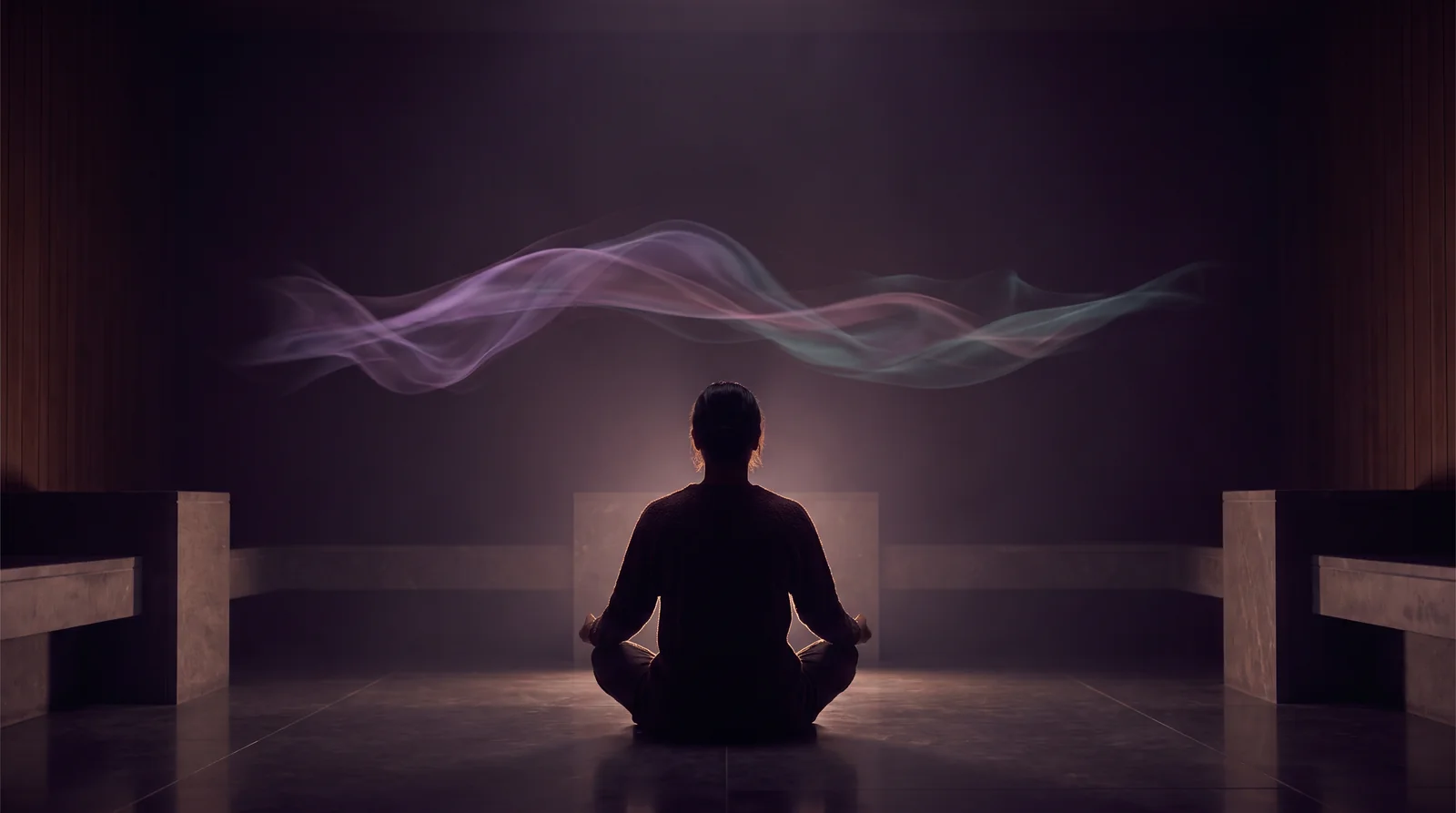
Close your eyes, says the recording, and picture a beach. For most people something duly appears: hazy, flickering, more suggestion than photograph, but unmistakably a beach. For a small share of the population, nothing appears at all. Not a dim beach. Not a blurry one. Nothing, a darkness with a caption. If that is you, you have spent years assuming everyone else was speaking in metaphor, and the discovery that they were not can arrive like a quiet thunderclap.
The condition has a name, aphantasia, and it is neither a failure of imagination nor a bar to meditation. But it does mean that an enormous amount of standard meditation instruction, built on picture this and visualise that, was never written for you. This essay is about what aphantasia is, what the research actually shows, and how to practise beautifully without a single mental image.
The mind that does not picture
The phenomenon is old; the name is new. In 1880 Francis Galton circulated a questionnaire asking people to call up their breakfast table and describe its vividness, and found to his astonishment that some could summon nothing visual at all. The subject then slept for over a century. In 2015 the neurologist Adam Zeman and his colleagues, writing in the journal Cortex, described a group of people who reported having no mind's eye and gave the trait its name, aphantasia, from the Greek phantasia, the faculty of imagination. At the other end of the spectrum sit the hyperphantasics, whose inner pictures are nearly as vivid as sight. Most of us live somewhere between, and until someone asks the right question, almost nobody realises the spectrum exists.
Not a failure of effort
A reasonable sceptic might wonder whether aphantasics simply describe their perfectly normal imagery more modestly. The research suggests otherwise. In 2018, Rebecca Keogh and Joel Pearson published an elegant study in Cortex using a trick of vision called binocular rivalry, in which the two eyes are shown different images and the brain flips between them. In most people, merely imagining one of the images beforehand biases which one wins. In people with aphantasia, imagining produced no bias at all, as though nothing sensory had happened, because nothing had. The absence is real, not rhetorical. Crucially, it is an absence of pictures, not of mind: people with aphantasia remember, reason, create and recognise the faces they love. Many even dream in images, since dreaming uses different machinery from deliberate picturing. The canvas is not torn. It is simply not on display.
A blank mind's eye is not a locked door. It is a different doorway.
Why guided visualisation fails you, and why that is fine
So much modern meditation leans on the inner picture. Imagine a mountain. Picture light pouring through the crown of your head. Visualise each muscle softening. For an aphantasic listener these instructions turn a rest into an examination: you strain, nothing comes, you conclude you are bad at meditating, and the session ends more tense than it began. The unkindest part is that the image was never the point. Every visualisation script is a means to the same end, attention gathered gently in one place, and imagery is only one anchor among many. The tradition itself has always known this; it is full of doors that need no pictures at all.
Meditation without pictures
Here is the liberating reframe: let the world do the picturing, and bring only your attention. These approaches ask for no mind's eye whatsoever.
- Let your open eyes hold the image. Candle gazing, watching water, clouds, rain on a window: the oldest visual meditations are external, not imagined. Feelsy exists for exactly this gap; its slow lavender and aqua textures hold the image on the screen so your mind does not have to, and autoplay lets one scene drift into the next while you simply watch.
- Follow the breath. Counting breaths, box breathing or the 4-7-8 pattern give attention a rhythm instead of a picture, and they work identically for every kind of mind.
- Scan by feeling, not by seeing. A body scan needs no imagery at all if you treat it as a tour of sensation: warmth, weight, tingling, contact with the chair.
- Rest in sound. Rain, a low steady hum, a sound bath, or a word repeated silently can anchor attention entirely through the ear.
- Put the practice in motion. Walking meditation ties attention to footfall and balance, which no one has ever needed to visualise.
The quiet advantages
It would be sentimental to call aphantasia a superpower, but it is not a deficit ledger either. Imagination without pictures is still imagination: it thinks in structure, in language, in felt sense, and it is often startlingly good at precisely the kinds of meditation that defeat vivid picturers, whose inner cinema never stops selling tickets. Some people with aphantasia also say that difficult memories lose a little of their sting when they cannot replay as film. However your mind is built, the deeper point stands. Meditation was never a visualisation contest. It is the art of resting attention on something steady, and the steadiest anchors, breath, body, sound, and the slow moving world in front of your open eyes, were here long before anyone asked you to picture a beach.
Feelsy is a wellness product, not medical advice. If stress, anxiety or sleep problems persist, please speak with a qualified professional.
References
- Zeman, A., Dewar, M., & Della Sala, S. (2015). Lives without imagery: Congenital aphantasia. Cortex, 73, 378-380.
- Keogh, R., & Pearson, J. (2018). The blind mind: No sensory visual imagery in aphantasia. Cortex, 105, 53-60.
Frequently Asked Questions
What is aphantasia?
Aphantasia is the inability to voluntarily form mental images: when asked to picture a beach or a face, nothing visual appears. The trait was named in 2015 by the neurologist Adam Zeman and colleagues, though the phenomenon was first documented by Francis Galton in 1880. It is a variation in how minds work, not an illness, and people with aphantasia remember, reason and create normally.
How do I know if I have aphantasia?
Try calling up a familiar object, like an apple, with your eyes closed. Most people see something, however faint or flickering. If you can describe the apple in words but nothing visual appears at all, only a kind of darkness with a caption, you may be on the aphantasic end of the spectrum. Researchers confirm it with vividness questionnaires and laboratory tests such as binocular rivalry.
Can you meditate if you have aphantasia?
Yes, deeply. Visualisation is only one anchor among many, and the tradition is full of doors that need no pictures: following the breath, scanning the body by feeling rather than seeing, resting in sound, walking meditation, and open-eyed practices like candle gazing or watching slow-moving textures, where the world holds the image and you bring only your attention.
Is aphantasia a disorder?
No. Aphantasia is a natural variation in how minds represent things, sitting at one end of a spectrum that runs to hyperphantasia, where inner images are nearly as vivid as sight. Research shows the absence of imagery is real rather than a describing habit, but it is not linked to a lack of imagination, memory or creativity, and it needs no treatment.
Do people with aphantasia dream in images?
Many do. Deliberate visualisation and dreaming use different machinery in the brain, so a person who cannot summon a picture on demand may still experience vivid visual dreams at night. This is one of several signs that in aphantasia the mind's canvas is not damaged; it is simply not available for voluntary viewing.
About the author
Contributing writer
Eleonor writes about contemplative traditions, attention and the cultural history of calm. She has spent two decades collecting the rituals humans use to slow down, from zazen halls to hammams, and translating them for modern, screen-lit lives.
Feel it for yourself.
Feelsy turns reading about calm into practising it. Two minutes of a slow texture is often the whole difference.


Related reading
 Visual Meditation
Guided Imagery: Meditation for Minds That Think in Pictures
Learn how guided imagery meditation works: why picturing a peaceful scene calms the body, what research shows, and how to practise it in ten minutes.
 Ancient Wisdom
Trataka: The Original Visual Meditation
Centuries before screens, yogis rested their gaze on a single candle flame. How trataka works, how to practise it safely, and what it teaches modern visual meditation.
 Visual Meditation
Phosphenes: Why You See Colours When You Close Your Eyes
Those drifting blobs of colour behind closed eyelids are called phosphenes. What causes them, when to pay attention, and how to watch them as meditation.
 Visual MeditationNew
Apricity: The Forgotten Pleasure of Winter Sun
Apricity is a forgotten English word for the warmth of the sun in winter. Here is why a few minutes of low winter sunlight can soften the darkest months.
 Visual MeditationNew
Momijigari: The Japanese Art of Autumn Leaf Viewing
Momijigari is the old Japanese tradition of travelling to see autumn leaves. Here is why fiery foliage calms the mind, and how to practise it anywhere.
 Visual MeditationNew
Why Libraries Feel So Calming
Step into a library and your shoulders drop. Here is the psychology of hush, tall shelves and shared silence, and how to borrow that feeling for your rooms.