Why You're So Tired in Winter (and What Actually Helps)
Winter tiredness is real: less light, a confused body clock, and research showing we need more sleep in the dark months. What helps, backed by evidence.
By Kurt Woleret
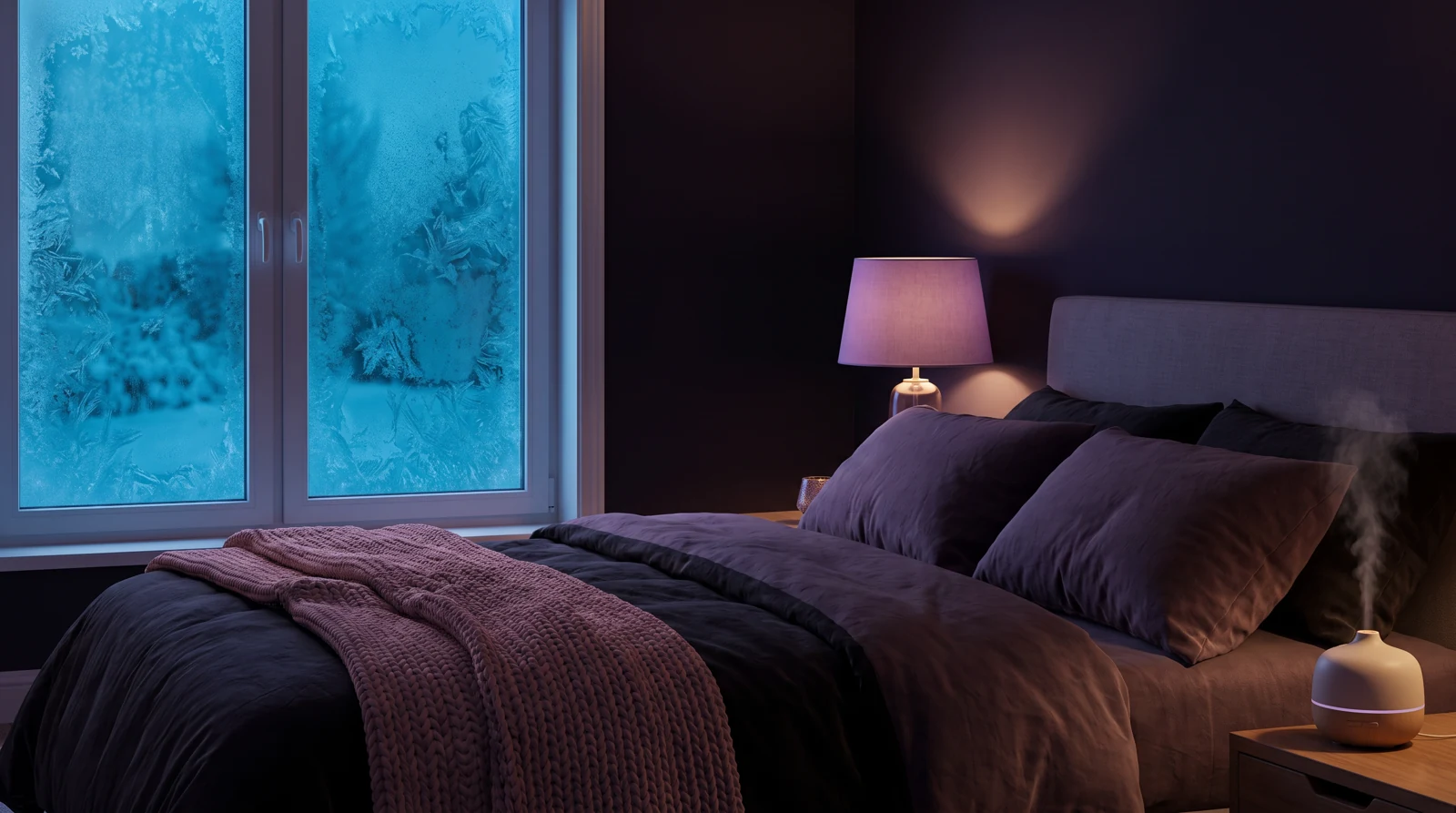
Every year around late October the same thing happens to me. The clocks haven't even changed yet and I'm already yawning at 9pm like a man twice my age, hitting snooze twice instead of once, and treating the walk to the subway like a polar expedition. For years I assumed this was a personal failing, some seasonal laziness I should out-discipline. Then I read the research. It turns out winter tiredness isn't a character flaw. It's biology, it's measurable, and there are a few levers that actually move it.
Your body clock runs on light, and the light just left
The master clock in your brain sets itself by one signal above all others: bright light hitting your eyes, especially in the morning. Light in the morning tells the clock it's daytime, which anchors everything downstream, when melatonin gets released at night, when cortisol peaks, when you feel alert and when you fade. In summer this system gets a firehose of signal. A bright day outdoors can hit six figures in lux; even a cloudy one delivers thousands. Winter cuts the dose brutally. The sun rises after many of us are already at a desk, sets before we leave, and office lighting, for all its fluorescent enthusiasm, delivers a few hundred lux, a rounding error compared to daylight.
Run a light-calibrated clock on a starvation diet of light and it drifts. Melatonin, the darkness hormone, also gets a longer runway: with dark evenings and dark mornings, the melatonin window stretches, and plenty of people are commuting, or sitting in first-period meetings, while their brain is still chemically on night shift. The 7am alarm doesn't care that your biology thinks it's 5am. That mismatch is a lot of what 'winter tired' is.
You may genuinely need more sleep right now
Here's the finding that made me stop fighting it. A Berlin sleep lab looked at full polysomnography, the gold-standard overnight sleep study, across the seasons and found that sleep architecture itself changes through the year: in winter, participants showed about 30 minutes more REM sleep than in summer, with total sleep trending longer as well (Seidler et al., 2023, Frontiers in Neuroscience). REM is the sleep stage most tightly wired to the circadian clock, so it makes sense that it tracks the seasons. We don't hibernate, but the data says the human sleep system is not flat across the calendar. It asks for more in the dark months.
Meanwhile most of us keep identical schedules all year: same alarm, same meetings, same bedtime scrolled past by the same forty minutes. Summer you and winter you are running the same calendar on different firmware. A little extra tiredness isn't a malfunction; it's an unpaid invoice.
We don't hibernate. But the sleep system asks for more in the dark months, and most of us just decline the request.
The compounding factors nobody counts
Stack on the mundane stuff and the fatigue math gets worse. Cold weather pushes you indoors, so you move less, and regular movement is one of the more reliable energy inputs there is. Dark evenings invite the couch-and-screen combo that delays bedtime. And the season runs on sugar and comfort carbs from Halloween through New Year's, which means more blood-sugar rollercoasters, with the post-lunch dip hitting harder when the afternoon is already dusk. None of these alone explains winter exhaustion. Together, on top of a light-starved clock, they explain a lot of it.
What actually helps
The playbook follows directly from the mechanism. Morning light is the headline move: get outside within an hour or two of waking, even for ten minutes, even under cloud. Outdoor winter daylight still beats indoor lighting by an order of magnitude, and morning light is the strongest anchor your clock can get. If sunrise happens after your workday starts, brighten your morning environment as much as you can and take the first daylight break available. Second: respect the invoice. Pull bedtime 20 or 30 minutes earlier instead of white-knuckling the summer schedule, and treat the extra sleep as seasonal maintenance, not weakness. Third: keep moving, indoors if needed; a lunchtime walk does double duty as light dose and movement. Fourth: hold the line on the basics that winter erodes, consistent wake time, caffeine cut by early afternoon, dim evenings.
That last one matters more in winter than people think. Your evenings are longer and darker, and the usual fix is a bright phone held at face height, which is exactly the light signal you don't want at 11pm. I've swapped some of my late-night scrolling for lower-stimulation wind-downs: paper books, and lately Feelsy running a slow dark texture with quiet rain sound, which scratches the screen itch without the blast of light and the algorithmic adrenaline. The goal is an evening that slopes downward instead of plateauing at full brightness until the second you close your eyes.
One boundary worth drawing: ordinary winter tiredness is tiredness. If the season brings persistent low mood, loss of interest in things you normally enjoy, or fatigue that sleep doesn't touch, that pattern deserves a conversation with a professional rather than a self-help checklist. For the common everyday version, the one with the 9pm yawns and the heroic snooze streaks, the fix is mostly cooperation: more light in the morning, less at night, a bit more sleep, and the acceptance that you are a seasonal animal with a smartphone.
Feelsy is a wellness product, not medical advice. If stress, anxiety or sleep problems persist, please speak with a qualified professional.
References
- Seidler, A., Weihrich, K. S., Bes, F., de Zeeuw, J., & Kunz, D. (2023). Seasonality of human sleep: Polysomnographic data of a neuropsychiatric sleep clinic. Frontiers in Neuroscience, 17, 1105233.
Frequently Asked Questions
Why am I so tired in winter?
Mostly light, or the lack of it. Your body clock calibrates itself with bright daylight, especially in the morning, and winter cuts that signal drastically: short days, late sunrises, and indoor lighting that's far dimmer than daylight. The clock drifts, melatonin lingers into the morning, and you feel groggy at times you'd normally be alert. Less movement and darker evenings pile on.
Do people need more sleep in winter?
Research suggests yes, modestly. A sleep-lab study tracking people across the seasons found about 30 minutes more REM sleep in winter than summer, with total sleep trending longer too. Humans don't hibernate, but sleep needs aren't flat across the year, so going to bed 20 to 30 minutes earlier in the dark months is working with your biology rather than against it.
How do I get more energy in winter?
Start with morning light: get outside within an hour or two of waking, even briefly, even when it's cloudy, because outdoor winter daylight is still far brighter than indoor lighting. Keep moving daily, ideally a lunchtime walk that doubles as a light dose, keep a consistent wake time, and dim your evenings so your clock gets a clear day-night contrast.
Is winter tiredness the same as seasonal depression?
No. Ordinary winter tiredness is extra sleepiness and sluggishness that improves with light, movement, and a little more sleep. If a season brings persistent low mood, loss of interest in things you enjoy, or exhaustion that rest doesn't touch, that's a different pattern and worth discussing with a qualified professional rather than self-treating.
Does screen time at night make winter fatigue worse?
It can. Winter evenings are long and dark, and a bright phone at face height delivers exactly the light signal your brain shouldn't get before bed, delaying melatonin when mornings are already hard. Swapping late scrolling for dimmer, calmer wind-downs, paper books, quiet audio, or a slow dark visual, keeps the evening sloping toward sleep.

About the author
Contributing writer
Kurt is a New York based writer covering the practical science of stress, sleep and focus. He is the resident sceptic of the Journal: if a technique cannot survive a crowded subway commute and a deadline week, he is not interested in it.
Feel it for yourself.
Feelsy turns reading about calm into practising it. Two minutes of a slow texture is often the whole difference.


Related reading
 Sleep
Morning Sunlight: The Cheapest Sleep Aid You're Not Using
Morning sunlight is the strongest signal your body clock gets all day. What the camping study showed, why window light falls short, and how to use it right.
 Sleep
Your Circadian Rhythm, Explained Without the Jargon
What your circadian rhythm actually is, how light sets the clock, why it drifts off schedule, and the evidence-backed ways to nudge it back in line.
 Sleep
Why Am I Still Tired After 8 Hours of Sleep?
Getting eight hours but waking up exhausted? Here's why time in bed isn't the same as good sleep: fragmentation, timing, alcohol, and what actually helps.
 Sleep
Falling Back: A Survival Guide for the End of Daylight Saving Time
Clocks fall back this weekend, and the free hour is slightly fake. What the end of daylight saving time really does to your sleep, and how to land it well.
 Sleep
The Best Alarm Sound to Wake Up To, According to Research
Harsh beeping may be making your mornings worse. What research says about the best alarm sound to wake up to, and how to choose one your brain won't fight.
 Sleep
Can You Learn While You Sleep? What the Science Actually Says
Sleep learning is an old dream and mostly a myth, but not entirely. What research really shows about learning, memory and your sleeping brain.