Why Aquariums Are So Calming: The Science of Watching Fish
Why watching fish lowers stress: what aquarium research found about heart rate, blood pressure and mood, and how to use water and drift as visual meditation.
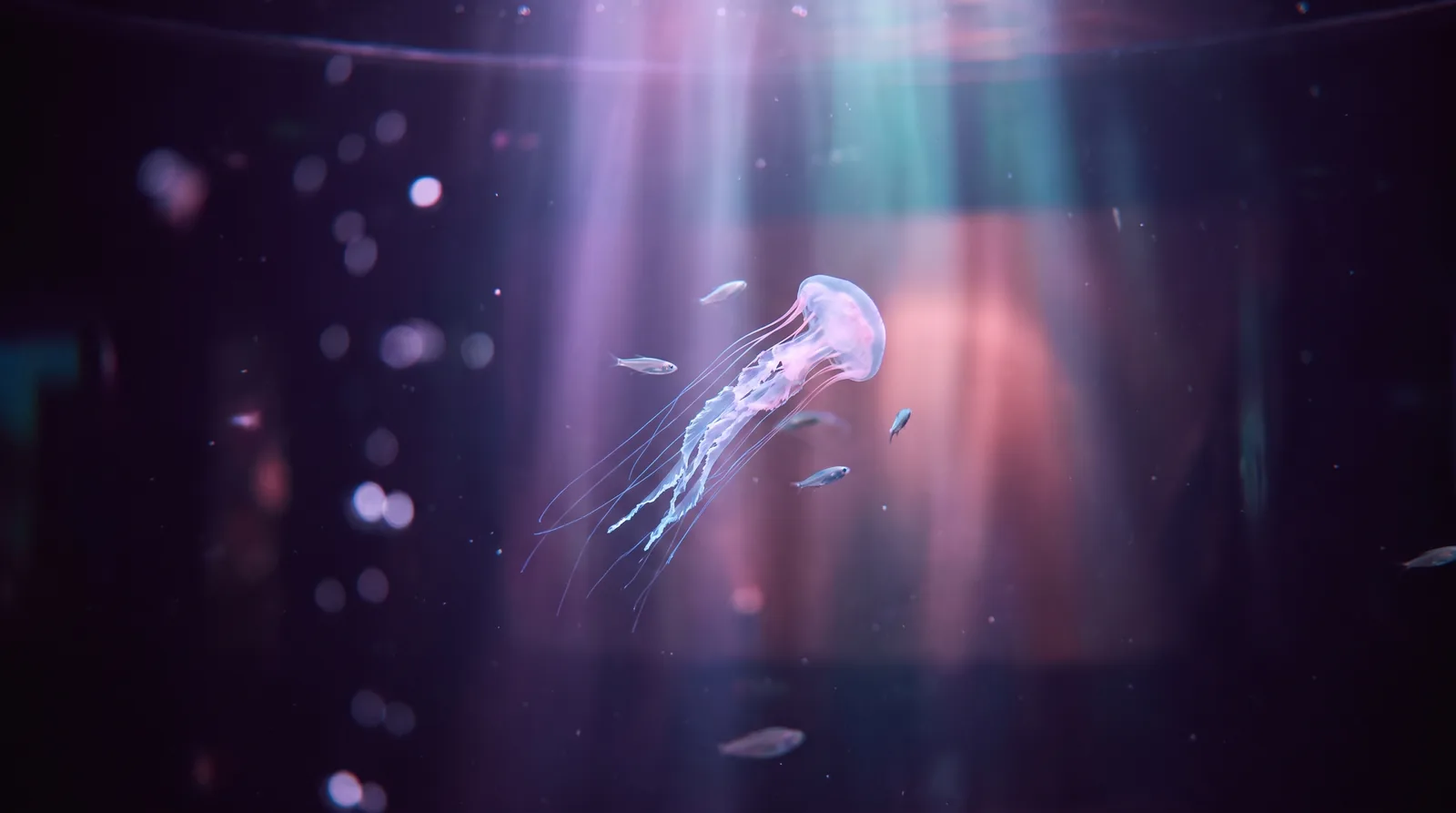
Somebody long ago worked out that the most frightened rooms in civic life, the dentist's waiting room, the hospital corridor, the visa office, should contain a tank of fish. Nobody consulted a study first. It was folk knowledge of the most reliable kind: put water and slow movement in front of anxious people and the room's collective pulse comes down a beat. We have all felt it. You sit down braced, and within a minute your eyes have been quietly kidnapped by a tetra patrolling its glass territory, and the appointment matters slightly less than it did.
The interesting question is why. What is it about watching fish, of all things, that unclenches the human nervous system? The answer turns out to involve attention, evolution and light, and it explains rather more than aquariums: it accounts for a whole family of things we stare at when we need to come down, from rivers to lava lamps to the drifting shapes on a phone screen.
What the research actually found
The most careful look at the question came from an unusual opportunity. When the National Marine Aquarium in Plymouth restocked one of its large exhibits in stages, researchers realised they could watch people watching the tank at three different levels of life: empty but for water and decor, partly stocked, and fully stocked. The results were tidy. Viewing the tank lowered heart rate and blood pressure at every stage, and the more life the tank held, the better people's moods became, with interest and positive feeling rising alongside the fish count (Cracknell et al., 2015, Environment and Behavior). Even the empty tank soothed: water alone did measurable work.
The study was small and its authors properly modest, but its shape is telling. The calming effect was not an on-off switch; it behaved like a dose. More movement, more life, more to softly watch, more calm. Attention, it seems, wants something to hold, and is happiest when what it holds keeps gently changing.
Soft fascination, wet edition
Environmental psychologists have a name for the mode of attention an aquarium invites: soft fascination. Hard fascination is what a thriller or a phone notification commands; it seizes attention and spends it. Soft fascination is different: the scene is interesting enough to hold the eye without effort, but undemanding enough that the mind can rest while looking. Nothing in a fish tank needs anything from you. No fish will ever address you by name. The scene simply continues, indifferent and unhurried, and your attention gets to be present without being taxed.
Water may be especially good at producing this state because of what it did for us for two hundred thousand years. A body of clear, calm water was survival: drink, food, safety from fire, a place animals gathered. Several researchers have argued that our disproportionate calm around water, the reason a sea view commands a premium and a fountain improves a plaza, is old machinery still running. Whether or not the evolutionary story is the whole truth, the modern measurements agree that blue space soothes in a way even green space struggles to match.
Nothing in a fish tank needs anything from you. The scene simply continues, indifferent and unhurried.
The dose-response finding also explains the curious hierarchy of what we choose to watch. Jellyfish tanks have become the celebrities of the modern aquarium, and it is easy to see why: a moon jelly is soft fascination distilled, all drift and pulse and no plot whatsoever. Live kelp-forest cameras, watched by thousands of perfectly sane adults on their lunch breaks, work the same seam. The common ingredients are always motion without event and life without demand, a scene that is visibly alive, endlessly various in its small ways, and structurally incapable of surprising you.
The aquarium as visual meditation
Framed this way, an aquarium is not a decoration but an instrument: a machine for producing soft fascination on demand. And like any instrument, it can be used deliberately. Watching fish becomes visual meditation the moment you stop glancing and start attending. A few adjustments turn idle looking into practice.
- Follow one fish, not the tank. Choose a single animal and let your eyes travel with it, the way you would follow a candle flame in trataka. When you lose it, find it again; that noticing-and-returning is the whole exercise.
- Let the breath borrow the water's pace. Without forcing anything, allow the exhale to lengthen towards the tempo of the drifting you are watching. Slow scenes invite slow breath.
- Stay past the boredom. The first two minutes entertain; the calm arrives in minute three or four, after novelty has worn off and attention has settled into the scene like sediment.
An aquarium in your pocket
Not everyone can keep fish, and a neglected tank calms nobody. But the active ingredients, slow continuous motion, liquid light, a scene with no demands in it, travel well. It is exactly this recipe that the Feelsy team drew on for the app's drifting textures: orbs and slow fluids that move at aquarium pace, asking nothing, with autoplay letting one scene dissolve into the next the way one corner of a reef hands you to another. Watched the same way, one shape followed, breath slowing to match, the screen does what the waiting-room tank does, minus the algae.
There is something quietly restorative in the idea itself: that the oldest screen in civic life, the glass box of water in the anxious room, was never really about the fish. It was about giving frightened attention somewhere kind to stand. That, at least, is portable.
Feelsy is a wellness product, not medical advice. If stress, anxiety or sleep problems persist, please speak with a qualified professional.
References
- Cracknell, D., White, M. P., Pahl, S., Nichols, W. J., & Depledge, M. H. (2015). Marine biota and psychological well-being: A preliminary examination of dose-response effects in an aquarium setting. Environment and Behavior, 48(10), 1242–1269.
Frequently Asked Questions
Why are aquariums calming to watch?
Aquariums invite a state psychologists call soft fascination, where the scene is interesting enough to hold the eye without effort but undemanding enough that the mind can rest. Nothing in the tank needs anything from you, and the slow, continuous motion of the water and fish lets attention settle without being taxed.
What did the Plymouth aquarium study find?
Researchers at the National Marine Aquarium in Plymouth studied a tank as it was restocked in stages, from empty to fully stocked, and found viewing it lowered heart rate and blood pressure at every stage. The more life the tank held, the better people's moods became, with interest and positive feeling rising alongside the fish count.
Does an empty tank with no fish still have a calming effect?
Yes, according to the research, even the empty tank with just water and decor produced measurable calming effects on heart rate and blood pressure. The calm behaved like a dose though, so more life and movement in the tank produced even greater benefit.
Why do jellyfish tanks feel especially calming?
Jellyfish tanks distil soft fascination almost perfectly, offering all drift and pulse with no plot to follow. The common ingredients that make them and similar scenes soothing are motion without event and life without demand, visibly alive yet structurally incapable of surprising you.
How can you turn watching fish into a visual meditation?
Follow one fish rather than the whole tank, letting your eyes travel with it and gently returning when you lose track, similar to following a candle flame. Let your breath borrow the water's slow pace, and stay past the first couple of minutes of boredom, since the real calm tends to arrive around minute three or four.

About the author
Contributing writer
Eleonor writes about contemplative traditions, attention and the cultural history of calm. She has spent two decades collecting the rituals humans use to slow down, from zazen halls to hammams, and translating them for modern, screen-lit lives.
Feel it for yourself.
Feelsy turns reading about calm into practising it. Two minutes of a slow texture is often the whole difference.


Related reading
 Visual Meditation
Why Watching Fire Is So Calming
Why is watching fire so relaxing? The science of flames, flicker and fireside calm, and how to borrow the campfire effect from a screen on an ordinary night.
 Visual Meditation
What Is Visual Meditation? The Complete Guide
Visual meditation rests your attention on slow, pleasing motion so calm happens almost on its own. Here is how it works, what the research says, and how to practise it in three minutes.
 ASMR
ASMRThe Quiet Pleasure of Oddly Satisfying Videos
Why are oddly satisfying videos so satisfying? The psychology of perfect fits, clean sweeps and slow swirls, and how to turn watching into meditation.
 Visual MeditationNew
Highway Hypnosis: Why You Can't Remember the Last Ten Miles
You arrive at your exit with no memory of driving there. Highway hypnosis is real and common: here's the science of the road trance and how to use it safely.
 Visual Meditation
Why the Northern Lights Mesmerise Us: Aurora Watching as Visual Meditation
What causes the northern lights, why the aurora feels so calming to watch, and how to turn sky watching into a simple visual meditation practice.
 Visual Meditation
Blue Mind: Why Being Near Water Calms the Brain
What blue mind theory says about why oceans, lakes and rivers soothe us: the research on blue space, water's pull on the eye, and how to use it daily.