Why Autumn Leaves Calm the Mind: The Quiet Art of Leaf-Peeping
Why do autumn leaves make us feel calm and a little wistful? The psychology of leaf-peeping, soft fascination and letting go, plus how to practise it.
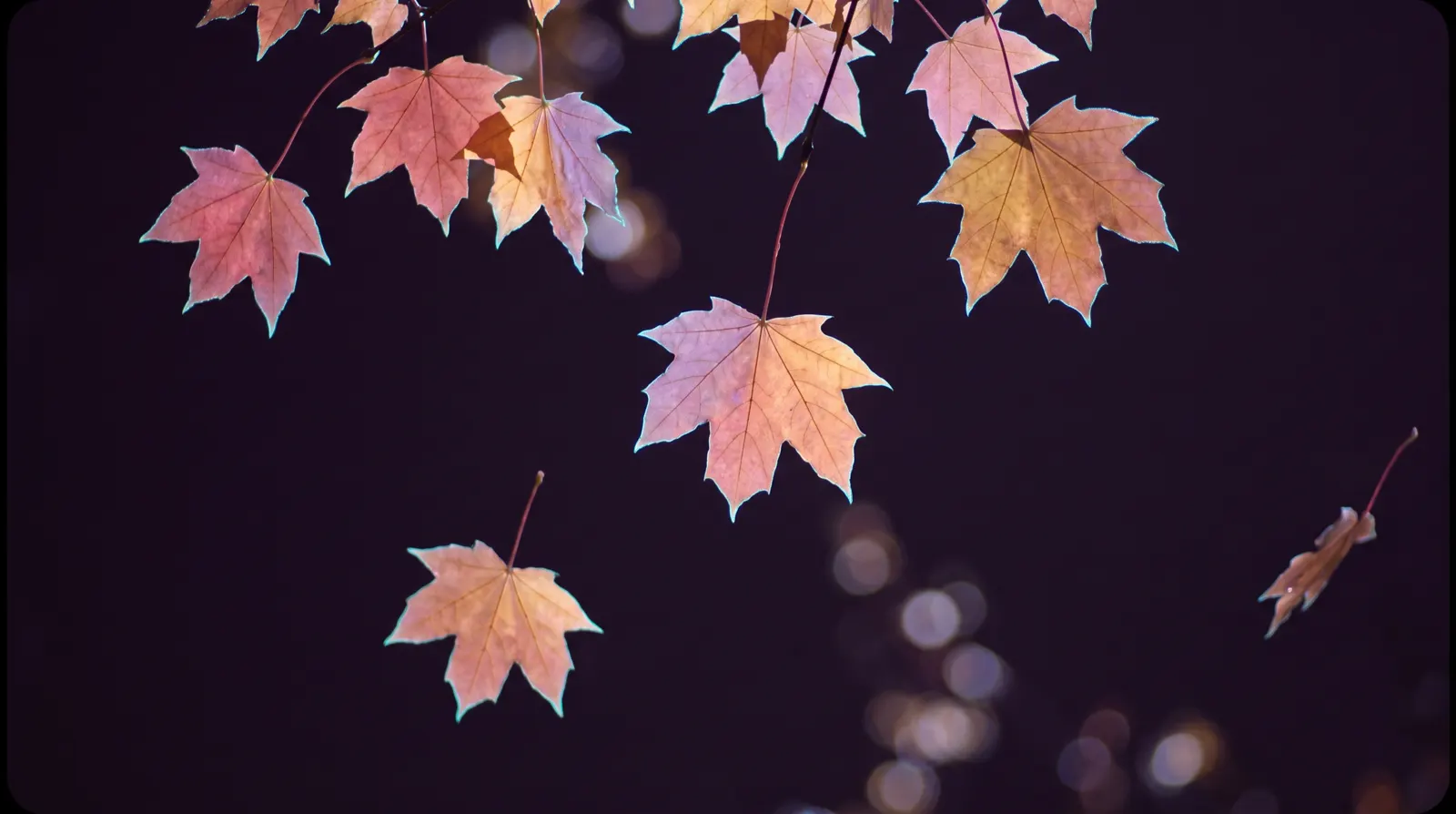
Every year around this time, a strange migration begins. Perfectly sensible adults drive hours into the hills to look at trees they ignored all summer. The Americans call it leaf-peeping, which makes it sound faintly illicit; the Japanese have practised momijigari, autumn-leaf hunting, since at least the Heian court a thousand years ago. Whatever the name, the impulse is the same: when the leaves turn, we want to be under them. And most of us come home from an hour of it feeling rinsed, as if something had been quietly set down along the way.
It is tempting to wave this off as mere prettiness. But the calm that autumn colour produces has structure to it, and understanding that structure turns a nice walk into something closer to a practice.
The season of soft fascination
Attention restoration theory, developed by the environmental psychologist Stephen Kaplan, holds that the focused, effortful attention we spend on work and screens is a depletable resource, and that it recovers in environments offering what he called soft fascination: gentle stimulation that holds the eye without demanding anything of it (Kaplan, 1995, Journal of Environmental Psychology). Clouds, water, foliage; things that move and change but never test you.
Autumn may be the year's most generous supplier. A turning canopy is variation without chaos: ten thousand leaves, no two the same shade, all obeying the same slow rule. Light comes through the thinning branches at a lower, kinder angle. Leaves fall singly, each one a small event that asks nothing. There is motion everywhere and urgency nowhere, which is precisely the recipe for attention that rests while remaining awake.
A walk among trees is not just a walk
The restorative effect of tree-lined walking has been measured. In a well-known experiment, psychologists sent people on a fifty-minute walk through an arboretum or along busy city streets, then tested their memory and attention; the arboretum walkers improved markedly more, and the researchers found the cognitive benefit did not depend on enjoying the weather, appearing even on cold days when the walk was not especially pleasant (Berman, Jonides & Kaplan, 2008, Psychological Science). That detail matters for autumn: you do not need golden-hour perfection. A grey, damp leaf-walk in a scarf still pays.
This is worth holding onto in a season when the light shortens and moods can dip with it. The prescription is not dramatic. It is an unhurried circuit of whatever trees you can reach, taken as though the trees were the point, because for one hour, they are.
It helps, too, to know what you are actually looking at. The golds and ambers were in the leaf all summer, carotenoid pigments hidden under the green; when the tree withdraws its chlorophyll for winter, they are simply revealed, like furniture when the dust sheets come off. The reds are different: many trees manufacture those anthocyanin pigments freshly in autumn, spending energy on colour in the very act of letting go. Half the show is unveiling, and half is a deliberate last flourish. Knowing this does not explain the pleasure away; it gives the eye more to find.
The tree spends its colour extravagantly and drops it without regret; we walk beneath it learning the same lesson at a smaller scale.
Colour, transience and the art of letting go
There is also something in autumn that soothes precisely because it is a little sad. The Japanese aesthetic tradition names it mono no aware, the gentle poignancy of things passing. A red maple is beautiful in a way a plastic one never could be, because the redness is a farewell. The tree is letting go on a schedule, publicly, gorgeously, and it will be fine; it does this every year.
Watching that performance does quiet work on us. Most of the mind's churn is a refusal to let things end: the argument replayed, the summer clung to, the task list defended against the evening. An afternoon under turning leaves is an argument from the other side, made in colour rather than words. Endings can be the most beautiful part; release can be the strong move, not the defeat. Nobody needs to say any of this aloud. The trees are more persuasive than we are.
How to practise leaf-watching
You can, of course, simply go outside. But a few habits deepen the hour considerably:
- Go slowly enough to be overtaken. A leaf-walk is not exercise with scenery; halve your usual pace and let the joggers stream past.
- Pick one tree and give it two full minutes. Watch how many colours a single canopy is running at once. Counting shades is a surprisingly absorbing form of doing nothing.
- Wait for one leaf to fall, and follow it all the way down. It is a five-second meditation with a definite ending, and it never falls the way you expect.
- Bring nothing home. Leave the phone in your pocket and let the walk be unrecorded; an hour that produces no evidence is the point, not a waste.
When the branches empty
The season's one flaw is brevity. The peak lasts a fortnight if the weather is kind, and then the show is over for a year, which is perhaps why we drive such distances for it. When the branches empty, or on the days you cannot get out at all, the eye can still be fed something with the same quality: slow drift, warm colour, endless small variation. On dark evenings I sometimes put one of Feelsy's amber and rose textures on autoplay while the tea steeps, colour turning and falling with nowhere to be, a pocket-sized October. It is not the hillside. But it keeps the eye in practice until spring's entirely different show begins.
In the meantime, the trees are turning now, unhurried and extravagant, and they will not wait. Go and be under them while the going is good.
Feelsy is a wellness product, not medical advice. If stress, anxiety or sleep problems persist, please speak with a qualified professional.
References
- Kaplan, S. (1995). The restorative benefits of nature: Toward an integrative framework. Journal of Environmental Psychology, 15(3), 169–182.
- Berman, M. G., Jonides, J., & Kaplan, S. (2008). The cognitive benefits of interacting with nature. Psychological Science, 19(12), 1207–1212.
Frequently Asked Questions
Why do autumn leaves make me feel calm?
A turning canopy offers what psychologists call soft fascination: constant gentle change that holds the eye without demanding anything from it, which lets tired, effortful attention recover. Autumn adds a second, quieter effect: watching trees let go of their leaves on schedule, beautifully and without struggle, gently loosens our own grip on things that are ending.
What is leaf-peeping?
Leaf-peeping is the informal name, common in North America, for travelling to watch autumn foliage at its peak. Japan has an older version called momijigari, autumn-leaf hunting, practised for around a thousand years. Both amount to the same thing: making the turning of the leaves a destination in itself rather than a backdrop.
Does walking among trees actually improve attention?
In one well-known experiment, people who took a fifty-minute walk through an arboretum improved markedly more on memory and attention tests than those who walked busy city streets. Notably, the benefit did not depend on enjoying the weather; it appeared even on cold days. So an ordinary grey autumn walk still counts.
How do I get the benefit if I can't get outside?
The useful qualities are slow drift, warm colour and endless small variation, and those can be fed to the eye indoors. Watching a slow-moving warm visual texture, such as Feelsy's amber and rose scenes on autoplay, offers a similar kind of unhurried motion on dark evenings. It is a stand-in rather than a replacement, but it keeps the eye rested until you can get under real trees.

About the author
Contributing writer
Eleonor writes about contemplative traditions, attention and the cultural history of calm. She has spent two decades collecting the rituals humans use to slow down, from zazen halls to hammams, and translating them for modern, screen-lit lives.
Feel it for yourself.
Feelsy turns reading about calm into practising it. Two minutes of a slow texture is often the whole difference.


Related reading
 Visual Meditation
Komorebi: The Japanese Word for Sunlight Through Leaves, and Why It Calms the Mind
Komorebi is the Japanese word for sunlight filtering through leaves. Here is what the word holds, why dappled light soothes the brain, and how to practise it.
 Visual Meditation
Awe Walks: The Simple Practice of Walking Until the World Grows Large
An awe walk is an ordinary stroll taken with attention tuned to vastness and wonder. Here is the research behind awe walks and how to take one this week.
 Visual Meditation
Why Watching Snow Fall Is So Calming: The Science of the Hush
Snow hushes the street, slows the eye and settles a busy mind. Here is the science of why watching snow fall is so calming, and how to make it a practice.
 Visual MeditationNew
Highway Hypnosis: Why You Can't Remember the Last Ten Miles
You arrive at your exit with no memory of driving there. Highway hypnosis is real and common: here's the science of the road trance and how to use it safely.
 Visual Meditation
Why the Northern Lights Mesmerise Us: Aurora Watching as Visual Meditation
What causes the northern lights, why the aurora feels so calming to watch, and how to turn sky watching into a simple visual meditation practice.
 Visual Meditation
Blue Mind: Why Being Near Water Calms the Brain
What blue mind theory says about why oceans, lakes and rivers soothe us: the research on blue space, water's pull on the eye, and how to use it daily.