Zentangle: The Meditative Drawing Practice Anyone Can Learn
Zentangle turns simple repeated pen strokes into a calming ritual. Learn how the method works, why structured drawing soothes anxiety, and how to begin tonight.
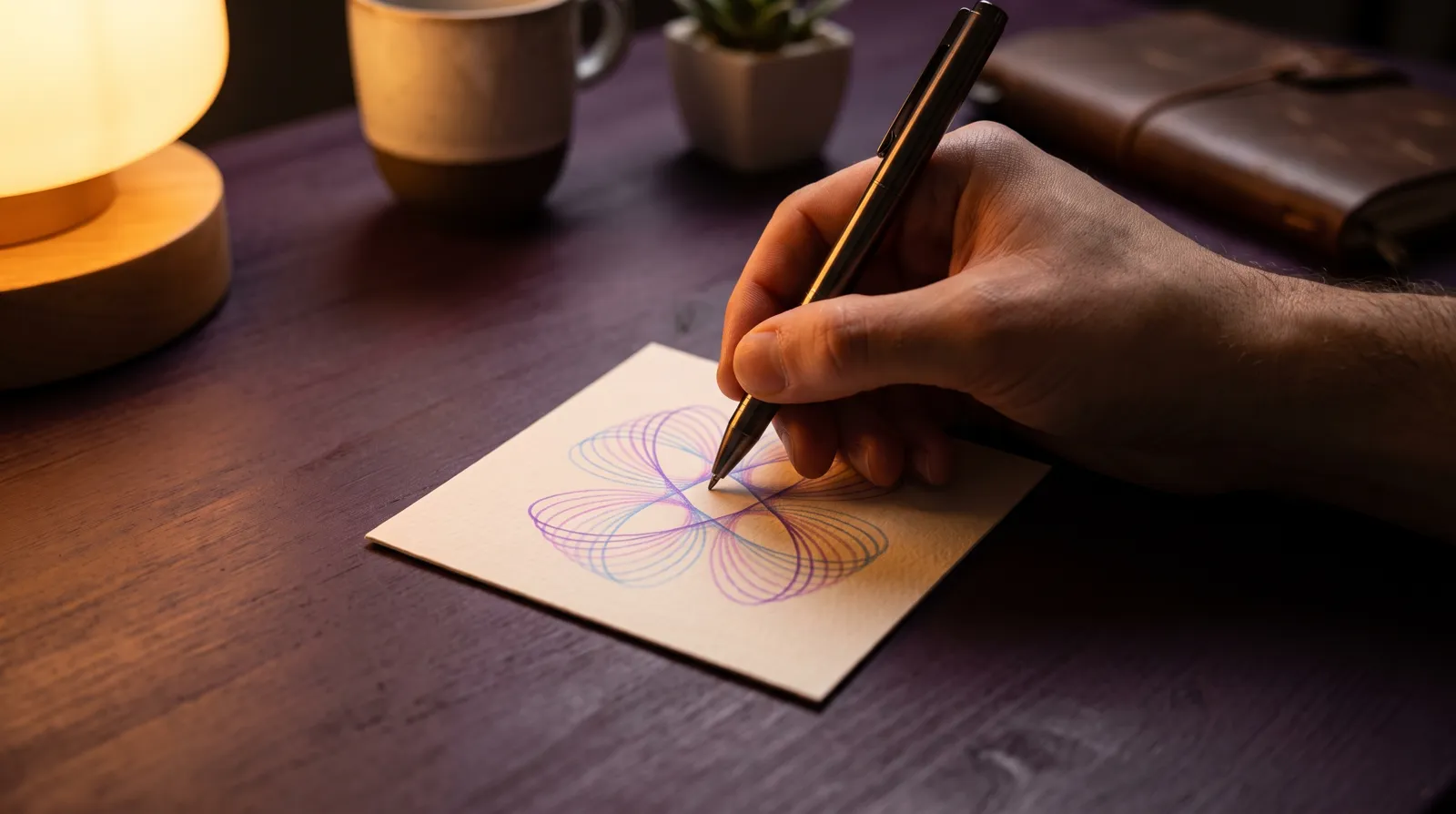
There is a moment, a few minutes into filling a small square of paper with repeating pen strokes, when something in the chest unclenches. The to-do list recedes. The hand moves in little loops and hatches, the pattern grows row by row, and the mind, given one simple thing to do, stops doing seventeen others. This is the quiet promise of Zentangle, a drawing method designed not to produce art, although it often does, but to produce the state you are in while making it.
If you have ever told yourself you cannot meditate because your thoughts will not sit still, and also that you cannot draw, Zentangle was invented for precisely you. It asks for no talent, no imagery, no meaning. Only a pen, a small piece of paper, and the willingness to make one deliberate stroke at a time.
What Zentangle actually is
The method was developed in the early 2000s by Rick Roberts, a former monk, and Maria Thomas, a calligrapher, after Maria described the sensation of complete absorption she felt while drawing background patterns on a manuscript: timeless, free, utterly focused. The pair set out to bottle that state. Their insight was that the absorption did not come from artistic skill. It came from structure: simple repetitive strokes, a small defined space, and no possibility of failure.
The classic practice uses a tile, a square of paper roughly nine centimetres across, small enough to finish in one sitting. You draw a light pencil border, then a casual line or two inside it called a string, which divides the tile into sections. Each section is then filled with a tangle, a named pattern built from elemental strokes: dots, lines, curves, orbs. Patterns have friendly names like Crescent Moon, Hollibaugh and Printemps, and each is deliberately easy, a sequence of strokes anyone who can write their name can repeat.
The rule that changes everything: no mistakes
Zentangle is drawn in ink, and this is not an accident. There is no rubber, no erasing, no undo. A stroke that lands somewhere unexpected is not a mistake; it is simply what the drawing now is, and the practice invites you to incorporate it, to build the next pattern around it, the way a river accommodates a fallen stone. For many people this is the most quietly radical part of the whole method. Somewhere in adulthood most of us absorbed the idea that marks must be correct, that pages must be neat, that errors are small emergencies. Twenty minutes of deliberately unerasable drawing is a gentle rehearsal for a different relationship with imperfection altogether.
A stroke that lands somewhere unexpected is not a mistake. It is simply what the drawing now is.
Why repetitive drawing calms the mind
The soothing power of structured mark-making is not merely anecdotal. In a frequently cited experiment, researchers induced mild anxiety in participants and then asked them to colour either a structured mandala pattern, a plaid design, or a blank page. The structured patterns reduced anxiety significantly more than free-form colouring (Curry and Kasser, 2005, Art Therapy). Structure, it seems, is the active ingredient: when the eyes and hands are given a bounded, repetitive, mildly demanding task, attention settles into it, and the churn of self-referential thought, the rehearsing and ruminating, has nowhere to run.
Zentangle concentrates that ingredient. The strokes are rhythmic, and rhythm is deeply regulating to the nervous system, as anyone who has been calmed by knitting, kneading or rowing knows. The field of view narrows to a few centimetres of paper, which quiets the wider visual world. And because each stroke is a small decision followed by a small completion, the practice delivers a steady drip of finishing, something modern work, with its endless tabs and threads, almost never provides.
How to begin, tonight, with what you have
You do not need official tiles or pens to start, only paper with some weight to it and any pen you enjoy. Then the ritual matters more than the materials:
- Cut or fold a small square of paper, roughly the size of your palm. Smallness is the point; a whole page invites ambition, and ambition is what you are resting from.
- Draw a soft pencil border, then a lazy line or two across the inside to divide it into sections. There is no wrong way to do this.
- Choose one simple repeating pattern per section: rows of overlapping crescents, nested squares, little ropes of S-curves. Repeat it slowly until the section is full.
- Let the pen move at the speed of your breath rather than the speed of your thoughts. When the tile is full, stop, hold it at arm's length, and turn it, since tangles have no up or down.
Fifteen to twenty minutes is plenty. Many practitioners keep their finished tiles in a small box, not as a portfolio but as a record of sittings, the way a meditator might note sessions in a journal.
Zentangle, doodling and the family of slow attention
Is this just doodling with better marketing? Not quite. Doodling is usually something the hand does while the mind is elsewhere, in a meeting or on the telephone. Zentangle reverses the arrangement: the marks are the whole of the activity, made deliberately, one at a time, with full attention. It belongs to the same family as calligraphy practised as meditation, sand mandalas, and adult colouring, all of them ways of giving the restless visual mind a beautiful, bounded task. Colouring fills someone else's lines; Zentangle lets you grow your own, which many people find more absorbing still.
And on the evenings when even finding a pen feels like too much, the same principle works in softer forms. Watching a slow, repetitive motion settles attention through the eyes much as drawing settles it through the hand; a few unhurried minutes with a drifting Feelsy texture, or its 4-7-8 breathing exercise before bed, rests on exactly the rhythm and repetition that make a tangle so soothing. The medium matters less than the message it sends to the nervous system: nothing here needs solving. One stroke, one breath, one row at a time.
Feelsy is a wellness product, not medical advice. If stress, anxiety or sleep problems persist, please speak with a qualified professional.
References
- Curry, N. A., & Kasser, T. (2005). Can coloring mandalas reduce anxiety? Art Therapy: Journal of the American Art Therapy Association, 22(2), 81-85.
Frequently Asked Questions
What is the Zentangle method?
Zentangle is a meditative drawing practice created in the early 2000s by Rick Roberts and Maria Thomas. You fill a small square of paper, called a tile, with simple repeating ink patterns known as tangles. The aim is not the finished artwork but the calm, absorbed state you enter while drawing.
Do I need to be good at drawing to try Zentangle?
No. Every tangle is built from elemental strokes such as dots, lines, curves and orbs, so anyone who can write their name can do it. There are no mistakes in the method: stray strokes are simply incorporated into the pattern rather than erased or corrected.
Does drawing patterns really reduce anxiety?
Structured pattern work has genuine research behind it. In one experiment, participants who coloured structured mandala or plaid patterns after an anxiety-inducing task showed significantly greater reductions in anxiety than those who coloured freely on a blank page. Bounded, repetitive tasks give attention somewhere steady to rest.
What do I need to start Zentangle?
Only a pen and a small square of reasonably thick paper. Fold or cut a piece roughly the size of your palm, draw a light border, divide the space with a casual line or two, and fill each section with one slow repeating pattern. Fifteen to twenty minutes makes a complete session.
What is the difference between Zentangle and doodling?
Doodling is usually absent-minded, something the hand does while attention is elsewhere. Zentangle is the opposite: each stroke is made deliberately and with full attention, one at a time, inside a small defined space. That deliberateness is what turns mark-making into a form of meditation.
About the author
Contributing writer
Eleonor writes about contemplative traditions, attention and the cultural history of calm. She has spent two decades collecting the rituals humans use to slow down, from zazen halls to hammams, and translating them for modern, screen-lit lives.
Feel it for yourself.
Feelsy turns reading about calm into practising it. Two minutes of a slow texture is often the whole difference.


Related reading
 Visual Meditation
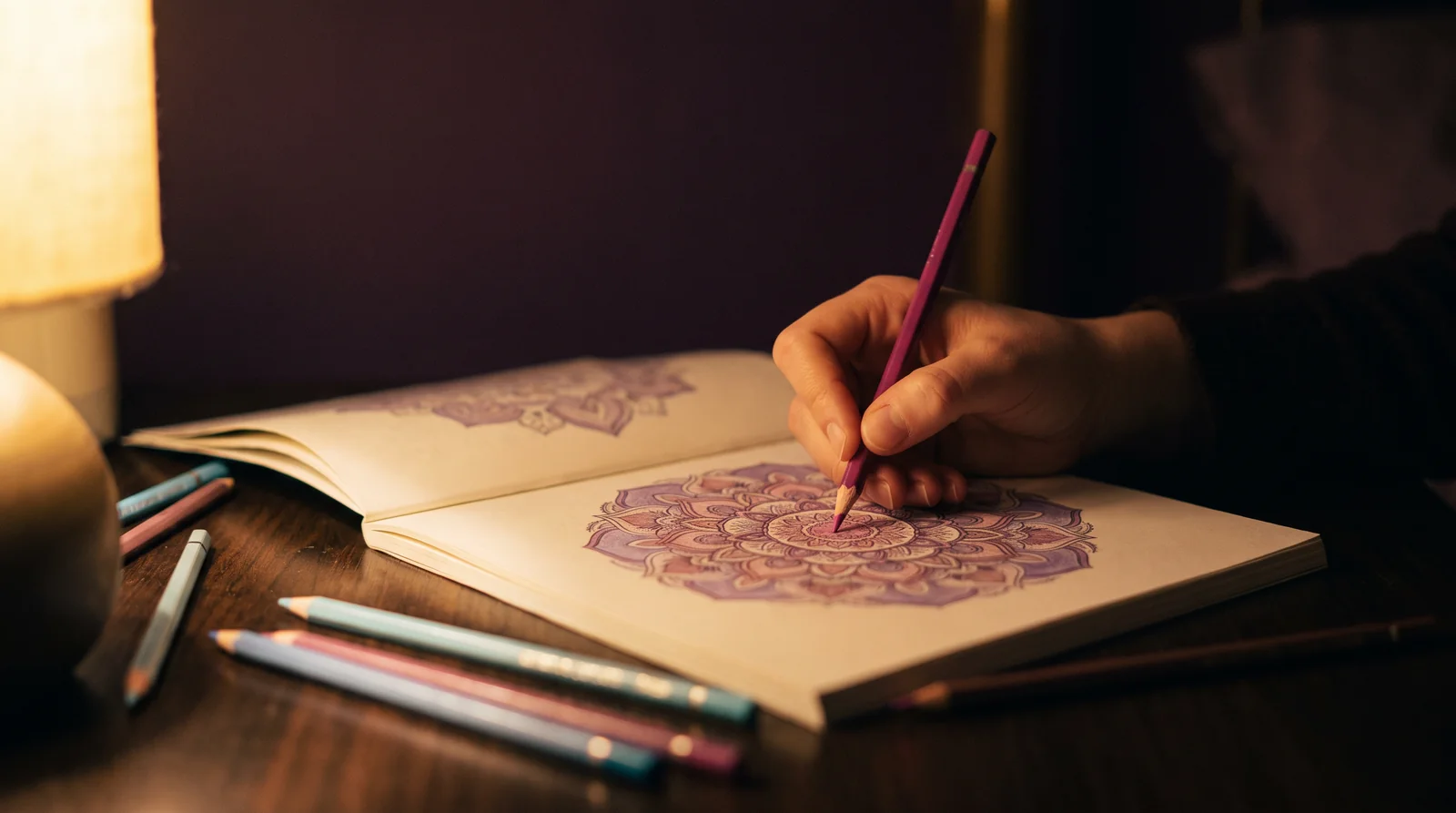
Colouring In: Why Adult Colouring Books Quiet an Anxious Mind
Why colouring calms adult minds: what research on mandala colouring and anxiety found, and how to turn ten minutes with pencils into a visual meditation.
 Visual Meditation
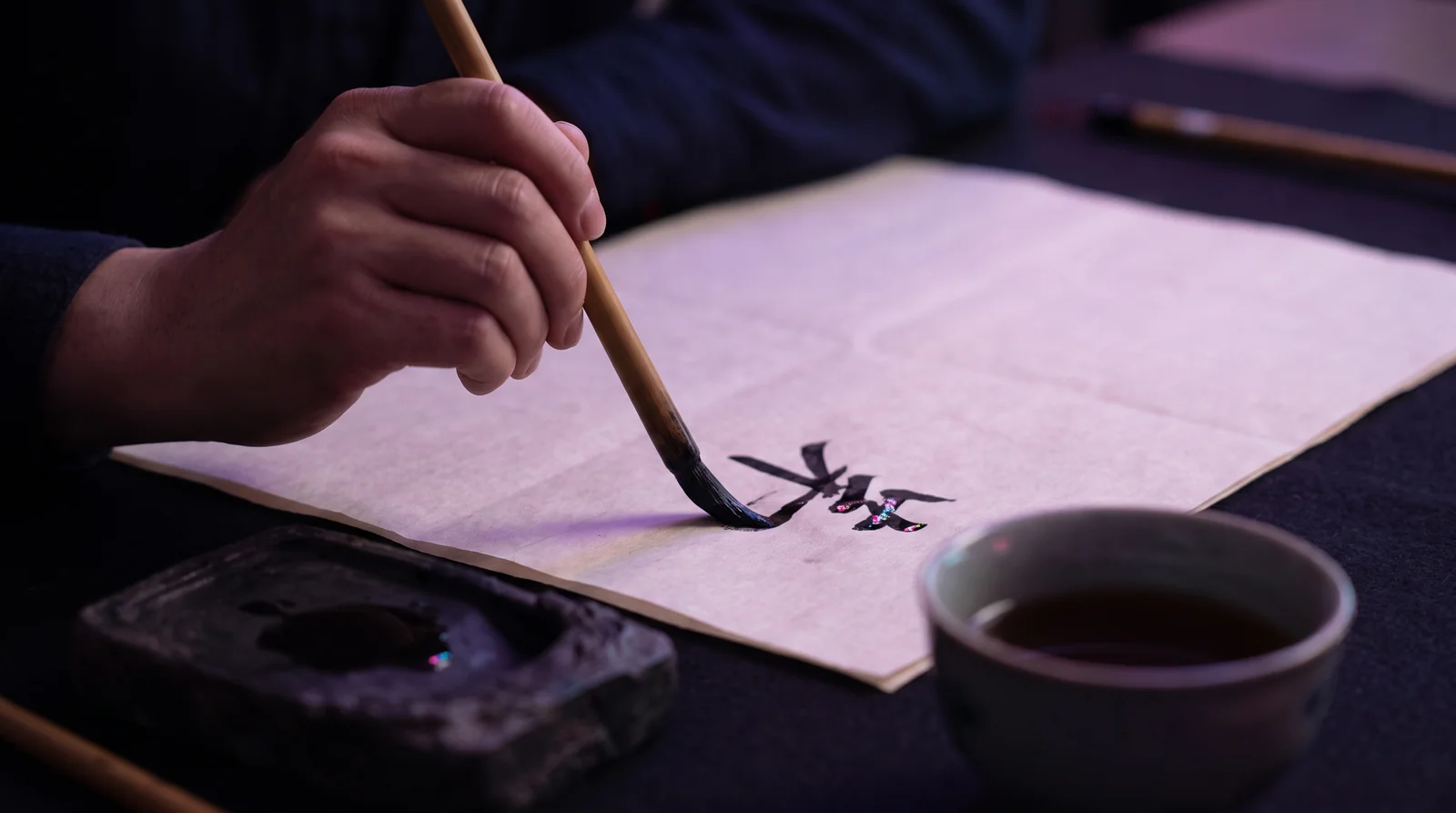
Calligraphy as Meditation: Why Slow Writing Calms a Fast Mind
Why calligraphy calms a racing mind: the science of slow writing and attention, and how to practice mindful handwriting with any pen and ten quiet minutes.
 Ancient Wisdom
Sand Mandalas and the Art of Letting Go
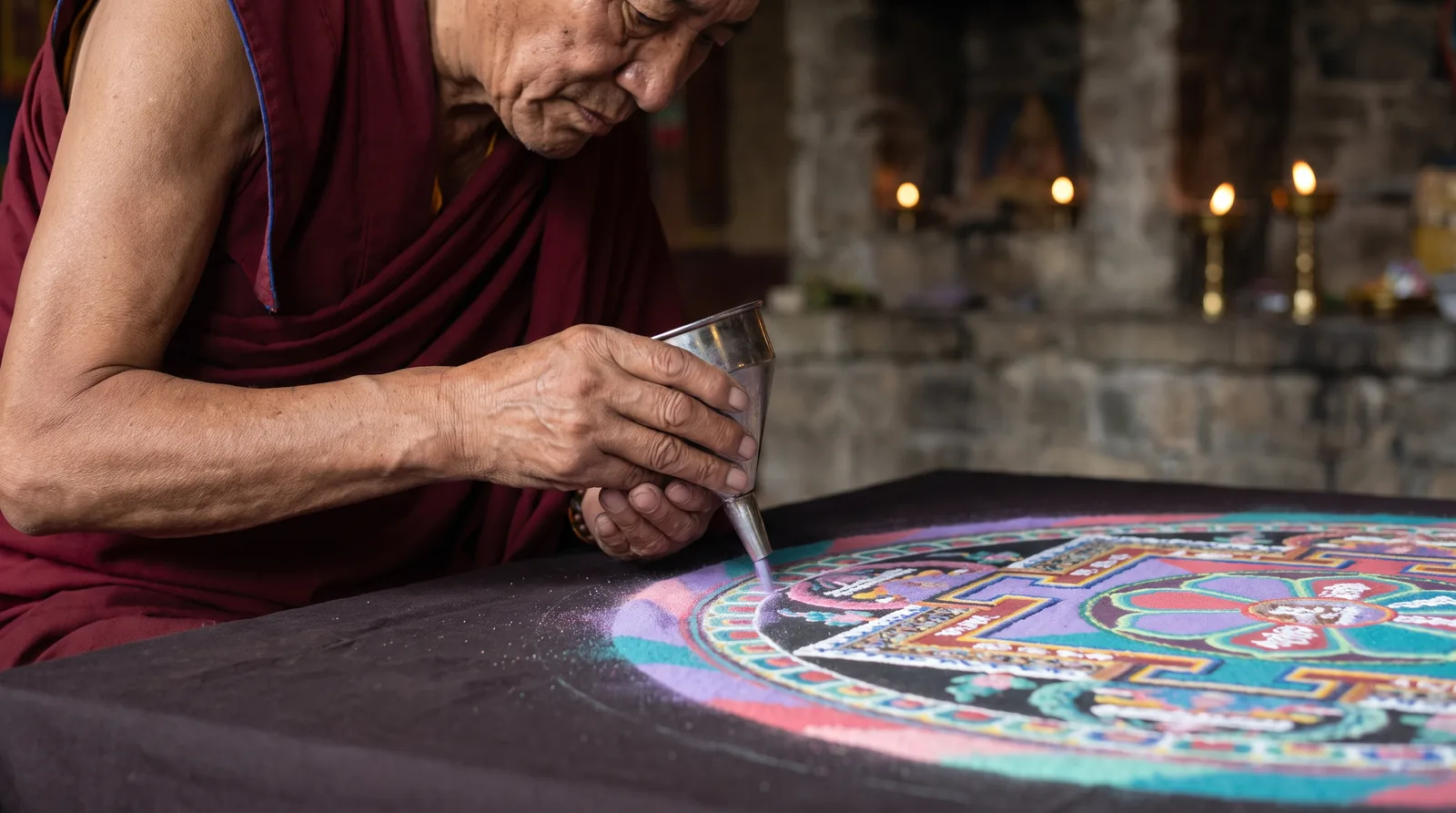
Tibetan monks spend days building an intricate sand mandala, then sweep it away. What the ritual teaches about impermanence, process and why watching can be meditation.
 Visual MeditationNew
Why Ink Blooming in Water Is So Mesmerizing
A drop of ink unfurls underwater like slow smoke, and you cannot look away. The science and the old floating-ink arts behind one of the calmest sights there is.
 Visual Meditation
Highway Hypnosis: Why You Can't Remember the Last Ten Miles
You arrive at your exit with no memory of driving there. Highway hypnosis is real and common: here's the science of the road trance and how to use it safely.
 Visual Meditation
Why the Northern Lights Mesmerise Us: Aurora Watching as Visual Meditation
What causes the northern lights, why the aurora feels so calming to watch, and how to turn sky watching into a simple visual meditation practice.