Biphasic Sleep: Is Sleeping in Two Shifts Actually Natural?
Biphasic sleep splits the night into two blocks with quiet time between. Here's what history and sleep research say about two-shift sleep, and who it suits.
By Kurt Woleret
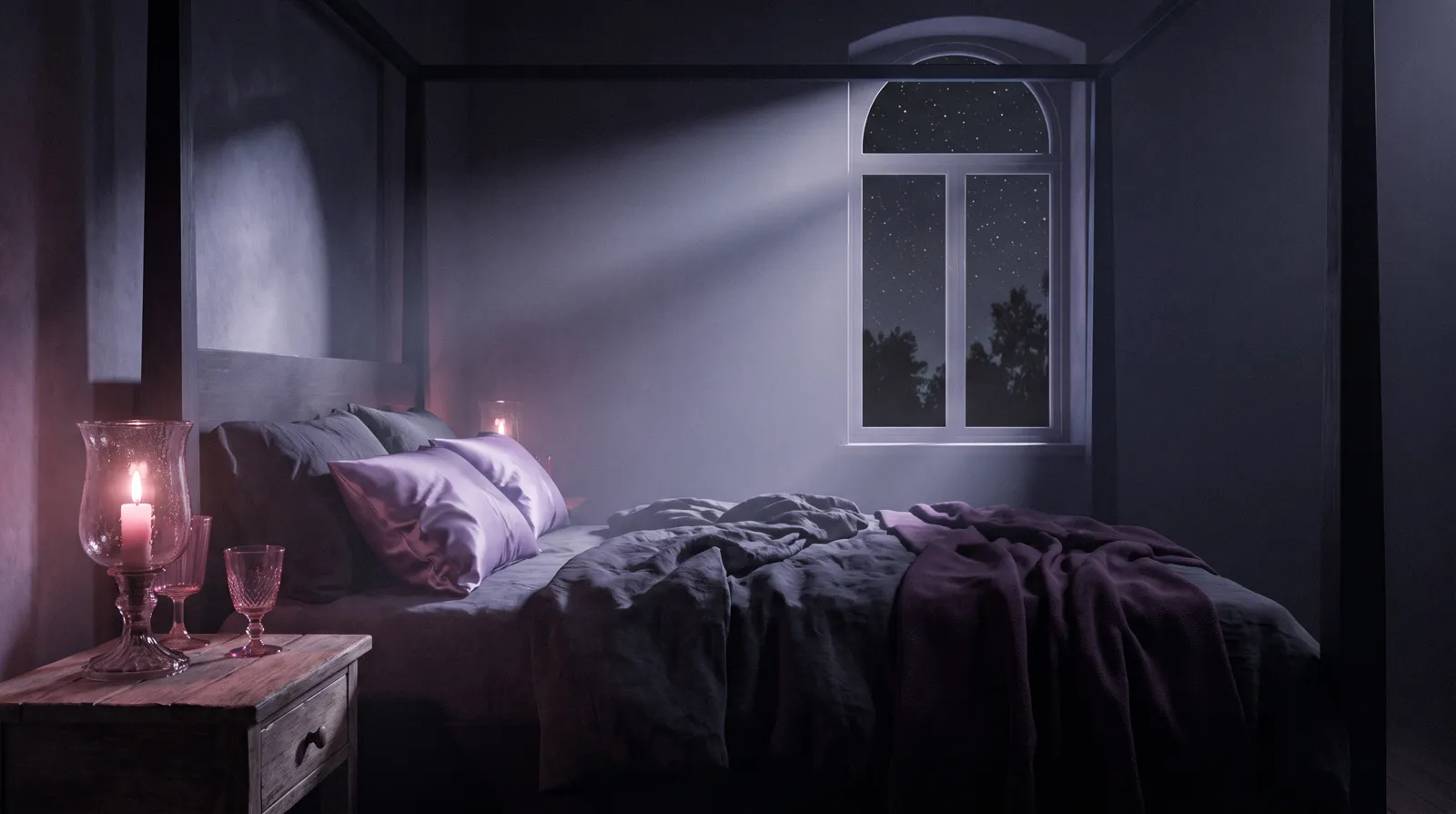
At 3:14 a.m. on a Tuesday, wide awake for no reason, I did what everyone does: I grabbed my phone and asked the internet if I was broken. The internet, for once, had good news. It said that for most of human history, waking up in the middle of the night wasn't a malfunction. It was the schedule. People slept in two shifts, with an hour or two of quiet wakefulness in between, and nobody panicked about it because nobody expected the night to be one seamless block. That idea has a name, biphasic sleep, and it's having a moment, which means it's also collecting hype it hasn't earned. So let's do what we do here: sort the history from the marketing, and figure out whether you should actually sleep in two pieces on purpose.
The night used to have an intermission
The historical case is real, and it's one of my favorite pieces of sleep research because it came from an archive, not a lab. The historian A. Roger Ekirch spent years combing diaries, court records, medical texts and novels from pre-industrial Europe, and kept finding casual references to a 'first sleep' and a 'second sleep' (Ekirch, 2001, The American Historical Review). Not as a quirk. As furniture. People went down soon after dark, woke around midnight for an hour or so, and then slept again until morning. The interval even had uses: people prayed, talked, tended the fire, thought about their dreams. Nobody lay there catastrophizing about their sleep score, partly because the sleep score hadn't been invented and partly because waking wasn't a failure. The seamless eight-hour block, in this telling, is a recent invention, largely a product of artificial lighting and industrial schedules that compressed the night and made every wakeful minute look like lost productivity.
Then a lab accidentally backed the archive up. In an experiment at the National Institute of Mental Health, Thomas Wehr had people live with 14-hour nights, no artificial light, for weeks, roughly simulating a mid-winter world before light bulbs. Their sleep didn't stay in one block. It split in two, with a stretch of calm wakefulness in the middle (Wehr, 1992, Journal of Sleep Research). Take away the electric light and the compressed schedule, and something like first and second sleep re-emerged on its own. That's a striking convergence: the diaries and the lab pointing the same direction.
For most of human history, waking at midnight wasn't a malfunction. It was the intermission.
What biphasic actually means (and what it doesn't)
Biphasic sleep just means sleeping in two segments per 24 hours. The historical version is the split night. The living version is the siesta: a shorter night plus an afternoon nap, still standard in plenty of warm places and quietly practiced in every office with a wellness room and a lock. Both are ordinary human patterns. Neither requires an app, a subreddit or a manifesto.
Then there's the internet's version: polyphasic sleep schedules with names like Uberman, where you sleep in six 20-minute naps and unlock 22 productive hours a day, allegedly. Here the evidence stops cooperating. A National Sleep Foundation consensus panel reviewed the research on chopping sleep into many pieces and concluded that polyphasic schedules carry real downsides, from impaired performance to accumulated sleep restriction, with no demonstrated benefit over consolidated sleep (Adverse impact of polyphasic sleep patterns in humans, 2021, Sleep Health). Which tracks. The historical two-shift night wasn't a productivity hack; people still spent nine or ten hours in bed. The modern nap-stacking schedules mostly work by convincing you that being chronically sleep deprived is a personality.
So should you sleep in two shifts?
Here's my read of the evidence, as someone whose bedroom faces a street that hosts a garbage truck convention at 4 a.m. If your sleep is fine, don't fix it. Consolidated sleep works well for most people living on modern schedules, and deliberately splitting your night while keeping a 9 a.m. standup is a good way to end up with two bad sleeps instead of one decent one. The biphasic research earns its keep somewhere more specific: it changes what a 3 a.m. wake-up means. If you wake in the night, lie calm for a while and drift back, that's not broken sleep. That's arguably the oldest sleep pattern on record, and treating it as a crisis is the only part that's new.
The panic matters more than the wake-up. Sleep researchers keep finding that the anxiety about being awake, the clock-checking, the mental math about how ruined tomorrow is, generates far more arousal than the wakefulness itself. The pre-industrial crowd had an advantage we can copy: they had something quiet to do with the interval and no expectation that it shouldn't exist.
A modern protocol for the middle of the night
So steal their playbook, updated for people with jobs:
- Reframe first. Awake at 3 a.m. and calm is a normal human sleep shape, not an emergency. The story you tell yourself in that minute decides the next hour.
- No clock, no feed. Checking the time starts the doom math, and the phone's bright, fast content is engineered to finish the job of waking you.
- Do something dim and slow. The historical intermission was candlelight and quiet thought, not torchlight and tax preparation. Keep lights low and stimulation lower.
- Give it 20 minutes or so. If sleep isn't coming back, get up, keep it boring and dim, and return when your eyelids vote yes.
This is the one place I'll mention what I actually do, since it's the modern equivalent of staring at the embers. I keep Feelsy on the nightstand for exactly this interval: a slow, dark texture at minimum brightness, the kind of drifting visual that asks nothing of you, with a round of the built-in 4-7-8 breathing exercise to slow everything down. Autoplay means no decisions, no menus, no light show. It's candle-watching for people whose building has a strict no-open-flame policy, which in my case is enforced by a superintendent named Vlad.
The honest bottom line
Biphasic sleep is natural in the sense that it's a shape human sleep readily takes when the conditions allow it. That doesn't make it mandatory, superior or worth engineering into a life that runs on meetings. The useful takeaways are smaller and better: your night doesn't have to be seamless to be healthy, a calm wake-up isn't a broken one, and the intermission goes best when you treat it the way your ancestors did, as a quiet, dim, unremarkable pause. The garbage trucks, unfortunately, remain unsolved.
Feelsy is a wellness product, not medical advice. If stress, anxiety or sleep problems persist, please speak with a qualified professional.
References
- Ekirch, A. R. (2001). Sleep we have lost: Pre-industrial slumber in the British Isles. The American Historical Review, 106(2), 343-386.
- Wehr, T. A. (1992). In short photoperiods, human sleep is biphasic. Journal of Sleep Research, 1(2), 103-107.
- National Sleep Foundation sleep timing and variability consensus panel (2021). Adverse impact of polyphasic sleep patterns in humans. Sleep Health.
Frequently Asked Questions
What is biphasic sleep?
Biphasic sleep means sleeping in two segments per 24 hours instead of one block. That can be a split night, two sleeps separated by an hour or so of quiet wakefulness, or a shorter night paired with an afternoon siesta. Both are ordinary, well-documented human sleep patterns.
Is biphasic sleep healthy?
The two-block pattern itself appears to be a natural shape for human sleep; historical records and a light-restriction experiment both show it emerging when nights are long and artificial light is absent. For most people on modern schedules, though, consolidated sleep works well, and there's no need to force a split night if your sleep is fine.
What were first sleep and second sleep?
In pre-industrial Europe, people commonly slept in two shifts: a first sleep beginning soon after dark, an hour or two of calm wakefulness around midnight, then a second sleep until morning. Historian A. Roger Ekirch documented hundreds of casual references to this pattern in diaries, court records and other sources, suggesting it was completely unremarkable at the time.
Is polyphasic sleep, like the Uberman schedule, a good idea?
The evidence says no. A National Sleep Foundation consensus panel found that schedules chopping sleep into many short naps carry real downsides, including impaired performance and accumulated sleep loss, with no demonstrated benefit over consolidated sleep. The historical two-shift night was not a way to sleep less; people still spent long hours in bed.
What should I do when I wake up at 3 a.m.?
Stay calm, avoid checking the clock or your phone, and keep everything dim and slow. A quiet wake-up followed by drifting back to sleep fits the oldest recorded human sleep pattern, and the anxiety about being awake usually costs more sleep than the wakefulness itself. If sleep hasn't returned after 20 minutes or so, get up briefly and keep it boring until drowsiness returns.

About the author
Contributing writer
Kurt is a New York based writer covering the practical science of stress, sleep and focus. He is the resident sceptic of the Journal: if a technique cannot survive a crowded subway commute and a deadline week, he is not interested in it.
Feel it for yourself.
Feelsy turns reading about calm into practising it. Two minutes of a slow texture is often the whole difference.


Related reading
 Sleep
SleepWhy You Wake Up at 3 AM (and How to Get Back to Sleep)
Waking at 3 AM isn't a curse or a sign something's broken. Here's the sleep science behind those small-hours wake-ups, and what actually gets you back down.
 Sleep
SleepSleep Cycles, Explained: What Actually Happens Every 90 Minutes
What a sleep cycle actually is, how long one really lasts, why deep sleep front-loads your night, and how to time your alarm so mornings hurt less.
 Sleep
SleepHow Much Sleep Do You Actually Need? An Honest Look at the Numbers
Eight hours is the number everyone quotes and almost nobody sourced. Here's where the official sleep recommendations come from and how to find your range.
 SleepNew
Night Owl vs Early Bird: The Science of Chronotypes
Night owl or early bird isn't a personality flaw or a virtue. It's a chronotype. Here's what the science says about your body clock and how to work with it.
 Sleep
SleepHow to Wake Up Early (Without Hating Your Life)
Want to become a morning person? Here's how to wake up early using light, timing and consistency, based on what circadian science actually shows.
 Sleep
SleepCan't Sleep? Why Getting Out of Bed Is the Counterintuitive Fix
Lying awake trying harder is the one thing that makes insomnia worse. Here's the 20-minute rule, the science of stimulus control, and how to use it.