Do Sleep Masks Actually Work? The Case for Twelve Dollars of Darkness
Do sleep masks actually work? What a 2023 study found about darkness, memory and next-day alertness, plus how to pick a mask you'll keep wearing.
By Kurt Woleret
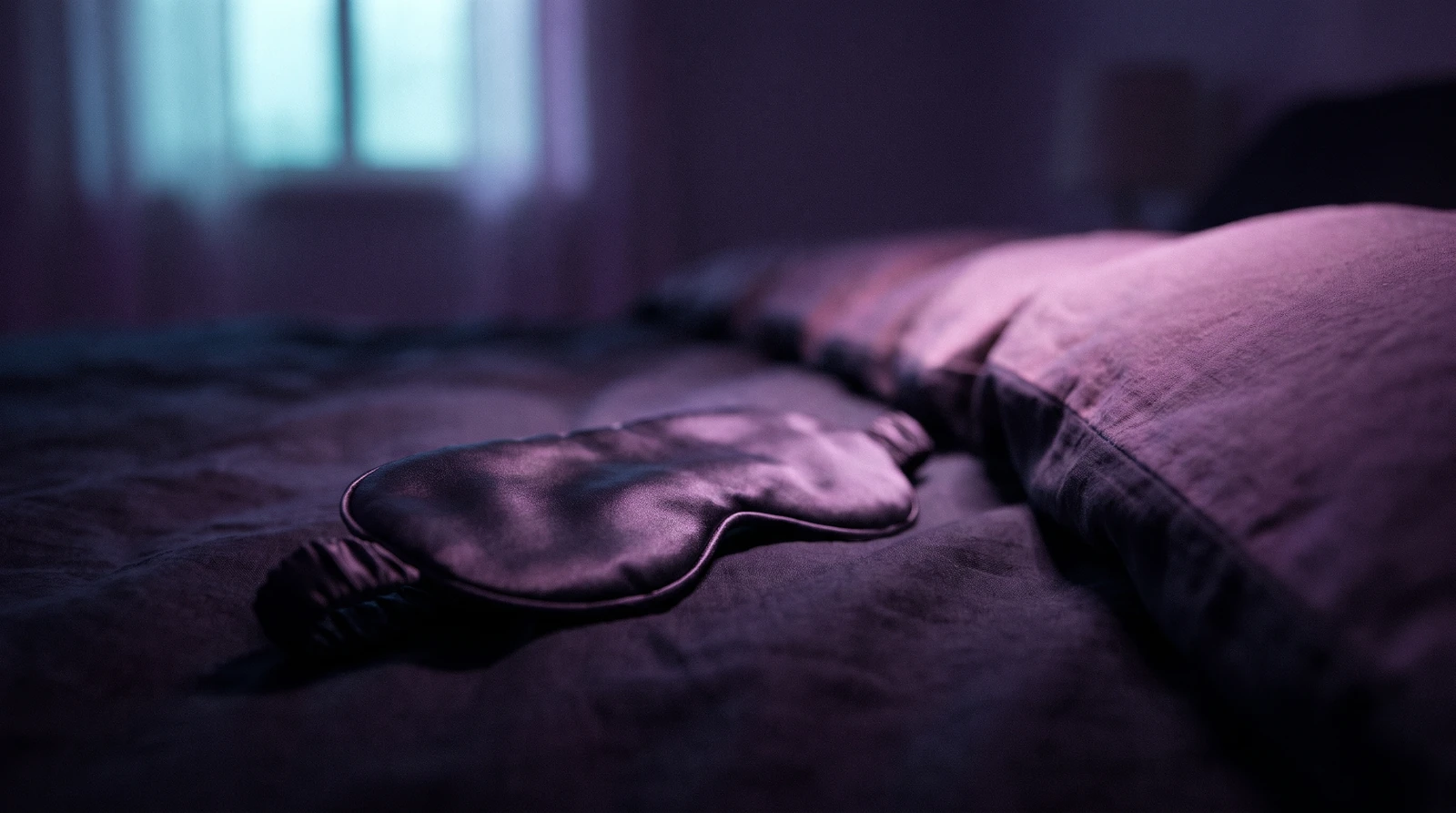
I review sleep products for a living, sort of, in the sense that I buy them during deadline weeks and then read the research and feel foolish. The drawer of shame contains blue light glasses, a jaw strap, and a bracelet that was supposed to vibrate me calm. So believe me when I say I approached the humble sleep mask ready to file it with the rest. Twelve dollars of polyester standing between me and the streetlight outside my apartment window, which has the approximate wattage of a prison searchlight. Here's the twist: the mask is one of the only things in the drawer that walked away from the evidence intact.
Your bedroom is not as dark as you think
Start with the problem. Unless you live in a cabin or spent real money on blackout curtains, your bedroom at 3 am is a planetarium of junk light. The streetlight. The neighbor's porch bulb. The router's blink, the TV's standby dot, the phone that lights up face-down like a firefly under a cup. City apartments are the worst offenders; mine gets a free light show from a bodega sign that never sleeps. And your eyelids, which you might assume are the body's built-in blackout solution, are thin enough to pass a meaningful amount of that light straight through to the retina. Closed eyes are a dimmer switch, not an off switch.
That matters because your circadian system keeps listening to light all night. Light reaching the eye in the dark hours can nudge the body clock and lean on melatonin, the hormone that signals night to the rest of you. You don't have to wake up for this to happen. The machinery reads the room while you're unconscious, which is both impressive and slightly rude.
The study that made me keep the mask
In 2023, researchers at Cardiff University ran a refreshingly simple experiment, published in the journal Sleep. Young adults spent about a week sleeping at home in an eye mask, and another week without one, then came into the lab for testing. After the masked week, they did better at learning new word pairs, a standard test of episodic memory, and they were more alert on a reaction-time task, the kind where you jab a button the instant a signal appears. Same beds, same lives, same people; the only variable was darkness strapped to the face. In a follow-up experiment with a wearable sleep tracker, the memory benefit tracked with time spent in deep sleep, which is exactly the stage you'd expect to matter, since it's when the brain does its heaviest filing.
Same beds, same lives, same people. The only variable was twelve dollars of darkness strapped to the face.
Normal caveats apply, and I'd lose my sceptic's license if I skipped them. It's one study, the participants were young and healthy, and the effects were modest: sharper, not superhuman. Nobody is claiming a mask will reorganize your life. But as sleep interventions go, this is about as cheap, safe, and low-effort as they come, and it has something most gadgets in my drawer never had: a plausible mechanism and a controlled trial pointing the same direction.
Why darkness earns its keep
The mechanism is boring, which in sleep science is a compliment. Total darkness means your melatonin signal runs clean through the night instead of getting sanded down by stray photons. It means the half-awakenings everyone has, the brief surfacings you don't remember, are less likely to snag on a lit room and escalate into actual awake. And unlike blackout curtains, the mask travels. Hotel rooms, red-eyes, a partner who reads at 1 am with the dedication of a medieval monk: the mask handles all of it for the price of a sandwich. It's the rare sleep product where the marketing claim and the physics are the same sentence.
How to pick one you'll actually wear
The research doesn't crown a specific style, so this part is field notes, not findings:
- Contoured masks with molded eye cups don't press on your eyelids, so you can blink and your lashes survive. Side sleepers tend to find them less squashy.
- Flat silk or satin masks are cooler and pack flat, but they press lightly on the eyes, which some people hate and some find weirdly soothing.
- Check the strap before the fabric. An adjustable strap that doesn't dig in decides whether the mask is still on your face at 4 am or on the floor.
- Cheap is fine. The job is blocking light, not impressing anyone. Spend the savings on literally anything else.
The mask is the last step, not the whole plan
One honest warning: a mask blocks the light in the room, not the light you aim at your own face until 12:30. If the last hour of your night is a bright feed at full brightness, you're undoing the work before the mask goes on. Dim the final stretch. Keep whatever's on the screen dark, slow, and finite; this is the hour Feelsy was built for, with its near-black palette and textures that drift on autoplay instead of demanding taps. Run the 4-7-8 breathing exercise once you're horizontal, then mask on, lights out for real this time. Darkness works best when you stop arguing with it.
So: do sleep masks work? For blocking light, obviously. For sharper memory and alertness the next day, one good controlled study says yes, modestly, with a mechanism that makes sense. That's a better report card than almost anything else in the drawer of shame, and the drawer is deep. The jaw strap remains unavailable for comment.
Feelsy is a wellness product, not medical advice. If stress, anxiety or sleep problems persist, please speak with a qualified professional.
References
- Greco, V., Bergamo, D., Cuoccio, P., Konkoly, K. R., Muñoz Lombardo, K., & Lewis, P. A. (2023). Wearing an eye mask during overnight sleep improves episodic learning and alertness. Sleep, 46(3), zsac305.
Frequently Asked Questions
Do sleep masks actually improve sleep quality?
A 2023 study in the journal Sleep found that young adults who wore an eye mask overnight for about a week learned new information better and reacted faster the next day than when they slept without one. The memory benefit tracked with time spent in deep sleep, so the darkness appears to help the sleep itself, not just comfort.
Why does light in the bedroom matter if my eyes are closed?
Eyelids are thin enough to let a meaningful amount of light through to the retina, and your circadian system keeps responding to light all night. Stray light from streetlights, standby LEDs and screens can lean on melatonin and make brief awakenings more likely to escalate, even if you never remember waking.
Are sleep masks better than blackout curtains?
They solve the same problem in different ways. Blackout curtains darken the whole room but stay home; a mask costs far less and works in hotel rooms, on flights, and next to a partner who reads late. Many people use curtains at home and keep a mask for travel. For pure light-blocking per dollar, the mask wins.
What kind of sleep mask is best?
The research doesn't favor a specific style, so comfort decides. Contoured masks with molded eye cups avoid pressure on the eyelids and suit side sleepers; flat silk masks are cooler and pack flat but press lightly on the eyes. The strap matters most: if it digs in or slips, the mask ends up on the floor by morning.
Will a sleep mask fix my sleep problems?
No single product will. A mask blocks room light, but it can't undo a bright screen held to your face until midnight or an erratic schedule. Treat it as the last step of a dim, consistent wind-down rather than the whole plan. If you have persistent sleep trouble, it's worth talking to a professional.

About the author
Contributing writer
Kurt is a New York based writer covering the practical science of stress, sleep and focus. He is the resident sceptic of the Journal: if a technique cannot survive a crowded subway commute and a deadline week, he is not interested in it.
Feel it for yourself.
Feelsy turns reading about calm into practising it. Two minutes of a slow texture is often the whole difference.


Related reading
 Sleep
How to Fall Asleep Faster: Sound, Light and Ritual
Falling asleep is a skill, not a stroke of luck. Here is how sound, light and a 15-minute ritual can quiet a racing mind and shorten the trip to sleep.
 Sleep
The Best Temperature for Sleep (and Why Your Bedroom Runs Hot)
What's the best temperature for sleep? Why cooler rooms help you fall asleep faster, what the research says about heat, and how to fix a hot bedroom.
 Sleep
Morning Sunlight: The Cheapest Sleep Aid You're Not Using
Morning sunlight is the strongest signal your body clock gets all day. What the camping study showed, why window light falls short, and how to use it right.
 Sleep
Falling Back: A Survival Guide for the End of Daylight Saving Time
Clocks fall back this weekend, and the free hour is slightly fake. What the end of daylight saving time really does to your sleep, and how to land it well.
 Sleep
The Best Alarm Sound to Wake Up To, According to Research
Harsh beeping may be making your mornings worse. What research says about the best alarm sound to wake up to, and how to choose one your brain won't fight.
 Sleep
Can You Learn While You Sleep? What the Science Actually Says
Sleep learning is an old dream and mostly a myth, but not entirely. What research really shows about learning, memory and your sleeping brain.