Do Weighted Blankets Actually Work? What the Research Says
Weighted blankets promise calmer nights through deep pressure. Here's what the best clinical trial actually found, who benefits most, and how to pick one.
By Kurt Woleret
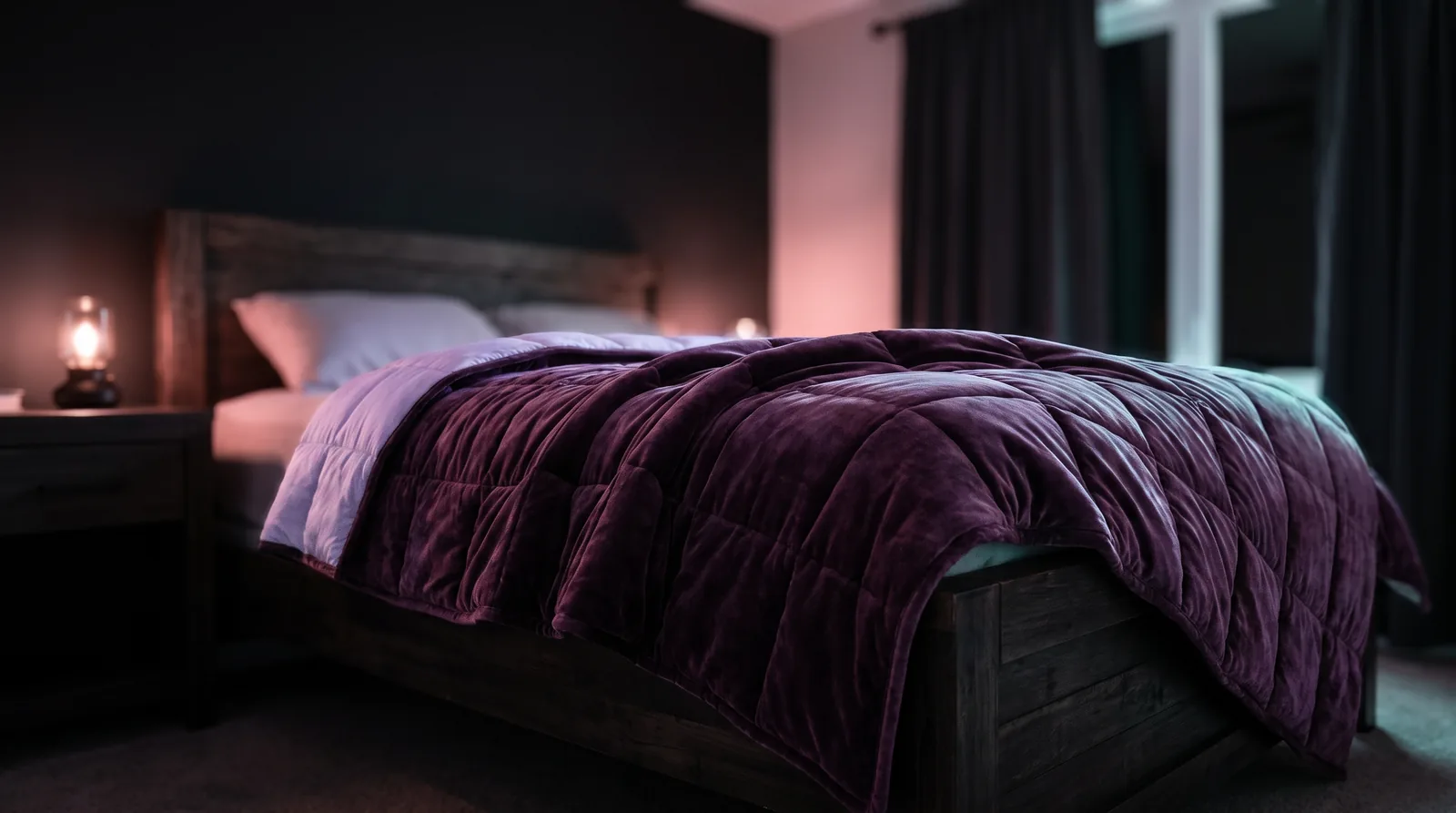
I own a fifteen-pound blanket. In a New York apartment, where every object has to justify its square footage, that's a serious commitment. I bought it during a stretch of bad sleep a few years back, in the exact mental state the weighted blanket industry loves: 2 a.m., wide awake, phone in hand, willing to believe. The pitch is seductive. Ancient swaddling wisdom, modern materials, a hug in textile form. The price tags run from fifty dollars to three hundred. So does it work, or did I buy the world's heaviest placebo? The honest answer is more interesting than either yes or no, so let's go through it properly.
The claim: deep pressure, calmer nervous system
The theory behind weighted blankets is called deep pressure stimulation. Firm, distributed pressure on the body is supposed to nudge the nervous system away from fight-or-flight and toward rest-and-digest: slower heart rate, less vigilance, easier descent into sleep. It's the same logic as swaddling an infant, a firm hug, or the way some people with anxiety or autism find relief under heavy quilts. As mechanisms go it's plausible, and it has the advantage of being something you can feel immediately. Skin and joints report pressure to the brain, and the brain generally reads steady, even pressure as safety. The question was never whether pressure feels nice. It's whether a heavy blanket produces measurable, durable improvements in actual sleep.
What the strongest study found
The best evidence we have is a randomized controlled trial from Sweden published in the Journal of Clinical Sleep Medicine (Ekholm et al., 2020). Researchers took adults with insomnia alongside psychiatric conditions like depression, bipolar disorder and ADHD, and gave half of them a weighted chain blanket and half a light control blanket. Four weeks later, the weighted group showed a significantly larger drop in insomnia severity, and they also reported less daytime fatigue and fewer symptoms of anxiety and depression. A follow-up period suggested the benefits held when people kept using the blanket. For a sleep product, that's an unusually solid result. Most gadgets in this aisle have nothing behind them but a font and a mood.
Now the caveats, because you know I keep them in stock. The participants were people with diagnosed psychiatric conditions and real insomnia, not garden-variety restless sleepers, so the results may not transfer perfectly to someone who just has a noisy street and a busy head. And blinding is basically impossible: you cannot hand someone fifteen pounds of blanket and have them not notice. Some of the effect is probably expectation. But here's the thing about sleep: expectation is not nothing. If a ritual convinces your body it's safe to power down, the sleep you get is still real sleep.
Pressure is information. Steady, even weight is the body's oldest way of hearing that nothing is chasing it.
How to choose one without overthinking it
- Weight: the common rule of thumb is around ten percent of your body weight. It's a starting point, not a law. Comfort wins over arithmetic.
- Fabric: if you sleep hot, look for breathable cotton or bamboo covers rather than plush polyester, which turns the hug into a sauna.
- Fill: glass beads distribute more evenly and lie flatter than plastic pellets; chain-style fills, like the ones in the Swedish trial, drape heavily and evenly.
- Trial run: use it on the couch for a few evenings first. If you feel trapped rather than held, that's your answer, and it's a perfectly valid one.
- Skip it for small children and anyone who can't easily move the blanket off themselves. Weight should be a choice, not a constraint.
Where it fits in an actual wind-down
A weighted blanket is not a sleep system. It's one input: touch. It works best when the rest of your evening isn't actively working against it. My own stack, refined through years of deadline weeks, is embarrassingly simple. Lights down an hour before bed. Phone parked across the room, with one exception: a few minutes of something slow and dim, like a Feelsy texture drifting on autoplay, which gives my eyes a place to land that isn't a news feed. Then the blanket, then a round or two of the 4-7-8 exercise under it, which pairs weirdly well with the weight; the pressure makes the long exhale feel like sinking. None of this is magic. All of it is signal, and the signals add up.
What the blanket can't fix
Worth saying plainly: a weighted blanket addresses the settling problem, the wired, restless, can't-power-down flavor of bad sleep. It does nothing for the other failure modes. If you fall asleep fine but wake at 3 a.m. with a to-do list, weight isn't your bottleneck. If you snore like a freight elevator and wake unrefreshed, get screened for apnea before spending blanket money. And if your evenings end with an hour of bright screens and an espresso you've decided doesn't count, the blanket will be politely outvoted by your own habits. Deep pressure is one calming input among several, and it stacks with the others rather than replacing them. The people in the Swedish trial who did well weren't handed a miracle; they were handed a consistent nightly signal of safety, and their nervous systems, given the same message every night for a month, eventually believed it. That's how most sleep improvements actually work: boring, repeated, cumulative.
The verdict
Weighted blankets are that rare wellness product where the evidence, while imperfect, actually points the right way. If your sleeplessness has an anxious, wired, can't-settle flavor, the odds are decent that weight will help, and the downside is limited to money and closet space. If you sleep hot, hate constraint, or your insomnia is driven by something a blanket can't touch, like apnea or a 6 p.m. espresso habit, fix those first. Mine stays on the bed about eight months a year. In a city that never stops broadcasting, fifteen pounds of quiet turns out to be a reasonable deal.
Feelsy is a wellness product, not medical advice. If stress, anxiety or sleep problems persist, please speak with a qualified professional.
References
- Ekholm, B., Spulber, S., & Adler, M. (2020). A randomized controlled study of weighted chain blankets for insomnia in psychiatric disorders. Journal of Clinical Sleep Medicine, 16(9), 1567-1577.
Frequently Asked Questions
Do weighted blankets actually work for insomnia?
The strongest evidence, a randomized controlled trial published in the Journal of Clinical Sleep Medicine in 2020, found that adults with insomnia and psychiatric conditions who used a weighted chain blanket for four weeks had a significantly larger drop in insomnia severity than a control group, plus less daytime fatigue and fewer anxiety and depression symptoms. The study population had diagnosed conditions, so results may not transfer perfectly to everyone, but the direction of the evidence is encouraging.
How heavy should a weighted blanket be?
The common rule of thumb is around ten percent of your body weight, so a 150-pound person would start near 15 pounds. Treat that as a starting point rather than a law; comfort matters more than arithmetic. Trying the blanket on the couch for a few evenings is the fastest way to learn whether the weight feels like being held or being trapped.
Who should not use a weighted blanket?
Skip weighted blankets for small children and for anyone who cannot easily move the blanket off themselves, since the weight should always be a choice rather than a constraint. People who sleep very hot may also struggle unless they choose breathable cotton or bamboo covers, and anyone whose sleep problems stem from conditions like sleep apnea should address those first.
How do weighted blankets calm the nervous system?
The proposed mechanism is deep pressure stimulation: firm, evenly distributed pressure appears to nudge the nervous system away from fight-or-flight and toward rest, similar to swaddling or a firm hug. The brain generally reads steady, even pressure as a safety signal, which can slow the heart rate and make the descent into sleep easier.
Can a weighted blanket replace a bedtime routine?
No. A weighted blanket handles exactly one input, touch, and it works best inside an evening that is not working against it. Dimming lights an hour before bed, keeping the phone out of reach, watching something slow instead of a feed, and pairing the weight with a slow breathing exercise like 4-7-8 all add signals that compound with the pressure.

About the author
Contributing writer
Kurt is a New York based writer covering the practical science of stress, sleep and focus. He is the resident sceptic of the Journal: if a technique cannot survive a crowded subway commute and a deadline week, he is not interested in it.
Feel it for yourself.
Feelsy turns reading about calm into practising it. Two minutes of a slow texture is often the whole difference.


Related reading
 Sleep
SleepHow to Fall Asleep Faster: Sound, Light and Ritual
Falling asleep is a skill, not a stroke of luck. Here is how sound, light and a 15-minute ritual can quiet a racing mind and shorten the trip to sleep.
 Sleep
SleepWhy Anxiety Feels Worse at Night (and What Actually Helps)
Why is anxiety worse at night? How hormones, darkness and an undistracted mind amplify worry after dark, and the gentle evening practices that help.
 Breath & Body
How to Stimulate Your Vagus Nerve (What's Real, What's Not)
The vagus nerve is the internet's favorite calm switch. Here's what it really does, what actually tones it, and which viral hacks are a waste of your time.
 SleepNew
Night Owl vs Early Bird: The Science of Chronotypes
Night owl or early bird isn't a personality flaw or a virtue. It's a chronotype. Here's what the science says about your body clock and how to work with it.
 SleepNew
How to Wake Up Early (Without Hating Your Life)
Want to become a morning person? Here's how to wake up early using light, timing and consistency, based on what circadian science actually shows.
 Sleep
SleepCan't Sleep? Why Getting Out of Bed Is the Counterintuitive Fix
Lying awake trying harder is the one thing that makes insomnia worse. Here's the 20-minute rule, the science of stimulus control, and how to use it.