Feng Shui for Sleep: Arranging a Bedroom That Lets You Rest
How feng shui principles shape a bedroom for deeper rest: bed placement, clutter, color and light, and what sleep research says about a calm room.
By Mei Lin
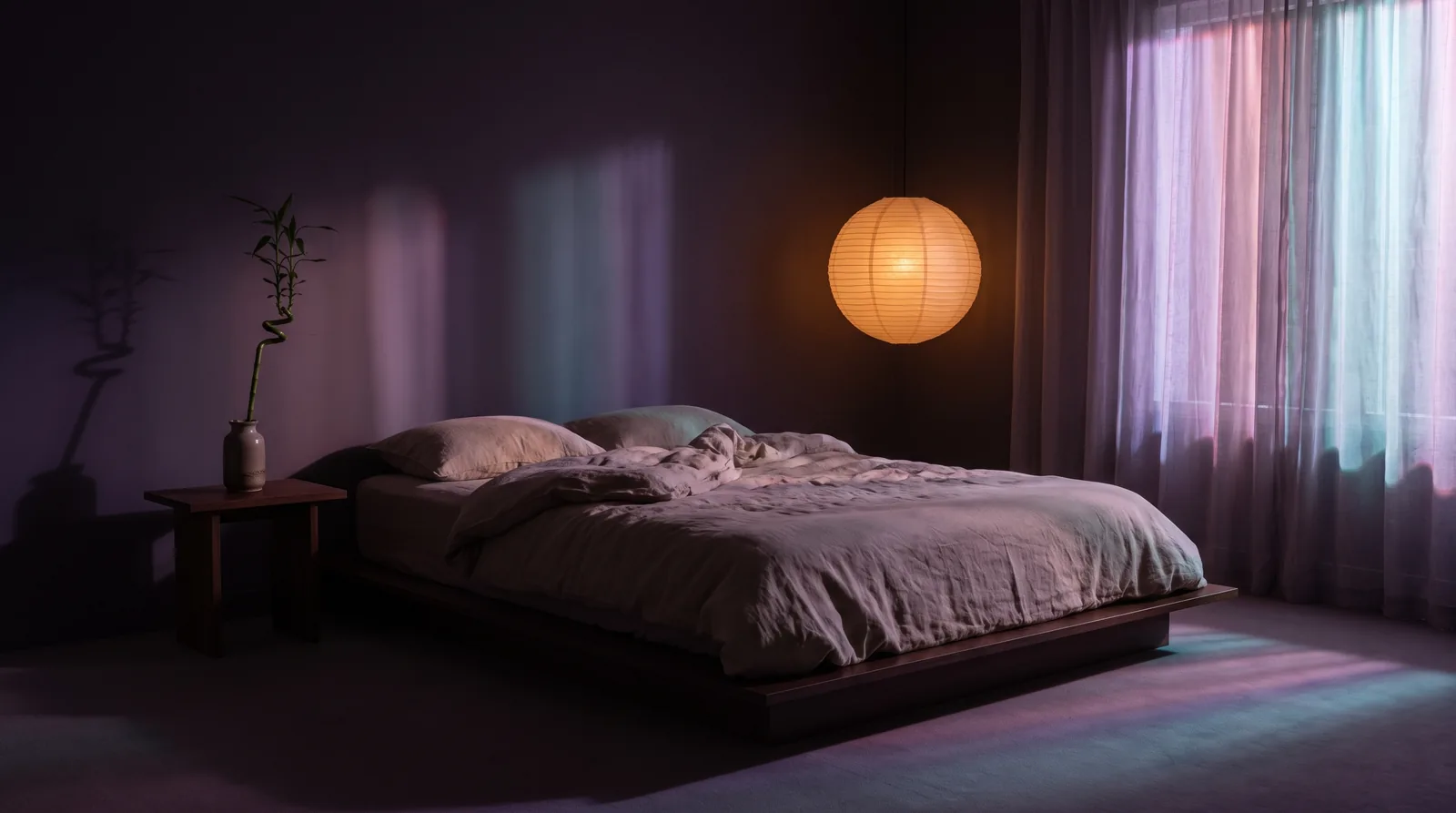
My grandmother rearranged her Shanghai apartment twice a year, and she did it the way other people consult calendars: seriously, and with the furniture's feelings in mind. The bed must not face the door. The mirror must not face the bed. The path from doorway to window should be clear, she said, so the room can breathe. As a child I thought this was superstition wearing house slippers. As an adult who has slept in many badly arranged rooms, I have come to think she was practicing something real under an old name. Feng shui, whatever else it carries, is a discipline of paying attention to how a space feels to a body, and nowhere does that matter more than the room where you close your eyes.
What feng shui asks of a bedroom
Feng shui, literally wind and water, is the classical Chinese practice of arranging spaces in harmony with the flow of qi, the vital energy that traditional thought sees moving through everything. You do not need to adopt the cosmology to use the craft. Read its bedroom rules side by side with modern sleep advice and the overlap is striking. Both want the sleeping room calm, dark, uncluttered and slightly underfurnished. Both treat the bedroom as a place with one job. Feng shui simply arrived at these conclusions centuries earlier, by watching how people rest instead of measuring it.
The commanding position
The first rule concerns the bed, which feng shui treats as the most important object in the home. It should sit in the commanding position: headboard against a solid wall, with a clear view of the door, but not directly in line with it. You should see anyone who enters without being in the doorway's path. The traditional explanation involves the flow of qi rushing through the door. The bodily explanation is simpler and, I think, the same observation in different clothes: an animal rests most deeply when nothing can approach it unseen. A bed with a wall behind it and a door in view is a den. A bed floating in the middle of a room, or hidden from the entrance, keeps some small watchful part of you on duty all night.
If the room's shape will not allow the textbook position, feng shui offers workarounds rather than despair: a sturdy headboard stands in for the wall, and a small mirror angled to show the door, never the bed, restores the missing sightline.
Clutter is unfinished business
The second rule is the one my grandmother enforced with the most energy: nothing under the bed, nothing piled in corners, nothing in the bedroom that belongs to your working life. In feng shui terms, clutter stagnates qi. In plainer terms, every object in a bedroom talks to you. The laundry asks to be folded. The papers ask to be filed. The exercise bike delivers a small sermon. A cluttered bedroom is a room full of open tabs, and sleep researchers have begun to agree: small studies presented at sleep conferences have linked cluttered sleeping spaces with poorer sleep quality, and decluttering the bedroom is increasingly suggested as a simple sleep hygiene step. The old rule and the new advice meet in the same place: what the eye rests on last should ask nothing of you.
A cluttered bedroom is a room full of open tabs. What the eye rests on last should ask nothing of you.
Color, light and quiet things
Feng shui favors soft, muted, earthy colors for bedrooms: clay, cream, gentle greens, the colors of skin and soil and dusk. Bright reds and busy patterns are for rooms where life happens loudly. Again the tradition anticipates the research on calming color: cool, muted tones tend to settle the nervous system where saturated ones stimulate it. Light matters just as much. Harsh overhead light has no place in a sleeping room; lamps at eye level or below, warm in tone, let the room dim gradually the way the sky does. And the modern amendment my grandmother never needed: the phone charges outside the bedroom, or at least across the room, face down. A glowing screen is the brightest object in any bedroom it enters, and the neediest.
Electronics generally fare badly in bedroom feng shui, and I have stopped finding this quaint. A television, a desk, a laptop on the nightstand: each one imports another room's purpose into the sleeping room. The tradition's insistence that a bedroom serve only rest is the same insight sleep clinicians repeat today: the bed should mean sleep, and very little else.
A simple evening sequence
You do not need to renovate. Most of feng shui's benefit for sleep arrives through small, finishable acts. This is the sequence I actually keep, learned half from tradition and half from trial:
- Ten minutes before bed, return the bedroom to stillness: laundry into the basket, cups to the kitchen, surfaces clear enough that nothing on them asks a question.
- Dim the lights to lamps only, warm bulbs, nothing overhead, and let the room spend its last hour at dusk.
- Put the phone to bed somewhere that is not your nightstand, so the last bright object you see is not the one that wakes you.
- Open the window for a minute if weather allows. My grandmother called this letting the room exhale; ventilation is the least mystical advice in the whole tradition.
- End with one slow thing: a few minutes of quiet breathing, or a soft visual unwinding. I often let one of Feelsy's slow textures drift on the dimmed screen across the room while I practice the 4-7-8 breath, a small moving lantern at the end of the day.
The room as an instruction
What I have kept from my grandmother's rearranging is not the cosmology but the conviction underneath it: that a room is an instruction, and a body reads it. A bedroom arranged with a protected bed, clear floors, soft colors and low light says one thing, all night, in a quiet voice: nothing is required of you here. Feng shui is one old and careful way of writing that sentence. However you write it, the point is that it gets written, because you will read it every night for the rest of your life.
Feelsy is a wellness product, not medical advice. If stress, anxiety or sleep problems persist, please speak with a qualified professional.
Frequently Asked Questions
What is the feng shui commanding position for a bed?
The commanding position places the bed with its headboard against a solid wall and a clear view of the door, without being directly in line with the doorway. You should be able to see anyone entering without lying in the door's path. If the room's shape will not allow it, a sturdy headboard and a small mirror angled to show the door, never the bed, are the traditional workarounds.
Does feng shui actually help you sleep better?
Many of feng shui's bedroom rules overlap closely with modern sleep advice: a calm, dark, uncluttered room, a protected bed position, soft muted colors, warm low light and no work objects or screens in the sleeping space. Small studies presented at sleep conferences have also linked cluttered bedrooms with poorer sleep quality. You do not need to accept the traditional cosmology for the arrangement itself to make a room easier to rest in.
Why should the bed not face the door in feng shui?
Tradition says qi rushes through the doorway, so a bed directly in line with the door sits in its path. The bodily version of the same observation is that people rest more deeply when they feel protected: a bed with a solid wall behind it and the door in view feels like a den, while a bed in the doorway's line keeps a small watchful part of you on duty.
What colors are best for a bedroom according to feng shui?
Feng shui favors soft, muted, earthy tones for sleeping rooms: clay, cream, gentle greens, the colors of dusk and soil. Bright reds and busy patterns are considered too stimulating for a room meant for rest, which matches what research on calming color suggests: cool, muted tones tend to settle the nervous system while saturated ones stimulate it.
Should I keep things stored under my bed?
Feng shui says no: clutter under the bed stagnates qi, and the tradition wants nothing beneath the sleeping body. The practical translation is that a bedroom full of stored objects is a room full of reminders, and the space where you sleep works best when what the eye rests on last asks nothing of you. If storage there is unavoidable, keep it to soft, quiet things like spare bedding.

About the author
Contributing writer
Mei grew up in Shanghai around tea that could not be hurried and grandmothers who considered stillness a skill. She writes about slow hands and sensory ritual: tea, calligraphy, qigong, and the quiet crafts that taught the world how to pay attention.
Feel it for yourself.
Feelsy turns reading about calm into practising it. Two minutes of a slow texture is often the whole difference.


Related reading
 Sleep
SleepThe Best Temperature for Sleep (and Why Your Bedroom Runs Hot)
What's the best temperature for sleep? Why cooler rooms help you fall asleep faster, what the research says about heat, and how to fix a hot bedroom.
 Sleep
SleepHow to Fall Asleep Faster: Sound, Light and Ritual
Falling asleep is a skill, not a stroke of luck. Here is how sound, light and a 15-minute ritual can quiet a racing mind and shorten the trip to sleep.
 Ancient Wisdom
The Zen Garden: Why Raking Gravel Stills the Mind
What a zen garden is and why it calms: the history of karesansui, the perception science of Ryoan-ji, and a way to practise dry-garden attention at home.
 SleepNew
Night Owl vs Early Bird: The Science of Chronotypes
Night owl or early bird isn't a personality flaw or a virtue. It's a chronotype. Here's what the science says about your body clock and how to work with it.
 SleepNew
How to Wake Up Early (Without Hating Your Life)
Want to become a morning person? Here's how to wake up early using light, timing and consistency, based on what circadian science actually shows.
 Sleep
SleepCan't Sleep? Why Getting Out of Bed Is the Counterintuitive Fix
Lying awake trying harder is the one thing that makes insomnia worse. Here's the 20-minute rule, the science of stimulus control, and how to use it.