Is It Bad to Eat Before Bed? What Late-Night Eating Actually Does
Is it bad to eat before bed? What late meals and snacks really do to sleep and reflux, when timing matters, and what to reach for at 11 p.m.
By Kurt Woleret
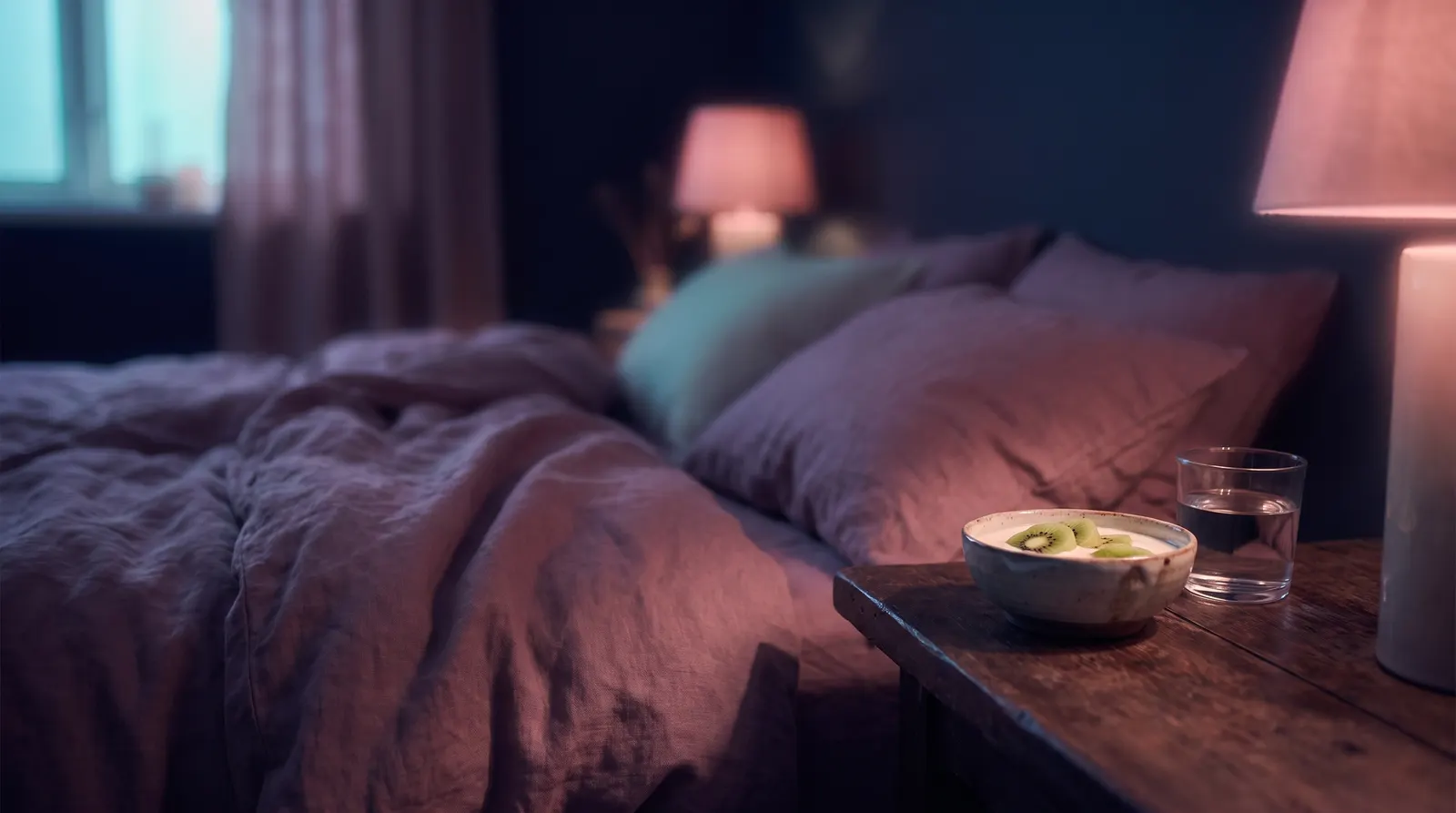
It's 11:40 p.m. and I'm standing in front of my refrigerator with the door open, lit up like a suspect in an interrogation. This is a New York apartment, so the kitchen is also the living room, which is also six feet from my bed. The question on the table: is this slice of cold pizza going to ruin my night? Somewhere along the way we all absorbed the rule that eating before bed is bad. Bad for sleep, bad for digestion, bad for you generally, in the vague moralizing way that anything enjoyable after 9 p.m. gets labeled bad. So let's do what we do here and ask what the evidence actually says. The answer is more interesting than the rule.
The rule is half right, which means it's half wrong
Here's the honest version. Large, heavy, greasy, or spicy meals close to bedtime genuinely can mess with your sleep. Small snacks mostly don't, and for some people they help. The blanket rule got built out of the first half and then steamrolled the second, the way blanket rules do.
A review by Kinsey and Ormsbee in the journal Nutrients looked at this exact question and found the nuance the rule flattens: eating large mixed meals late at night, especially in people who are already prone to reflux or who eat most of their calories after dark, is associated with worse outcomes. But small, single-macronutrient snacks before bed, protein in particular, appeared largely benign and in some cases useful (Kinsey & Ormsbee, 2015). In other words, the dose and the size make the poison. A full diner cheeseburger platter at midnight and a small bowl of yogurt are not the same event, no matter what the rule says.
Why the big late meal actually hurts
Two mechanisms, both boring and both real. First: reflux. When you lie down with a full stomach, gravity stops helping you keep your dinner where it belongs. Stomach acid creeps up toward the esophagus, and you get heartburn, that sour 2 a.m. throat, or micro-awakenings you don't even remember but that chop your night into pieces. Fatty and spicy foods make this worse because they relax the valve that's supposed to hold the line. This is why every reflux guideline on earth says to leave roughly two to three hours between a big meal and lying down. Not because digestion is sinful after dark. Because of plumbing.
Second: heat and effort. Digesting a large meal raises your metabolic rate and your core temperature a little, right when your body wants to be cooling down. Falling asleep rides on a small drop in core temperature. A huge meal asks your body to run the dishwasher and the air conditioner at the same time. You'll probably still sleep. It just tends to be shallower and more interrupted than it needed to be.
A diner cheeseburger platter at midnight and a small bowl of yogurt are not the same event, no matter what the rule says.
Why going to bed starving also backfires
Here's the part the rule never mentions. Real hunger is arousing, in the clinical sense. An empty, growling stomach is a signal your brain treats as mildly urgent, and mildly urgent is exactly the wrong channel for falling asleep. If you eat dinner at 6 and go to bed at midnight, you're asking yourself to drift off during a low-grade alarm. People who white-knuckle the no-food rule often end up lying there doing math about breakfast. That's not discipline, that's just bad sleep with extra steps.
So the practical answer isn't never eat before bed. It's don't feast, and don't fast. A small snack an hour or so before bed, if you're actually hungry, is fine for most people and better than the growling alternative.
What to actually eat at 11 p.m.
You want small, bland-ish, and easy to digest. Things that have worked for humans since forever:
- A small bowl of plain yogurt or cottage cheese. Protein before bed was the specific snack the research literature treats most kindly.
- A banana, a kiwi, or a small handful of cherries. Light, easy, done.
- A piece of toast or a small bowl of cereal. Boring is a feature at this hour.
- Warm milk or a milky decaf drink. The ritual does as much work as the contents, and rituals count.
- A small handful of almonds or walnuts. Filling enough to shut the stomach up, small enough not to start a project.
What to skip: anything fried, anything spicy, big portions of anything, chocolate late in the evening if you're caffeine sensitive, and alcohol as a nightcap, which is its own article and its own disappointment. And if you know you have reflux, respect the two-to-three-hour buffer for real meals like it's a subway timetable. Miss it and you're waiting on the platform at 2 a.m.
The snack is settled. Now land the plane.
One more honest observation: half the time the late-night refrigerator visit isn't hunger at all. It's a stall. The snack is the excuse to stay up another twenty minutes doing nothing in particular, and it's the twenty minutes that costs you, not the yogurt. If that's you, put the snack on a plate, sit down, eat it like a person, and let it be the last scene of the day instead of the intermission.
Then give your brain something quieter than the ceiling. This is where I'll admit the thing that works for me: after the snack, lights low, I put on something slow and pointless to watch. Feelsy is built for exactly this, slow slime textures and soft sounds you can sink into while your dinner and your day both settle, and its 4-7-8 breathing exercise is a good way to close the kitchen for the night, so to speak. Long exhales, heavy eyelids, done. The snack was never the problem. The hour of bright screens after it was.
So: is it bad to eat before bed? Big and greasy, yes. Small and sensible, no. Somewhere between the cheeseburger and the monk, there's a bowl of yogurt with your name on it.
Feelsy is a wellness product, not medical advice. If stress, anxiety or sleep problems persist, please speak with a qualified professional.
References
- Kinsey, A. W., & Ormsbee, M. J. (2015). The health impact of nighttime eating: old and new perspectives. Nutrients, 7(4), 2648–2662.
Frequently Asked Questions
Is it bad to eat right before bed?
It depends on the size of the meal. Large, heavy, fatty, or spicy meals close to bedtime can cause reflux and shallower sleep, so it's smart to leave two to three hours after a big dinner. Small snacks, especially protein like yogurt or cottage cheese, are fine for most people and can be better than going to bed hungry.
How long should I wait to lie down after eating?
For a full meal, roughly two to three hours is the standard buffer, mostly to protect against reflux, since lying down with a full stomach lets acid creep toward the esophagus. For a small snack, an hour or so is plenty, and many people do fine with less.
What's the best snack before bed?
Small and easy to digest wins: plain yogurt or cottage cheese, a banana or kiwi, toast, a small bowl of cereal, warm milk, or a small handful of nuts. Protein-based snacks come off best in the research. Skip fried food, spicy food, big portions, and alcohol as a nightcap.
Is going to bed hungry bad for sleep?
It can be. Real hunger is a mildly urgent signal to the brain, and an empty, growling stomach makes it harder to drift off. If you're genuinely hungry at bedtime, a small snack is usually the better call than white-knuckling it until morning.

About the author
Contributing writer
Kurt is a New York based writer covering the practical science of stress, sleep and focus. He is the resident sceptic of the Journal: if a technique cannot survive a crowded subway commute and a deadline week, he is not interested in it.
Feel it for yourself.
Feelsy turns reading about calm into practising it. Two minutes of a slow texture is often the whole difference.


Related reading
 Sleep
SleepHow Late Is Too Late for Coffee? Your Caffeine Cutoff, Explained
Caffeine six hours before bed can still cut an hour of sleep. What the research says about your last-cup cutoff, half-lives, and smarter timing.
 Sleep
SleepDoes Alcohol Help You Sleep? The Nightcap, Fact-Checked
Alcohol really does make you fall asleep faster, then quietly wrecks the second half of the night. What the research shows, and what to try instead.
 Sleep
SleepTired but Can't Sleep? Why You're Wired at Bedtime
Exhausted all day, wide awake at midnight. Here's the science of being tired but wired, and what actually works to switch your brain off at bedtime.
 SleepNew
Night Owl vs Early Bird: The Science of Chronotypes
Night owl or early bird isn't a personality flaw or a virtue. It's a chronotype. Here's what the science says about your body clock and how to work with it.
 SleepNew
How to Wake Up Early (Without Hating Your Life)
Want to become a morning person? Here's how to wake up early using light, timing and consistency, based on what circadian science actually shows.
 Sleep
SleepCan't Sleep? Why Getting Out of Bed Is the Counterintuitive Fix
Lying awake trying harder is the one thing that makes insomnia worse. Here's the 20-minute rule, the science of stimulus control, and how to use it.