Sashiko and Visible Mending: The Slow Stitch That Repairs More Than Cloth
What sashiko is, how Japan's white-on-indigo stitching became the heart of visible mending, and why slow, rhythmic needlework settles a busy mind.
By Mei Lin
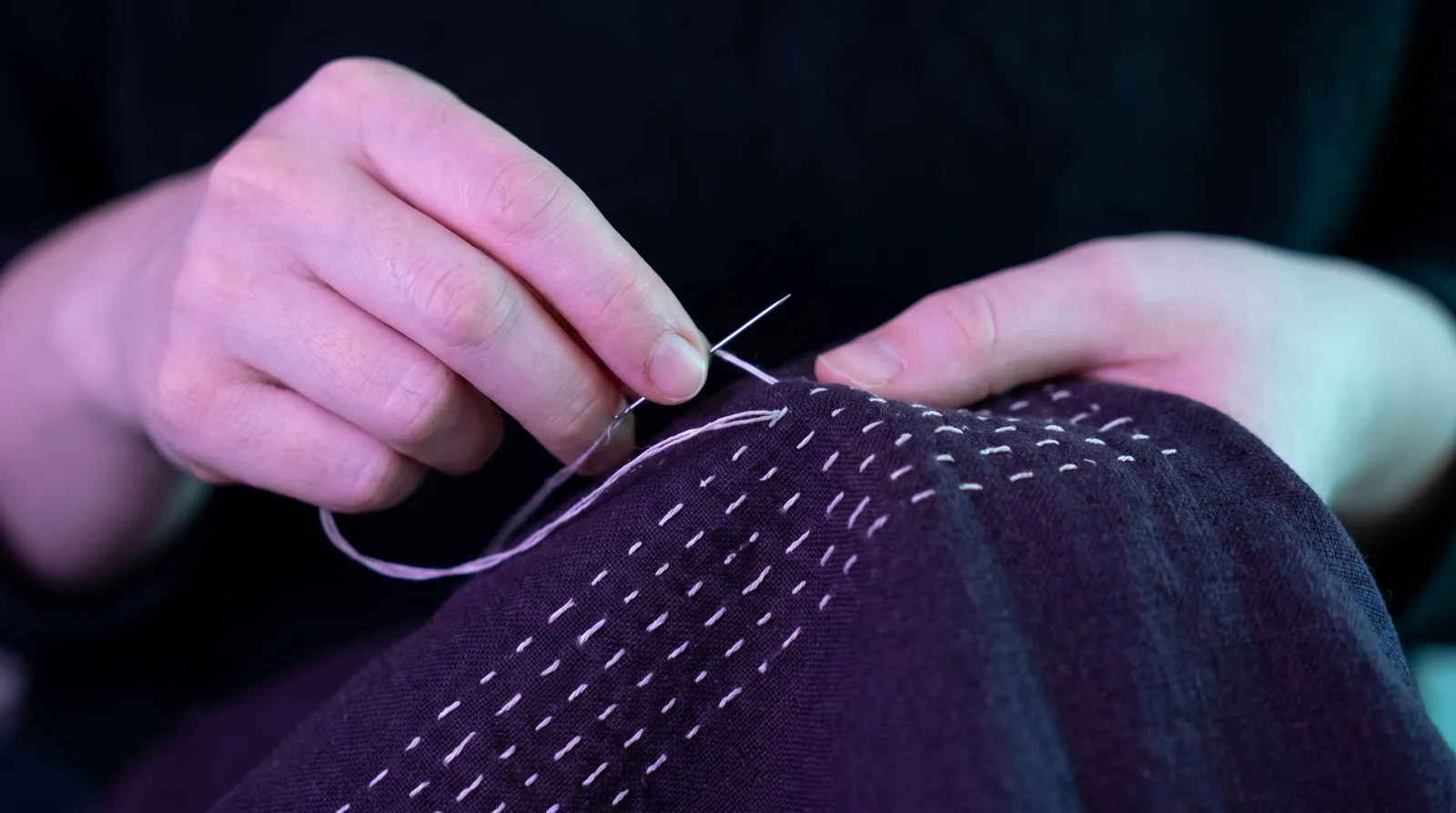
Hold a piece of old Japanese farm clothing to the light and you can read a family's history in thread. A patch over the shoulder where the carrying pole rested. Dense rows of stitching at the knees. Layers of indigo cotton, each generation's cloth sewn over the last, until a jacket became a document. This is boro, the mended textile of rural Japan, and the stitch that holds it together is sashiko: little stabs, in literal translation. Plain white cotton thread, a long needle, and rows of running stitches marching across blue cloth like rice seedlings across a flooded field. It began as poverty. It survives as one of the most quietly beautiful meditation practices a person can hold in two hands.
Cloth too precious to throw away
Sashiko took shape in the Edo period, in the cold farming regions of northern Japan, where cotton was scarce and winters were serious. Fabric traveled north in scraps and secondhand bolts, and none of it could be wasted. Farming families layered worn cloth and stitched the layers together, and the stitching did three jobs at once: it strengthened fabric against work, trapped warmth between layers, and made torn things whole. Over generations, the necessity grew a grammar. Stitches evolved into named patterns, waves, mountains, hemp leaves, persimmon flowers, passed from grandmother to granddaughter along with the winter jackets themselves. In some villages the quality of a young woman's stitching was read as character, patience made visible in thread. What poverty demanded, care made beautiful, and the jackets grew warmer and lovelier at the same time, each mend adding both wool-thickness and meaning.
That is the lineage modern visible mending draws on, half a world away, when someone darns a sweater elbow in bright contrasting yarn or lays white stitches over a torn knee of jeans. The philosophy is the same one kintsugi applies to broken pottery: the repair is not hidden, it is declared. A mend in plain sight says this object has a history and is worth my hours. In a wardrobe culture built on replacement, that small declaration lands almost as dissent.
Why stitching settles the mind
Ask anyone who sews why they do it and eventually they stop talking about the clothes. The running stitch that sashiko is built on is one of the most rhythmic movements the hands can make: load several stitches onto the needle, draw the thread through, smooth the cloth flat, begin again. It is repetitive without being mindless, demanding just enough attention to occupy the surface of the mind while the deeper water goes still. The breath tends to slow to match the hands, the way it does over a teapot or a lump of dough. Needlework asks for exactly the amount of you that would otherwise be worrying.
A mend in plain sight says: this object has a history, and it is worth my hours.
Research on needle crafts agrees with the practitioners. In an international survey of more than 3,500 knitters published in the British Journal of Occupational Therapy, respondents overwhelmingly reported feeling calmer and happier after knitting, and those who practiced more frequently reported greater gains in calm and wellbeing (Riley, Corkhill and Morris, 2013). The survey studied yarn rather than thread, but the ingredients it identifies, rhythm, repetition, soft materials, visible progress, are precisely what sashiko concentrates into its rows of little stabs. Stitch by stitch, there is proof of your minutes: a line that exists now and did not exist at breakfast.
Beginning badly, on purpose
Sashiko is among the friendliest crafts to enter, because its whole aesthetic forgives the beginner. You need a needle, strong thread, and any garment you were about to give up on; that is the entire toll. Draw a few guide lines in chalk if straightness comforts you, or trust the hand if it does not. Then stitch: forward, forward, forward, keeping the rows loose enough that the cloth still breathes. The stitches will be uneven. Leave them. Machine perfection is exactly what this practice is not for, and a wavering line of honest stitches has more warmth in it than any factory seam. Twenty minutes of this in an evening chair, ideally with something soft in the background, rain on the window, or a slow drift of Feelsy's textures with the sound low, is a complete practice. When the mind wanders to tomorrow, the needle is always waiting at the exact place you left it. Few things in a day offer that courtesy.
What the jacket knows
My own grandmother mended in the Chinese way, thimble on the middle finger, thread bitten short, socks darned over a wooden egg until the darn outlived the sock. Different tradition, same theology: nothing that can be saved is beneath saving. I think of her when I lay white rows over the worn knee of my jeans, adding my small stratum to the world's long archive of repairs. The jeans emerge heavier by a few grams of thread and lighter in some way that is harder to weigh. That is the real yield of the mending hour. You sit down with a torn thing and a tangle of thread, and you rise with both of them, somehow, put right. The wardrobe gains a jacket that fits the way only repaired things fit, and the evening gains a shape it did not have: a beginning, a rhythm, a knot tied at the end. Old cloth, it turns out, is generous. Mend it once and it will hold you for years; mend it slowly and it will hold you that same night.
Feelsy is a wellness product, not medical advice. If stress, anxiety or sleep problems persist, please speak with a qualified professional.
References
- Riley, J., Corkhill, B., & Morris, C. (2013). The benefits of knitting for personal and social wellbeing in adulthood: findings from an international survey. British Journal of Occupational Therapy, 76(2), 50-57.
Frequently Asked Questions
What is sashiko?
Sashiko, meaning little stabs in Japanese, is a traditional stitching technique from Edo-period rural Japan: rows of plain running stitches, classically white cotton thread on indigo cloth. Farming families used it to strengthen scarce fabric, trap warmth between layers, and mend tears, and over generations the stitches evolved into named decorative patterns.
What is the difference between sashiko and visible mending?
Sashiko is a specific Japanese stitching tradition; visible mending is the broader modern movement it inspired, in which repairs are deliberately shown rather than hidden, such as darning a sweater in contrasting yarn. Both share the philosophy kintsugi applies to pottery: a declared repair says the object has a history and is worth your hours.
Is stitching or mending actually good for your mental state?
Practitioners have said so for generations, and research on needle crafts supports them. An international survey of more than 3,500 knitters in the British Journal of Occupational Therapy found respondents overwhelmingly reported feeling calmer and happier after knitting, with more frequent crafters reporting greater calm (Riley, Corkhill and Morris, 2013). Sashiko concentrates the same ingredients: rhythm, repetition, and visible progress.
How do I start sashiko as a beginner?
You need only a needle, strong thread, and a garment you were about to give up on. Draw chalk guide lines if straightness comforts you, then sew loose rows of running stitches across the worn area, keeping the cloth relaxed. Uneven stitches are part of the aesthetic, not a failure; twenty minutes in an evening chair is a complete practice.
About the author
Contributing writer
Mei grew up in Shanghai around tea that could not be hurried and grandmothers who considered stillness a skill. She writes about slow hands and sensory ritual: tea, calligraphy, qigong, and the quiet crafts that taught the world how to pay attention.
Feel it for yourself.
Feelsy turns reading about calm into practising it. Two minutes of a slow texture is often the whole difference.


Related reading
 Ancient Wisdom
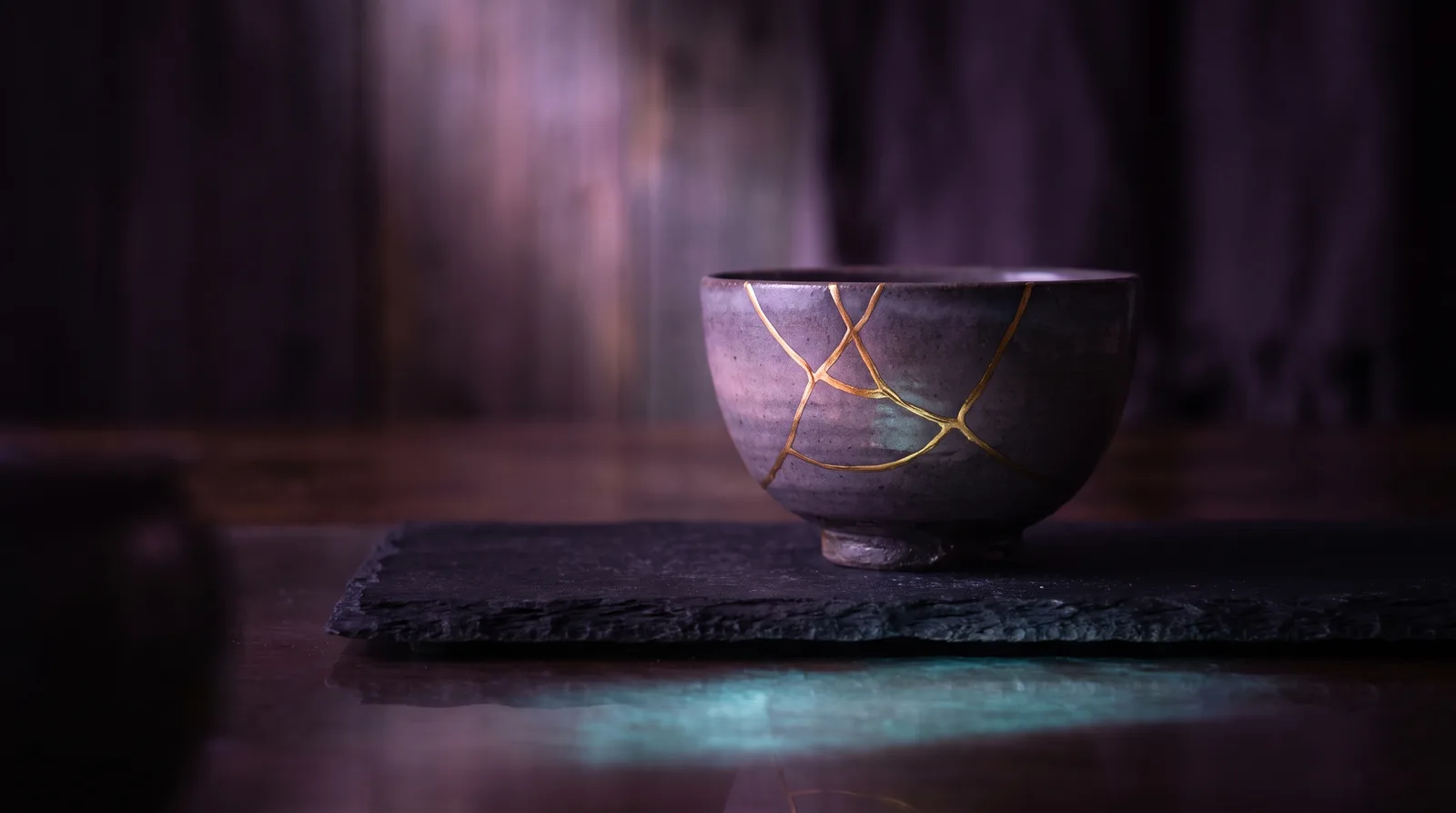
Kintsugi: The Japanese Art of Golden Repair
The meaning of kintsugi, how the Japanese craft of mending broken pottery with gold became a philosophy of resilience, and how to practise its lessons daily.
 Breath & Body
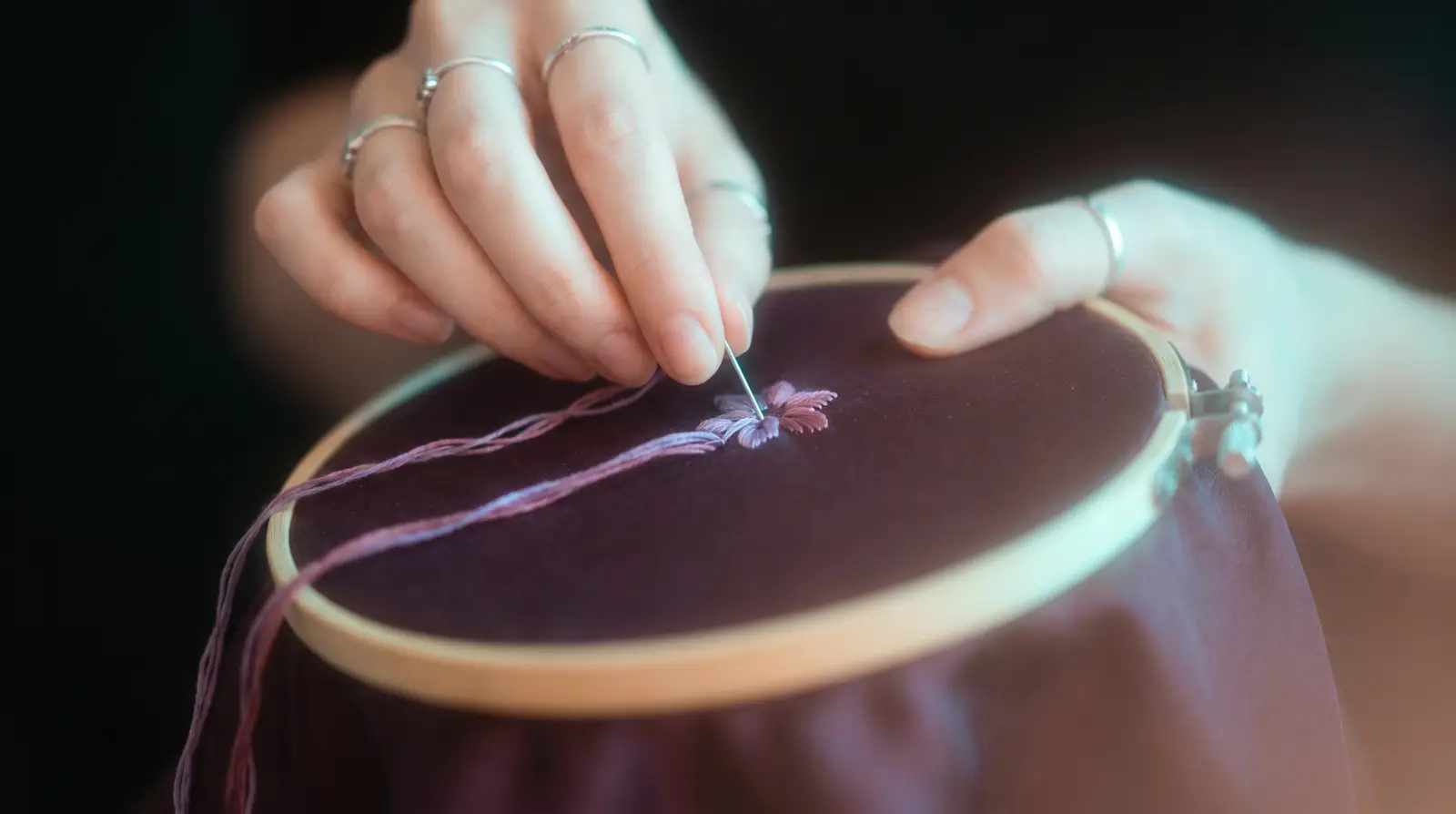
Embroidery as Meditation: The Quiet Work of Needle and Thread
Embroidery slows the hands and settles the mind one stitch at a time. Why needlework is so calming, what research on craft found, and how to begin.
 Breath & Body
Knitting as Meditation: Why Repeating Stitches Calms the Mind
Why knitting soothes anxiety: rhythm, repetition and the quiet focus of busy hands, what knitters report about calm, and how to begin the practice.
 Ancient WisdomNew
Sobremesa: The Spanish Art of Lingering at the Table
What sobremesa means, why Spaniards stay talking at the table long after a meal ends, and how this unhurried ritual can slow down an anxious day.
 Ancient WisdomNew
Lectio Divina: The Ancient Art of Reading Slowly
What lectio divina is, where the monastic practice of sacred slow reading comes from, its four classic steps, and how to adapt it to any book you love.
 Ancient Wisdom
What Is a Zen Koan? The Question You Cannot Think Your Way Out Of
Zen koans are questions designed to exhaust the thinking mind. What koans are, where they came from, and why sitting with one is so strangely calming.