Is It Bad to Sleep With Headphones On?
Is it bad to sleep with headphones on? What's actually risky, what isn't, safe volume rules, and comfier ways to keep calming sound going all night.
By Kurt Woleret
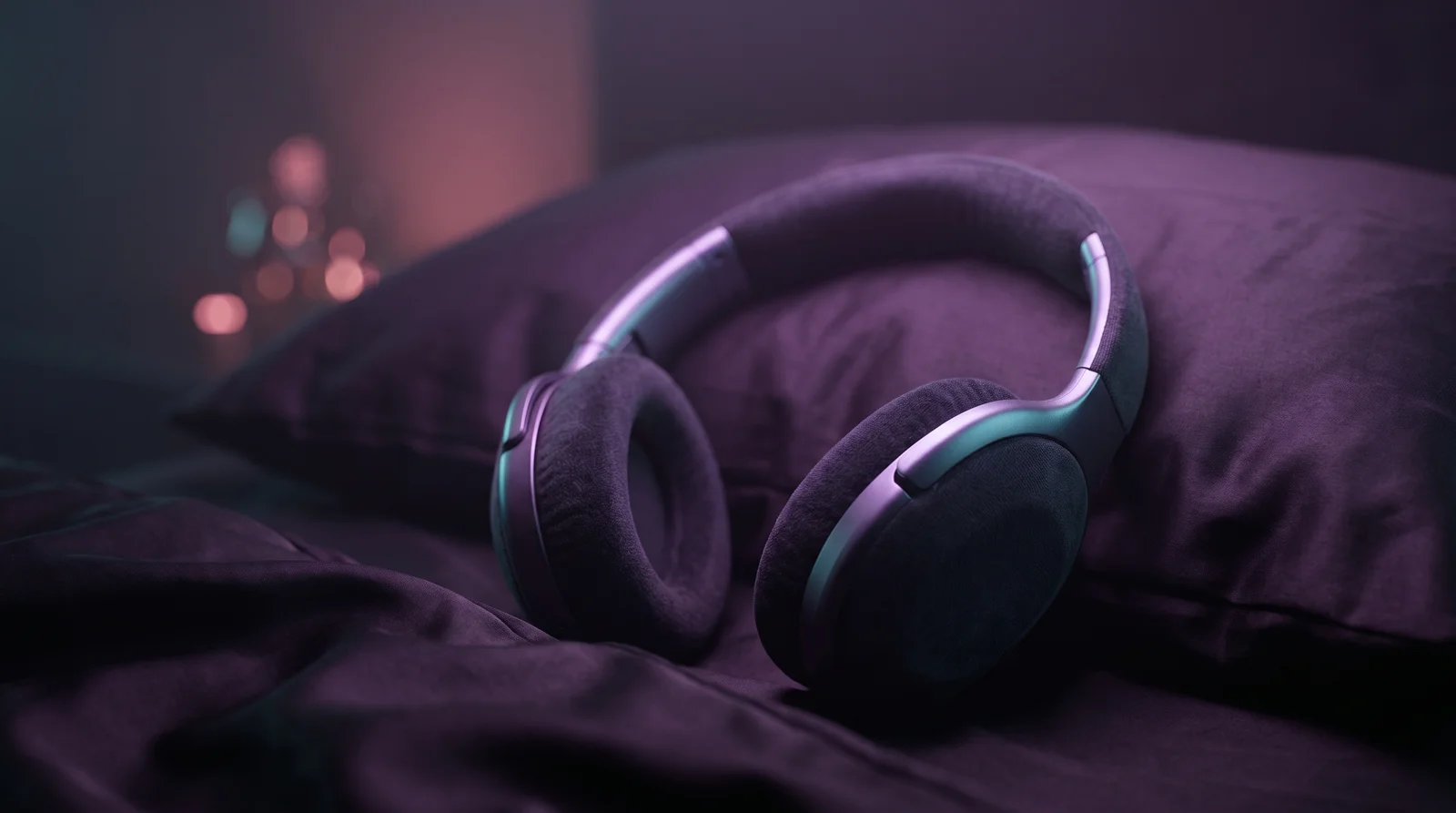
I live in an apartment where I can hear my upstairs neighbor decide to rearrange furniture at midnight. The radiator has opinions. Somewhere, always, a siren. So yes, I fall asleep with something playing in my ears most nights, and judging by my group chats, so does half the city. Which raises the question people type into search bars at 1am: is it actually bad to sleep with headphones on?
Short answer: mostly no, with a few real caveats that are worth getting right. Let's separate the actual risks from the internet folklore.
Why so many of us sleep with sound
This isn't a fringe habit. A survey study of over 600 adults found that using music as a sleep aid is widespread, and the reasons people gave were refreshingly practical (Trahan et al., 2018, PLOS ONE). Audio blocks external noise, it blocks internal noise, meaning the racing-thoughts channel your brain switches to the second the lights go off, and for many people it's simply part of the ritual that tells the body it's time. None of that is a malfunction. Giving your brain a soft signal to follow beats leaving it alone in the dark with your to-do list.
The real risks, ranked honestly
First, the one that actually matters: volume over time. Hearing damage is a function of loudness multiplied by duration, and sleep is a long duration. Audio that would be harmless for a 40-minute commute is a different proposition played for eight hours. This is the risk to take seriously, and the good news is it's entirely under your control.
Second tier: comfort and ear health. Earbuds worn all night can press on the ear canal, especially for side sleepers, and blocking the canal for hours can trap moisture and encourage earwax to compact. That usually shows up as soreness or a blocked feeling, not permanent damage, but it's a reason to rethink hard-shelled buds as a nightly habit. Keep whatever you use clean; earbuds that live in a bag and a bed collect grime you don't want parked in your ear canal all night.
Third tier: the mechanical stuff. Wired headphones plus a person who rolls over is a strap tangled around your neck or a dead earbud under your ribs at 3am. Wireless solves most of this. And the classic fear, that headphones cause ear infections outright, is overstated: infections need more than a clean earbud, though sleeping every night with sealed, never-cleaned buds does stack the odds slightly against you.
The volume rule that actually matters
Set the volume to the quietest level that still does the job, then nudge it down once more. A good test: it should sit at or below the level of a calm conversation, and someone lying next to you should not be able to identify what you're playing. If you need loud audio to mask your environment, that's a sign you want denser sound, like rain or brown noise, at low volume rather than thin sound turned up.
The goal isn't sound all night. The goal is sound until your brain stops asking for it.
The other half of the rule is duration. You don't need eight hours of playback; you need coverage for the falling-asleep window, plus a fallback for wake-ups. A sleep timer, or an autoplay mode that keeps a quiet stream going without you touching the phone, handles both. In Feelsy I'll put a rain scene on low with autoplay and let it run past the point I stop noticing it; the point is that I never have to reach for the screen, because unlocking a phone at midnight is how you end up watching videos about bridge engineering until 2am.
Pick your hardware for the way you sleep
- Back sleepers can get away with almost anything, including over-ears, which are the most comfortable option if they stay put.
- Side sleepers should skip hard earbuds and look at low-profile options: a soft fabric sleep headband with flat speakers, or simply a phone speaker across the room on low.
- Restless sleepers and rollers want wireless everything, or better, no wearable at all: a speaker with a timer does the masking without anything attached to your head.
- Couples with different noise tolerance are the one group where headphones genuinely beat a speaker, since your rain storm shouldn't be your partner's problem.
What to actually play
For pure masking, steady broadband sound works best: rain, brown noise, a low fan-like hum. For the racing-thoughts problem, something with just enough texture to hold attention without demanding it, like gentle ASMR, slow ambient layers, or a quiet soundscape paired with a slow visual, tends to work better than silence and better than anything with lyrics. If whispering voices keep you listening instead of drifting, use no-talking triggers or plain weather sound instead. The test for any of it is the same: you should stop noticing it within minutes.
The bottom line
Sleeping with headphones isn't the vice the internet makes it out to be. Keep the volume conversational or lower, keep whatever touches your ears clean, favor soft or wireless gear if you sleep on your side, and use a timer or a quiet autoplay stream instead of blasting audio until dawn. Do that, and nightly audio is just a tool, and a pretty good one, for getting a loud brain in a loud building to clock out.
Feelsy is a wellness product, not medical advice. If stress, anxiety or sleep problems persist, please speak with a qualified professional.
References
- Trahan, T., Durrant, S. J., Müllensiefen, D., & Williamson, V. J. (2018). The music that helps people sleep and the reasons they believe it works: A mixed methods analysis of online survey reports. PLOS ONE, 13(11), e0206531.
Frequently Asked Questions
Is it bad to sleep with headphones on every night?
For most people, no, as long as you manage volume and comfort. The main real risk is loudness over a long duration, since hearing strain depends on volume multiplied by time and sleep lasts hours. Keep audio at or below calm-conversation level, keep your gear clean, and choose soft or low-profile hardware if you sleep on your side, and nightly listening is a reasonable habit.
Can sleeping with earbuds cause ear problems?
Hard earbuds worn all night can press on the ear canal, especially for side sleepers, and sealing the canal for hours can trap moisture and compact earwax, which shows up as soreness or a blocked feeling. Outright infections are less common than the internet suggests, but dirty earbuds worn nightly do stack the odds against you. Softer sleep-specific gear, a headband with flat speakers, or a speaker across the room avoids most of this.
What volume is safe for sleeping with headphones?
Use the quietest level that still does the job, then nudge it down once more. It should sit at or below the loudness of a calm conversation, and a person lying next to you should not be able to identify what's playing. If you feel the need to turn it up to mask noise, switch to denser sound like rain or brown noise at low volume instead of thin audio played loud.
Should I play sound all night or use a timer?
You mainly need sound for the falling-asleep window plus wake-ups, not the full eight hours. A sleep timer or a quiet autoplay stream covers both without you touching your phone, which matters because unlocking a screen at midnight is how a two-minute adjustment becomes an hour of scrolling. Steady sound left on low all night is also fine if silence tends to wake you.
What should I listen to for falling asleep?
For masking outside noise, steady broadband sound works best: rain, brown noise, or a low hum. For quieting racing thoughts, gentle ASMR, slow ambient layers, or a soundscape paired with a slow visual gives your brain just enough texture to follow without demanding attention. Avoid anything with lyrics, and if whispered voices keep you alert, switch to no-talking triggers or plain weather sound. You should stop noticing whatever you pick within minutes.

About the author
Contributing writer
Kurt is a New York based writer covering the practical science of stress, sleep and focus. He is the resident sceptic of the Journal: if a technique cannot survive a crowded subway commute and a deadline week, he is not interested in it.
Feel it for yourself.
Feelsy turns reading about calm into practising it. Two minutes of a slow texture is often the whole difference.


Related reading
 ASMR
ASMRASMR for Sleep: What the Research Actually Says
Millions fall asleep to whisper videos every night. Here's what research says about ASMR for sleep, who it helps, and how to use it without staying up later.
 ASMR
ASMRBinaural ASMR: Why Headphones Change Everything
Why ASMR feels flat from speakers and electric in headphones: how binaural recording works, what it does to your nervous system, and how to set it up right.
 ASMR
ASMRWhy Podcasts Put You to Sleep Faster Than Silence
Press play, someone starts talking, you're out in ten minutes. Why podcasts knock you out faster than silence, and how to set them up so they help your sleep.
 ASMR
ASMRWhy Ambient Music Calms the Mind: Sound You Can Live Inside
Ambient music was designed to be ignorable and interesting at once. Here is where it came from, why beatless sound settles the body, and how to listen well.
 ASMR
ASMRWhy Gregorian Chant Is So Calming: Slow Music from the Monastery
A thousand-year-old melody still lowers the modern pulse. Here is what makes Gregorian chant so soothing, what slow music does to the body, and how to listen.
 ASMR
ASMRWhy Whale Songs Are So Calming: The Science of the Ocean's Slowest Music
Whale songs slow the racing mind like little else. Here is why these deep, unhurried voices calm us, what the recordings changed, and how to listen for sleep.