Mouth Taping for Sleep: What the Evidence Actually Says
Mouth taping is all over social media, but the evidence is thin and the risks are real. Here's what studies actually found before you tape up tonight.
By Kurt Woleret
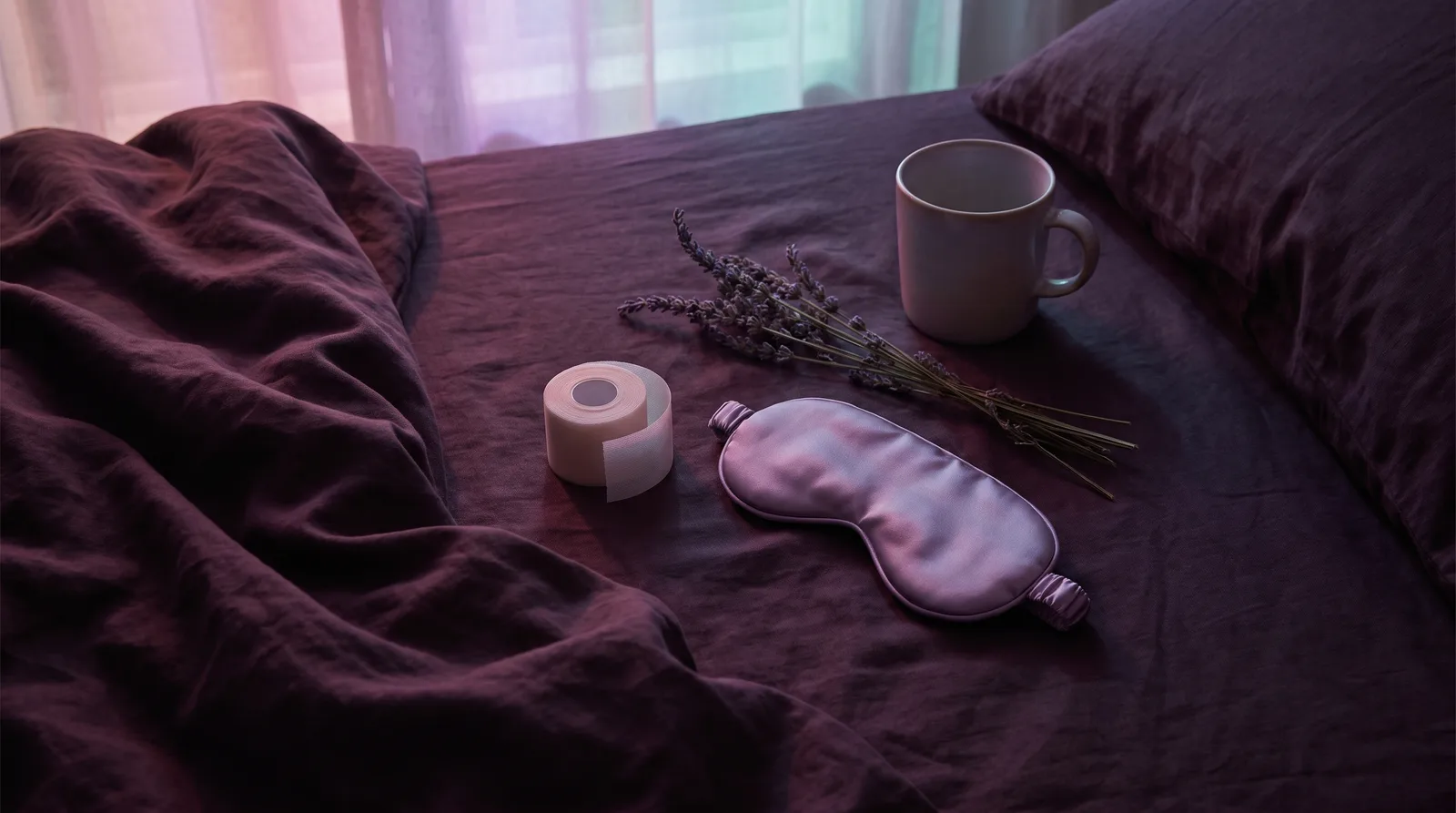
Somewhere on your feed right now, a person with suspiciously good skin is taping their mouth shut for the night and promising it will change your life. Better sleep, better jawline, better everything. The clips are mesmerizing. The claims are enormous. And because my job is apparently to be the guy who reads the studies behind wellness trends, I read the studies. Grab your tape, or actually, don't yet. Let's talk.
The theory, steelmanned
To be fair to the tapers, the underlying idea isn't crazy. Nasal breathing has legitimate advantages: your nose filters, warms, and humidifies air, and chronic mouth breathing at night is associated with snoring, dry mouth, and worse sleep for some people. So the pitch writes itself. If nose breathing is good and mouth breathing is bad, tape the mouth and force the upgrade. One strip of tape, problem solved, product sold. It's the kind of clean mechanical logic the internet loves. Bodies, unfortunately, are not that clean.
What the research found
In 2025, a team of researchers led by Rhee published a systematic review in PLOS One that went looking for every study on mouth taping and oral occlusion during sleep. They found ten studies covering a couple hundred patients, which is already telling: this trend's evidence base could fit in one subway car. Of those ten, only two showed statistically significant improvement, and that was limited to people with mild obstructive sleep apnea, on specific breathing metrics. The rest showed no meaningful benefit.
The review's conclusion was blunter than most wellness coverage will tell you: the existing data does not support mouth taping as a sound clinical intervention for the general population with sleep disordered breathing. And it went further, flagging a potentially serious risk of harm for people who tape indiscriminately, especially anyone with nasal obstruction. If your nose is blocked, from allergies, a cold, a deviated septum, and you seal the backup airway shut, you've engineered exactly the emergency your body was built to avoid.
Ten small studies, two modest positives, one serious safety flag. That's the entire evidence base under the tape.
The risk that matters most
Here's the part that worries sleep clinicians more than any influencer will mention. Loud snoring, gasping, and mouth breathing at night aren't just quirks. They're some of the classic signs of obstructive sleep apnea, a condition where your airway repeatedly collapses during sleep. Taping your mouth doesn't treat that. It can hide it. The snoring gets quieter, the video looks great, and the underlying oxygen drops keep happening all night with the escape hatch sealed. Muffling a smoke alarm is not the same as putting out the fire.
So the population most drawn to mouth taping, snorers and mouth breathers, is exactly the population that should get checked before going anywhere near it. That's not fearmongering. That's just the order of operations: diagnose first, hack second.
Why the trend won't die
Mouth taping has everything a viral wellness trend needs. It's cheap, it's visible, it photographs well, and it produces a strong placebo-friendly narrative: I did a weird disciplined thing and woke up feeling like a new person. Add before-and-after face claims that no study has verified, and you've got content that will outrun any systematic review. A PLOS One paper gets read by hundreds. The tape video gets ten million views. That asymmetry, not evidence, is why your feed keeps serving it.
There's also a real kernel underneath: people genuinely do sleep badly, and they're reaching for anything with a promise attached. I get it. But the fix for bad sleep is rarely found in the tape aisle.
What to try instead
If you wake up with a dry mouth or your partner reports snoring, start with the unglamorous checklist. Deal with nasal congestion properly: treat the allergies, run a humidifier, see someone about persistent blockage, because a working nose beats tape every time. Side sleeping helps many snorers, and it requires zero adhesive. Cut alcohol close to bedtime, since it relaxes exactly the throat muscles you need firm. And if the snoring is loud, or anyone has seen you gasp or stop breathing at night, get evaluated for sleep apnea before trying any internet fix. That one's non-negotiable.
And if your actual problem is falling asleep rather than how you breathe once you're there, work the wind-down instead. Lights low, screens boring, a few minutes of long slow exhales, the guided 4-7-8 exercise in Feelsy if you want the pacing done for you, and something soft for your eyes to land on, like Feelsy's slow-moving textures on autoplay. None of it will go viral. All of it is safer than sealing your airway based on a stranger's skincare routine.
Verdict: for healthy nose-breathers, mouth taping is probably unnecessary. For people with blocked noses or undiagnosed sleep apnea, it ranges from useless to genuinely risky. And for the mild sleep apnea cases where two small studies saw improvement, that's a conversation to have with a clinician, not a checkout cart.
Feelsy is a wellness product, not medical advice. If stress, anxiety or sleep problems persist, please speak with a qualified professional.
References
- Rhee, J., et al. (2025). Breaking social media fads and uncovering the safety and efficacy of mouth taping in patients with mouth breathing, sleep disordered breathing, or obstructive sleep apnea: A systematic review. PLOS One, 20(5), e0323643.
Frequently Asked Questions
Does mouth taping actually improve sleep?
The evidence is weak. A 2025 systematic review in PLOS One found only ten studies on mouth taping, and just two showed statistically significant improvement, limited to people with mild obstructive sleep apnea. For the general population, the reviewers concluded the data does not support mouth taping as a sound sleep intervention.
Is mouth taping dangerous?
It can be. The systematic review flagged a potentially serious risk of harm for people who tape indiscriminately, especially anyone with nasal obstruction from allergies, congestion, or a deviated septum. Sealing your mouth when your nose is blocked closes your backup airway. Snorers should also be evaluated for sleep apnea first, since taping can mask its warning signs without treating it.
Why do people say mouth taping changed their sleep?
Cheap, visible rituals with strong narratives produce powerful placebo effects and great content, and unverified claims about jawlines and energy spread faster than any study. There's also a real kernel: nasal breathing does filter, warm, and humidify air, and some mouth breathers do sleep poorly. That doesn't make tape the right fix.
What should I try instead of mouth taping?
Treat nasal congestion properly, try side sleeping, skip alcohol near bedtime, and get evaluated for sleep apnea if you snore loudly or gasp at night. If your real problem is falling asleep, build a wind-down ramp instead: dim lights, slow breathing with long exhales, and something calm and slow for your eyes instead of a feed.

About the author
Contributing writer
Kurt is a New York based writer covering the practical science of stress, sleep and focus. He is the resident sceptic of the Journal: if a technique cannot survive a crowded subway commute and a deadline week, he is not interested in it.
Feel it for yourself.
Feelsy turns reading about calm into practising it. Two minutes of a slow texture is often the whole difference.


Related reading
 Sleep
SleepDo Weighted Blankets Actually Work? What the Research Says
Weighted blankets promise calmer nights through deep pressure. Here's what the best clinical trial actually found, who benefits most, and how to pick one.
 Sleep
SleepThe Best Temperature for Sleep (and Why Your Bedroom Runs Hot)
What's the best temperature for sleep? Why cooler rooms help you fall asleep faster, what the research says about heat, and how to fix a hot bedroom.
 Sleep
SleepWhy Am I Still Tired After 8 Hours of Sleep?
Getting eight hours but waking up exhausted? Here's why time in bed isn't the same as good sleep: fragmentation, timing, alcohol, and what actually helps.
 SleepNew
Night Owl vs Early Bird: The Science of Chronotypes
Night owl or early bird isn't a personality flaw or a virtue. It's a chronotype. Here's what the science says about your body clock and how to work with it.
 SleepNew
How to Wake Up Early (Without Hating Your Life)
Want to become a morning person? Here's how to wake up early using light, timing and consistency, based on what circadian science actually shows.
 Sleep
SleepCan't Sleep? Why Getting Out of Bed Is the Counterintuitive Fix
Lying awake trying harder is the one thing that makes insomnia worse. Here's the 20-minute rule, the science of stimulus control, and how to use it.